

September 2, 2026, 9:04 am | Read time: 11 minutes
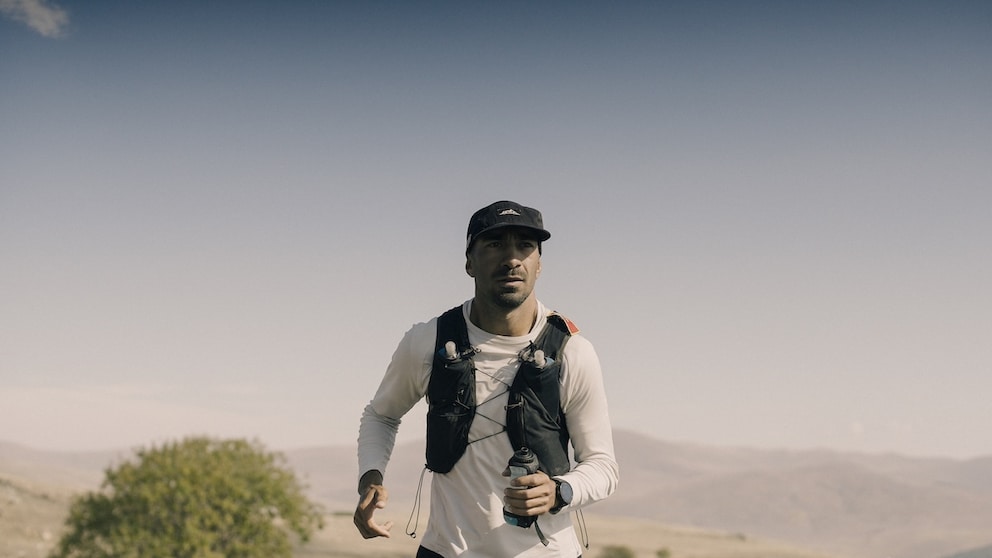
From soccer player and personal trainer to extreme athlete: Savaş Çoban (33) seeks challenges that go far beyond traditional competitions. He ran from Munich to Istanbul, crossed Peru in 87 days, and during his adventures, he covered ultramarathon distances daily for weeks. For his current book “Homerun,” which was published a few months ago, his journey last year took him through Turkey and back to his family roots. In an interview with FITBOOK, Çoban talks about what drives him to such extreme runs, how he deals with pain, exhaustion, and self-doubt, and why mental strength means more to him than sheer willpower. He also explains how the body can adapt to enormous running volumes and why he consciously runs slowly during his adventures.
The Unusual Path to Becoming an Ultra Runner
FITBOOK: You used to play soccer, worked as a personal trainer, and then, without much preparation, rode a bike to Seville. How did you end up in (ultra) running?
Savaş Çoban: “The bike trip was in 2020, during the COVID-19 pandemic, and I suddenly had a lot of time. Out of a melancholic mood came the spontaneous idea to get a used bike and just start riding, even though I had never done anything like it before. Six days later, I was already on my way to Seville. I didn’t even know how to change a tire. For me, it wasn’t an extreme project back then, but my first real adventure trip. Seville was far enough away to be a real challenge. My former host family from Spain also lived there. On this trip, I realized for the first time how much I enjoyed such situations: not knowing where I would sleep, what to expect, or what challenge would come the next day. I had tried many things, done countless jobs, and often put myself under pressure. On the bike, I realized: I want to be an adventurer and extreme athlete. While still in Madrid, I called a friend and asked him what I needed to do, whether I needed sponsors, and how to even approach something like this.”
“The Love Was Initially Not for Running, but for the Adventure Itself”
Many people have an idea or a dream after a special trip but then return to their everyday lives. Why was it different for you?
“The love was initially not for running, but for the adventure itself. After I no longer had the bike, I started running longer distances. Sports have always been an important part of my life. Running was always a strength, but never my main sport. Over time, running captivated me. I downloaded a running app and started dealing with things like pace for the first time. But my goal was never just to run a marathon. Instead, another spontaneous idea came up.”
And what was that?
“I ran from Hamburg to my family in Bremen, about 100 kilometers. After 14 hours, I was sitting completely frozen in my mother’s bathtub, thinking: ‘If you can manage 100 kilometers, what else is possible?’ This sparked the desire for bigger adventures. In 2021, I ran from Munich to Istanbul: 45 days on the road, completely alone and self-supported. For me, as a German-Turk, arriving in Istanbul was something very special. After that, I went on to Peru. There, I was on the road for 87 days, crossing various climate zones and running at over 5,000 meters altitude. From this journey, a documentary and my first book emerged. By then, I could fulfill my dream of being a full-time adventurer.”
From Extreme Running to a Journey Back to the Roots
Let’s talk about your current book. With “Homerun,” the trigger was not only athletic but also the earthquake in Turkey and Syria in 2023 and a call from your family. When did you realize that it could become more than just a sporting challenge?
Savaş Çoban: “I was in Peru at the time when I got the call. At that moment, I couldn’t grasp the magnitude. Earthquakes happen in Turkey repeatedly, and I was also completely occupied with my daily life in Peru. It wasn’t until I returned to Germany that I realized how bad the situation was and how much my family was affected. My mother’s siblings lived in the region, so it was a difficult time for them as well. At the same time, I realized how far I had distanced myself from my homeland. While my mother and siblings regularly visited, I hadn’t been to Turkey for about twelve years and had little contact with the family there. I felt like I had left them behind to some extent. I knew Istanbul and my family’s hometown, but little else about Turkey. When I arrived in Istanbul in 2021, my relatives from Kahramanmaraş said: ‘Just run to us.’ That thought stuck with me. The athletic achievement wasn’t the focus. It was about my heritage and the question of my own identity. ‘Homerun’ was therefore primarily a journey back to my roots. I ran an ultramarathon every day for 80 days—from Istanbul counterclockwise around Turkey and back to Istanbul.”
Through Running, You Experience More
You could have traveled through Turkey by car. What do you miss when you drive through a country instead of running it?
“For me, the effort and challenge create a completely different connection to a country. Traveling by bus or train offers a different experience. On foot, you move step by step through the landscape, meet more people, and perceive much more intensely. At some point, we jokingly said I ran from village to village and from tea to tea because I was constantly invited. That’s the appeal for me: You’re slower, experience more, and get much closer to people. Without this challenge, I probably wouldn’t undertake such an adventure.”
“The Key Is to Have a Clear Why”
What goes through your mind when you want to push through, are tired, or question yourself? What does mental strength mean to you specifically?
“For me, much is a matter of the mind. The key is to have a clear why and give meaning to the endeavor. Willpower alone is often not enough. It also helps me that I can visualize things very well. When I imagine something, it becomes tangible in my mind. This creates the belief that I can achieve it. In difficult moments, it’s precisely this why and the conviction that I can do it that keep me going.”
The Body Gets Used to Pain
At the beginning of your run through Turkey, you not only imagined success but also very detailed scenarios of despair or screaming. From a sports psychology perspective, it’s often said to visualize positives. Why did this negative visualization work for you?
“That’s actually interesting. On one hand, I visualize my goal. That helps me because I can already feel the emotions associated with it. It motivates me. On the other hand, the negative visualization helps me: ‘What happens if you give up now?’ At some point, you would look back and think: ‘You could have continued.’ This journey had enormous personal significance for me. Failing would have meant something very personal. At the same time, this is my profession and my sport. That’s where the athlete’s mindset comes in. Especially because the problems came so early, it was mentally challenging. At the beginning of the run, I had such severe issues that I thought the journey might be over, even though it had just begun. A cameraman filmed me breaking down in tears—not because of the pain, but because I imagined having to give up. At the same time, my experience from previous trips helped me. I knew that the body is particularly susceptible to stress pain at the beginning. So I could assess the issues correctly. Over time, the body gets used to it, and many things become easier.”
“We Can Often Do Much More Than We Think”
Is mental strength trainable or innate? What would you advise someone who wants to give up after six kilometers, even though the body could continue?
“In my experience, most people underestimate themselves. We can often do much more than we think. Many don’t tap into their potential because they never come close to their own limits. For me, pushing these boundaries is not purely physical. It’s primarily a realization: I can do more than I thought. I’ve experienced this myself and observed it in others. That’s why I always say: ‘Scratch at your own limits.’ You’ll be surprised how far you can go. It takes courage to start running. And that courage can be trained.”
“On Day 50 or 60, You Just Get Up and Start Running”
Resilience is often described as the ability to emerge stronger from crises. On your journeys, you constantly face challenges: from injuries to finding a place to sleep to difficult conditions. Do you feel that such experiences make you stronger, or can it be too much?
“I believe you can emerge stronger from crises. And I don’t just mean in sports, but in life. Challenges are not there to punish us. They can make us stronger and prepare us for what’s to come. In sports, it’s similar. If I’m on the road for 80 days and run an ultramarathon every day, it eventually becomes a habit. On day 50 or 60, you just get up and start running. You don’t question it anymore. It’s the same with discipline and routines: What is difficult at first becomes second nature over time. Before every adventure, I have a ritual. I visualize possible difficulties and prepare myself to be hungry, in pain, or to experience setbacks. Then I mentally switch to ‘adventure mode.’ From that moment until the end, I’m consciously outside my comfort zone. That helps me deal with difficulties better.”

Joey Kelly on extreme sports and survival: “Giving up is not an option”

“Thanks to training with an AI app, I ran a half marathon in under 2 hours”
Energy Management Instead of Fast Pace
You consciously run slowly during your adventures. What role do pace, running watch, and Zone 2 play for you: helpful orientation or potential misdirection?
“It’s mainly about energy management. I could also run a marathon in under three hours. But if I’m running an ultramarathon every day for 80 days, it’s not about being as fast as possible, but about getting through it healthily. That’s why I run slowly. When I was once a bit faster, I immediately noticed that recovery took longer. I can’t afford that because the next stage is the next day. The slower pace is for energy management and injury prevention. Then there’s the backpack on my back. On such trips, I hardly pay attention to pace. In training, it’s different. I work with different intensities. On my adventures, I have to hold back more.”
How Çoban Plans to Avoid Injuries on Long Distances
What three things should you keep in mind to complete a long running adventure without injury?
“First: be well-prepared. Ultra running is currently booming. Many want too much too quickly and get injured. The body needs time to adapt to such stresses. Second: specifically strengthen the leg muscles. Strong muscles relieve the joints, which are particularly challenged over long distances. Third: gradually increase the distances and learn your own limits. You should be physically prepared for the stress. The mental aspect develops with experience. It’s also important to correctly assess pain. At the beginning of my Turkey run, I had severe stress pain and was limping at times. Many might have stopped at that point. But from previous experiences, I knew it wasn’t an injury. My physiotherapist said at the time: ‘Keep running, your body will get used to it.’ It sounds crazy, but it worked in this case. Over time, you develop a better sense of your body and learn when you can continue and when a break is necessary.”
After all these experiences, what’s next for you in the coming weeks and months?
“I have plenty of ideas for new adventures. That’s something I particularly love about my sport: I can be creative and create my own challenges. There are many places in the world we’ve heard of but know little about. Peru was such an example for me and one of the best decisions of my life. We’re currently working on the documentary for ‘Homerun.’ In the next one to two years, several new adventures will definitely follow.”