


February 11, 2026, 9:14 am | Read time: 3 minutes
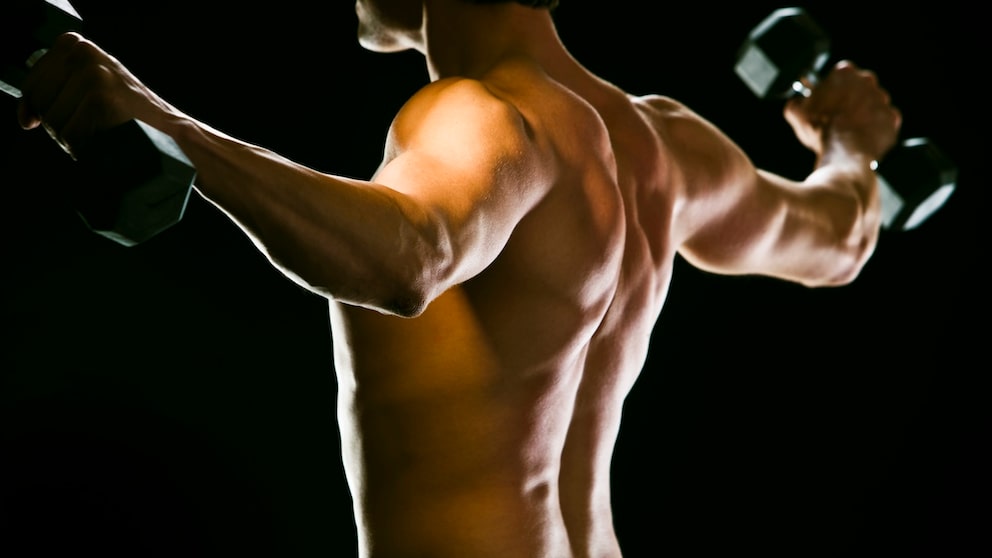
The goal for many fitness enthusiasts is well-defined shoulders. Men often train for a pronounced V-shape of the upper body. For both goals, we recommend incorporating lateral raises into your workout. The exercise is effective when performed correctly. FITBOOK explains the common mistakes in lateral raises. Here’s a preview: The weight you move matters. Learn what to consider to maximize the training effect of lateral raises.
Mistake 1: Shoulders are Raised
As soon as the ego joins the workout, execution worsens. This also applies to lateral raises. The exercise doesn’t allow for much weight to be moved. However, many find it hard to forgo heavy, impressive weights. If the dumbbells are too heavy, the load is compensated by shrugging—also known as “shrugs.” This shifts the training focus from the shoulders to the neck. The training effect for the shoulders is lost. Therefore, choose a moderate training weight and focus on technique.
Mistake 2: Upper Body Swings
An incorrectly chosen training weight can manifest in other ways. If the upper body swings during lateral raises, the dumbbells are too heavy. The exercise is distorted by using the back and neck. It’s advisable to reduce the weight to target the shoulder muscles effectively.
Mistake 3: Hands Are Above Elbow Level
In the gym, the following scenario is often observed: Hands are energetically lifted during lateral raises, while the elbows drop toward the floor—a typical mistake. It’s not about momentum, but controlled movement. Hands should not be above elbow level. Focusing on using the elbows as the leading force can help avoid this mistake.

7 Exercises That Really Make My Shoulders Burn

How to perform plank rows correctly
Mistake 4: Palms Don’t Face the Floor
Rotating the hands during lateral raises improves execution. When thumbs point toward the ceiling, hands rise above elbow level again. Tip: Hold your hands as if you were pouring out a glass of water.
Muscles Worked During Lateral Raises
Lateral raises with dumbbells primarily train the shoulder muscles, specifically the deltoid muscles. Additionally, the trapezius muscle also assists. The main work is done by the middle part of the deltoid muscle, which is responsible for lifting the arm sideways from the body. The deltoid muscle covers the shoulder joint like a protective cap and gives the shoulder its round shape; it is located where the upper arm, shoulder blade, and collarbone meet. The trapezius muscle is located in the upper back and neck area and extends from the neck over the shoulders to the middle of the upper back. During lateral raises, its upper fibers are primarily engaged, helping to stabilize the shoulder and support the movement.1