

January 18, 2026, 4:38 pm | Read time: 3 minutes
A trained core is much more than a visible six-pack: It stabilizes your spine, improves movement patterns, and can prevent injuries–whether you’re running, playing tennis, or just going about daily life. One of the most effective exercises for this is the “Dead Bug.” FITBOOK shows you how to perform it correctly–and why this classic is worth including in almost any workout.
Follow the FITBOOK channel on WhatsApp now!
What is the Dead Bug exercise?
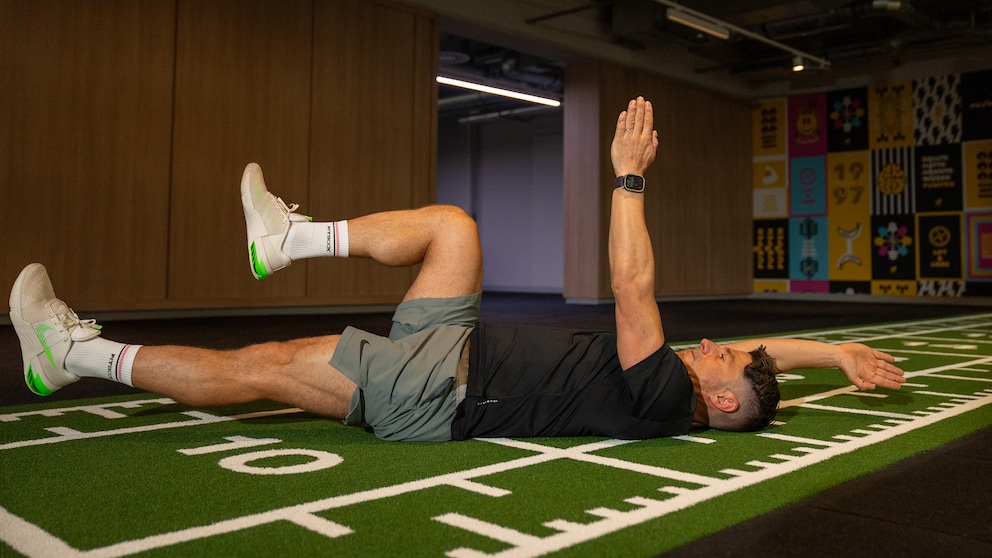
The exercise with the quirky name “Dead Bug” is one of the most effective methods to specifically strengthen the deeper core muscles. Performed lying on your back, arms and legs are stretched in opposite directions in a controlled manner–a movement that requires high concentration and body tension. The core remains constantly activated, which not only improves coordination but also relieves the spine and acts preventively against back pain. The name refers to the characteristic starting position: arms straight up, legs bent–a posture that somewhat resembles an insect lying on its back.

Strengthen Your Core: 6 Pro Exercises for Core Power

Pilates: The 34 Traditional Exercises
Proper Execution
Assume the Position
- First, lie on your back on a mat. Your head is relaxed, and your gaze is directed upward. Keep your shoulders on the ground, and your chest is calm.
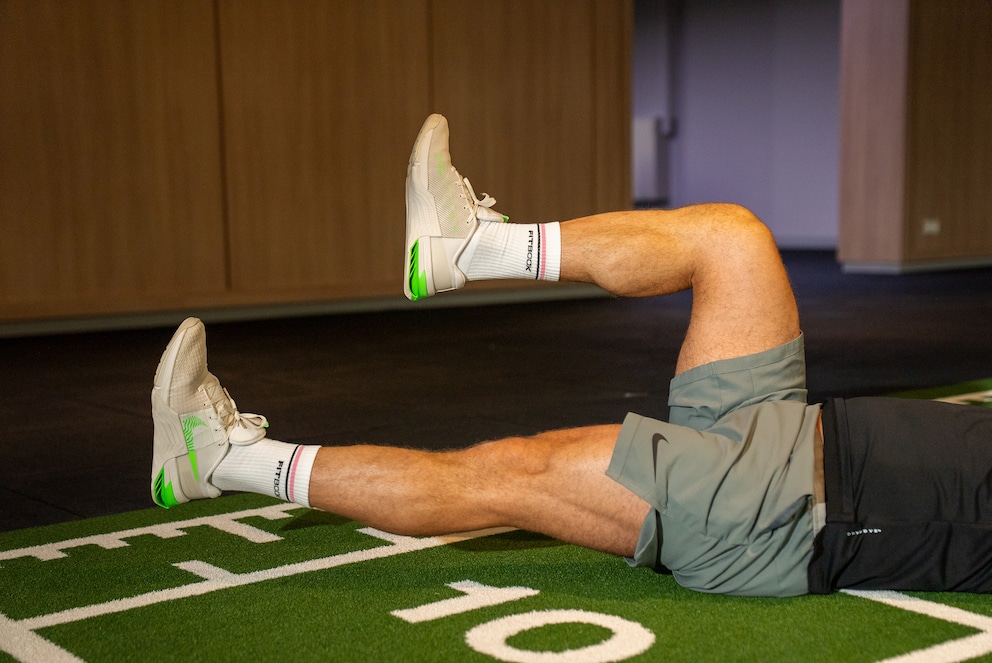
- Now lift both legs and bend your hips and knees to form a right angle. Your knees should be directly above your hips, and your lower legs parallel to the ground. Then stretch both arms straight up, with your hands over your shoulders.
- Now actively engage your abs and press your lower back firmly into the mat. Your pelvis tilts slightly backward, avoiding a hollow back. Maintain this tension consistently.
Movement Execution
- From the starting position, simultaneously lower your right arm backward toward the ground and extend your left leg forward. The arm moves over your head, and the leg goes toward the ground–both remain in the air and are not placed down.
- Go only as low as your lower back maintains full contact with the mat. If your back remains stable, hold the end position briefly, then slowly return your arm and leg to the starting position.
- Then repeat the movement with your left arm and right leg. Exhale calmly as you lower and inhale as you return, keeping your abdominal tension constant.
Why You Should Include the Exercise in Your Training
A key role is played by the deep, transverse abdominal muscle–the transversus abdominis. This muscle runs horizontally inside the torso and acts like a natural support corset. It not only stabilizes the spine but also supports breathing mechanics. This is where the “Dead Bug” comes in: Through controlled, alternating movements, the deep core is specifically targeted, improving core stability, promoting the interaction of the upper and lower body, and positively influencing posture and movement quality in the long term.1
At the same time, the exercise helps keep the lumbar spine in a stable, controlled position–a crucial protective factor for the lower back. The often-neglected hip flexors also benefit from the “Dead Bug,” as they tend to shorten or remain under tension due to prolonged sitting. The exercise serves as a valuable counterbalance to bring the pelvis back into muscular balance.2
Last but not least, the visible abdominal muscles are also effectively trained–even more efficiently than with traditional sit-ups. So if you’re looking for a holistic, spine-friendly, and everyday-suitable core exercise, the “Dead Bug” is a simple yet effective tool.3