


January 3, 2025, 4:25 pm | Read time: 5 minutes
Isolating the glutes in training–that works with cable kickbacks. This exercise targets the right muscles without overworking other muscle groups. FITBOOK author Nina Ponath explains the correct execution.
Have you ever taken a closer look at the cable machine in your gym? Yes? Then you’ve probably noticed that the ratio of women to men there isn’t quite balanced. Most of the time, the multifunctional training device with the two tall towers is mainly used by men. However, training on the cable machine is really beneficial for everyone. With the cable and its adjustable weights and various grips, you can target every single muscle fiber of the large muscles in the back and chest, while arms and shoulders benefit from varied, isolated exercises. That’s why we want to encourage women, as well as men, to use this versatile training device more often. One exercise recommendation from us: cable kickbacks. This exercise can isolate and shape the glutes. How to do it correctly is explained in this guide.1
Follow the FITBOOK channel on WhatsApp now!
Overview
What are cable kickbacks?
When it comes to effective glute training, cable kickbacks should not be missing. They are one of the best exercises to specifically train the gluteal muscles. The movement is simple: One leg is stretched backward under tension with the help of a cable machine while the rest of the body remains stable. With the correct execution, you can not only build strength but also optimize the shape of the gluteal muscles. The unilateral training allows both legs or glute halves to be isolated and evenly strengthened–perfect for balancing muscular imbalances and shaping the glutes.
Cable kickbacks–the correct execution
Assume the starting position
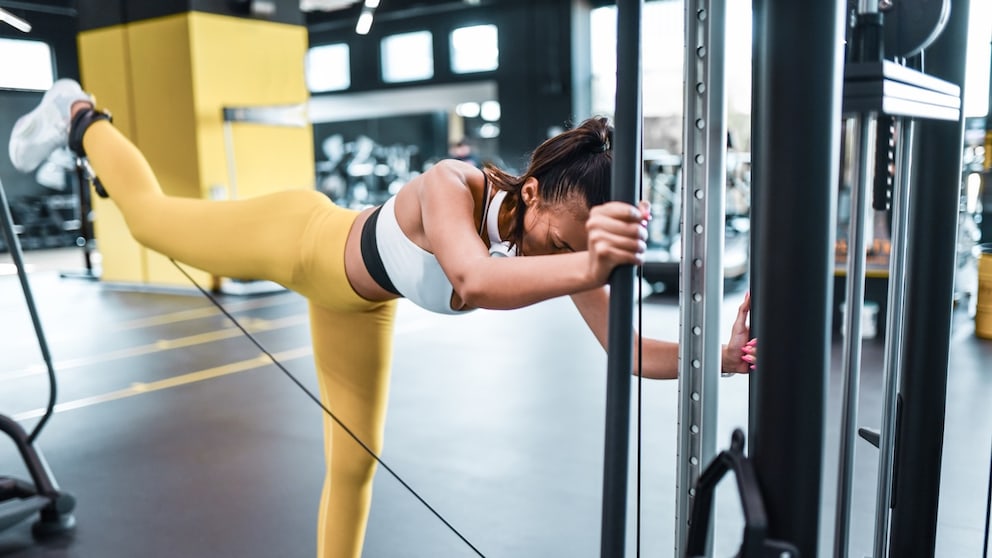
Attach an ankle strap to the cable machine and secure it around one of your ankles. Stand with slightly bent knees and a straight back in front of the machine. Hold onto the handles or a stable surface such as the tower.
Stabilize your posture
Tighten your core and keep your spine in a neutral position. The standing leg remains slightly bent.
Execute the movement
Activate the gluteal muscles and move the attached leg backward and upward in a controlled manner. Focus entirely on your glutes–they perform the exercise. The foot remains slightly turned outward during the movement.
Hold the top position
Hold the tension briefly at the highest point before slowly and controlled returning the leg to the starting position.
Repeat
Complete ten to twelve repetitions per leg in three to four sets. At the end, no clean repetition should be possible.
Muscles targeted by the exercise
Cable kickbacks are an isolated exercise for the glutes, meaning the exercise primarily targets the gluteal muscles, especially the gluteus maximus and gluteus medius. Additionally, the following muscles are secondarily engaged:
- Gluteus maximus (largest gluteal muscle, primarily responsible for hip extension)
Gluteus medius (lateral gluteal muscle, important for hip stabilization) - Hamstrings (leg flexors)
- Abdominal muscles (for stability)
- Adductors (inner thigh muscles)
- Abductors (muscles for leg abduction)
Benefits of cable kickbacks
Targeted muscle building
Cable kickbacks isolate and effectively strengthen the gluteal muscles. The glutes are the largest muscle and ensure an upright posture–the best prevention against back pain and posture issues. At the same time, trained glutes increase calorie consumption.
Correction of muscular imbalances
The unilateral training ensures even strength development. If you suffer from imbalances, they can be specifically corrected through training.
Strengthening core stability
The exercise improves your stability, which positively affects other types of training, such as running. Strength training will also become easier; especially complex movements like squats and deadlifts benefit from strong glutes.
Common mistakes and how to avoid them
Too much weight
Excessive resistance often leads to incorrect execution, as momentum is used instead of muscle strength. Therefore, start cautiously and don’t overdo it. The rule is: technique before weight!
Arching the back
Avoid sagging the back by keeping the abdominal muscles tense throughout the exercise. This way, you also train your core.
Lack of control
Lowering the leg too quickly reduces the training effect. Always perform the movement in a controlled and slow manner to keep the muscles under tension longer.
The right equipment
- Cable machine
- Ankle strap (most gyms have ankle straps, alternatively, they are also available online)
Abduction on the Cable Pulley – Common Mistakes and Correct Execution

7 Effective Exercises for the Glute Muscles
Alternative exercises
If you can’t use a cable machine, here are some alternatives:
- Kickbacks with resistance bands
- Glute bridges (single-leg or bilateral)
- Bulgarian split squats
- Step-ups
These exercises offer similar benefits and can be individually combined.
If you train at home, you can use resistance bands instead of a cable machine.
How often should you train?
Cable kickbacks can be integrated into your training program on leg day. Depending on how many days you train your glutes, you can perform the exercise three to four times a week. Make sure you “feel” the exercise correctly to target the right muscles. Despite your enthusiasm, take at least one day off between training sessions to allow the muscles time to recover.