


June 4, 2026, 9:45 pm | Read time: 6 minutes
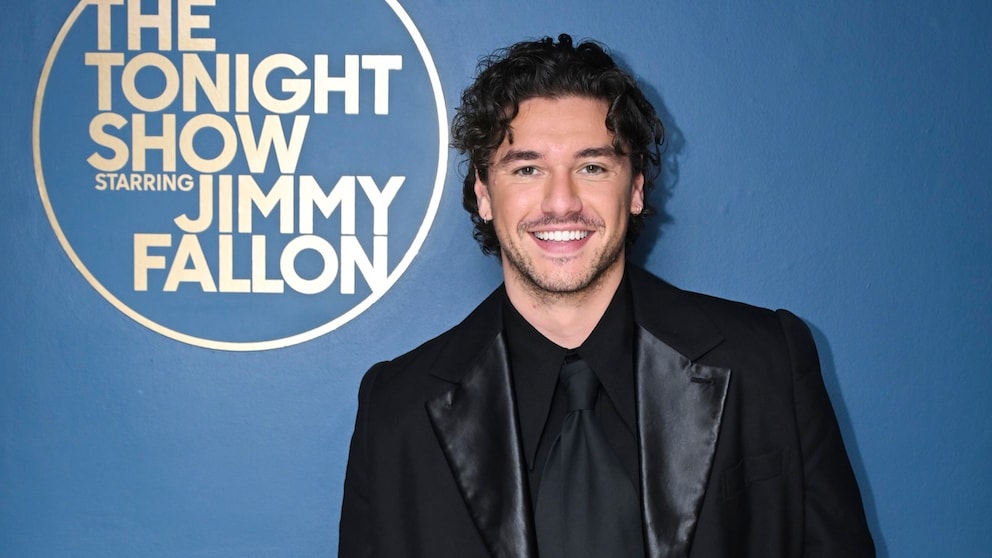
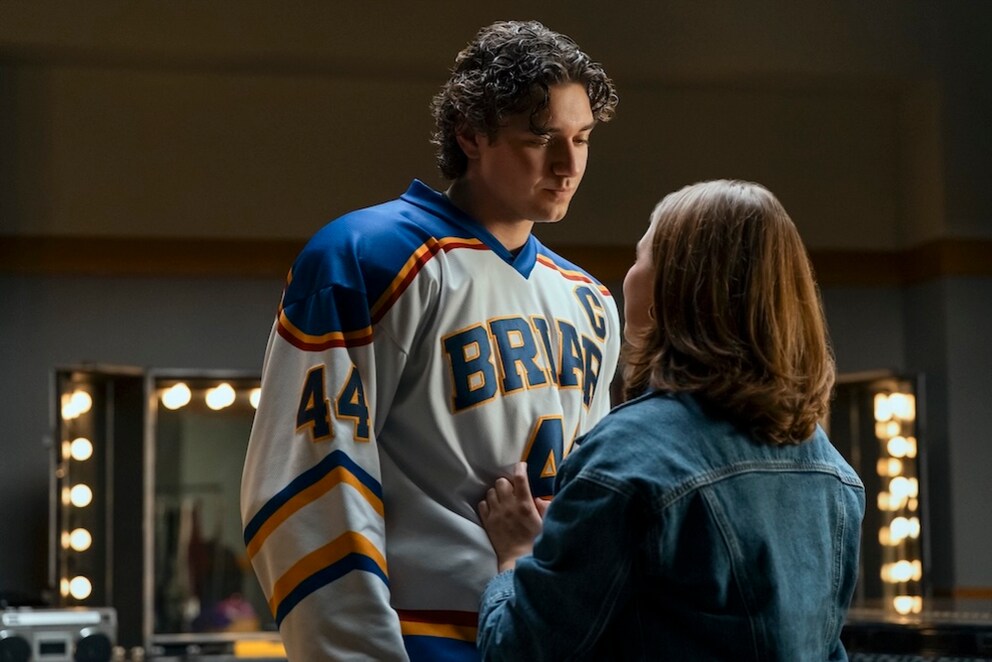
The series “Off Campus” conquered the top spot on Amazon and captivates viewers worldwide. The previously mostly unknown actors quickly became sought-after stars, including Belmont Cameli. The 28-year-old plays Garrett Graham and makes a great impression as a hockey player. Naturally, we’re interested in how he got fit for the role. The actor recently shared insights into his training–including a special tip for arm workouts.
Belmont Cameli has been athletic for a long time. The “Off Campus” star played American football during his school years. He’s been strength training for about ten years, so far without a trainer’s help. Everything he knows, the actor has taught himself, trying out various methods, making mistakes, and discovering his preferences. “I have to lift weights mainly for my brain. I just feel better when I sweat. It helps with everything,” Belmont revealed in an interview with “Men’s Health.” Previously, he trained primarily for his physical and mental well-being, but with his series role, he apparently had to train for a specific goal for the first time: convincingly portraying a hockey player.
From Football Player to Hockey Player
“The hockey player’s body can’t be easily defined by one thing. When I got the role, I had to learn to skate,” Cameli said. Anyone who has seen the first season of “Off Campus” knows that the 28-year-old learned enough to make a good impression as team captain on the ice. However, Cameli is apparently not yet satisfied with his skills. “Skating is very frustrating for me. It’s new to me, but I’m also very ambitious and competitive,” the actor said. “Stephen (his series colleague Stephen Kalyn, editor’s note) is the only one who plays hockey. But somehow I constantly have to measure myself against him, maybe because I’m faster than he is.” Therefore, Cameli’s declared goal for the second season is: “One day I’ll beat him. I just want to score a goal in a live game against him.”
Learning to skate was one thing, training for the right physique was another. For the role of Garrett Graham, it wasn’t about reducing body fat to five or six percent. Instead, it was important to build mass. Cameli is still working on that for the second season. And the 28-year-old learned firsthand that a bulkier physique has advantages in hockey. “Hockey players constantly take hits. I, on the other hand, kept crashing into the boards because I couldn’t stop while skating. The heavier I am, the safer I am,” Belmont Cameli joked in the interview.

How Actor Nicholas Galitzine Trained for His Role as “He-Man”

Liam Hemsworth’s “The Witcher” Muscles Are Thanks to This Training
Train as Often as Possible
That’s why the series star tries to train in the gym as often and as disciplined as possible: “Some weeks I manage six times, some only twice.” On trips, like currently during the promotional tour in the filming break, this is a challenge. “I’ve always been an all-or-nothing type. That means I train for a certain period. But as soon as I miss a few days, I’m out of the gym and have to start over.”
The upcoming filming of the second “Off Campus” season will again require full physical commitment from Cameli. Therefore, it’s important to slowly get back in shape. The actor can then fine-tune when he returns to the series set. Apparently, the set has received an upgrade. “They built us a gym on set. We’ll sweat and work our butts off there. It’s going to be great,” Cameli said in conversation with “Men’s Health.”
Belmont Cameli’s Upper Body Workout
After experimenting with several training methods during his ten years of strength training experience, the push-pull principle convinced him. He divides his week into push days, pull days, and leg days to train his entire body.

His Workout
In the MH video, the actor guides viewers through a typical upper body workout focusing on arms, chest, and back. He explains that he always starts his workouts with bodyweight exercises, which he performs until muscle failure.
Pull-Ups: 3 Sets with Maximum Repetitions
Pull-ups (with overhand grip) are among the actor’s favorite back exercises: “They challenge the entire back, and there’s nothing more satisfying than managing one more pull-up.” Sometimes he varies in the last set and does a few chin-ups (underhand grip) for the biceps. The workout at the bar is rounded off with the dead hang.
Cable Fly: 3 Sets with 10 to 12 Repetitions
Start with a cable in each hand. The arms are positioned in a V-shape down beside the body. Then, move the extended arms from below up to chest height (arms and hands pointing away from the body).
Single-Arm Cross Triceps Cable Press: 3 Sets, 8 to 10 Repetitions
For this, Cameli first takes the cable in his right hand. This hand presses the cable down from the left chest area, until the arm is almost straight but remains under tension. Then the forearm moves back in front of the upper body. It’s important that the upper arm stays immobile and the force for the movement comes from the triceps.
Triceps Kickback on Cable: 2 to 3 Sets, 10 to 12 Repetitions
For this, the actor gets into the starting position: With a bent-over upper body, he stands in front of the cable, holding onto the machine with the non-training hand. The training arm is bent. Now, extend the arm in a controlled manner. The movement is done via the triceps, meaning only the forearm moves, while the upper arm remains still.
Rope Curls on Cable: 3 Sets, 8 to 10 Repetitions
Finally, Belmont Cameli demonstrates an upper arm exercise in the video: the biceps curl performed with the rope grip on the cable. He attaches the grip at the bottom of the cable tower and then performs the biceps curls in a controlled manner. Here, too, only the forearms move.
Belmont Cameli’s Tip for Arm Training
The “Off Campus” actor advises doing arm exercises in isolation to avoid overloading the strong side and sparing the weak side. He also always starts with his weak side. This sets the number of repetitions for the set. That means: With the dominant side, he does only as many repetitions as he managed with the weak side, even if he could actually do more. This way, he aims to balance both sides.