


May 21, 2026, 3:01 pm | Read time: 6 minutes
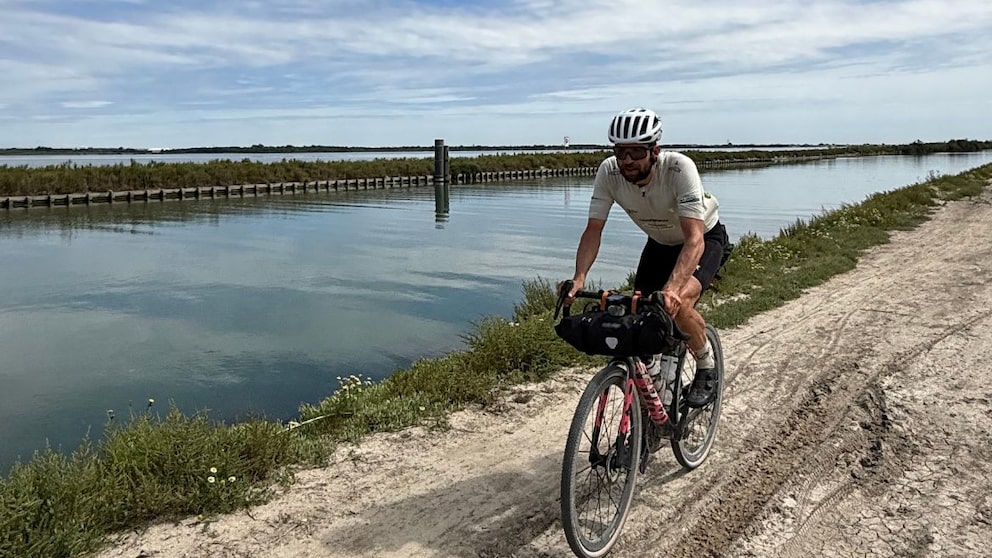
24,000 kilometers on a gravel bike, 27 countries, more than 250,000 meters of elevation gain—and almost no rest days. Together with Josefine Rutkowski, extreme athlete Jonas Deichmann is currently cycling around Europe. But how does such prolonged exertion actually change the body? Does the perception of strain eventually shift completely? In a conversation with FITBOOK, Deichmann talked about daily 180-kilometer stages, recovery, sleep, mental lows—and why he often feels better after long days in the saddle than right after waking up.
Months of Strain Without Rest Days? How Jonas Deichmann Trained for It
FITBOOK: How did you prepare for the Europe tour? Were there specific training or nutrition strategies?
Jonas Deichmann: “We mainly lived in Mallorca beforehand and spent the winter there. During this time, we focused on building a solid foundation: long bike rides, lots of elevation gain, along with running and targeted stability training. Stability and strength training are often underestimated—not just in cycling. In fact, everyone benefits from it. Injury prevention plays a big role, as does maintaining a stable posture on the bike. Endurance athletes should incorporate strength or stability exercises two to three times a week, even if it’s just bodyweight exercises. Yoga and stretching are also essential for us. They help with flexibility and improve the seating position on the bike. Especially in a project lasting several months, flexibility can quickly suffer.”
And what about nutrition?
“In terms of nutrition, we generally focus on a healthy and balanced base. On such a long bike trip, it doesn’t always work out perfectly. Sometimes you’re somewhere in the French countryside, the supermarkets are closed, and you just have to figure out how to get enough calories. Then you might end up eating cookies or other quick snacks. That’s why it’s even more important to build up good reserves beforehand. We also use some supplements.”
How Daily 180-Kilometer Stages Feel for the Body
Does a day with 180 kilometers on the bike still feel strenuous, or does the perception of strain eventually shift completely?
“Of course, it’s strenuous. But it always depends on the type of strain and how much elevation gain is involved. Rolling along 180 kilometers on flat terrain is no longer particularly exhausting. But if it’s a real Dolomite stage, you definitely feel it. However, I’m not completely exhausted afterward. I haven’t felt that completely worn-out feeling in a long time. I don’t really get sore muscles after such days either. What tends to happen is a certain underlying fatigue after two or three weeks. In the morning, the body takes a bit of time to get going. Often, I need 10 to 20 kilometers to warm up. Interestingly, I often feel better after 180 kilometers than right in the morning. What you do notice, though, is that the sharpness is lost. After three weeks without a rest day and eight to nine hours of strain daily, you can still ride every day, but intense intervals or hard mountain sprints just don’t work anymore.”
Why Recovery Is Just as Important to Him as Fitness
What’s more important during months of strain: fitness or recovery?
“You can’t really separate the two. You need both. Fitness only develops further if recovery works. For such projects, you don’t have to be in absolute top form at the start. The form comes automatically along the way. If recovery is right, you get stronger during the project. If it doesn’t work, injuries or overuse eventually occur. The most important factor in recovery is sleep.”
Sleeping in Nature Has Become Routine
How challenging is it for the body to constantly sleep in new places?
“Sleep and recovery are closely tied to routines. This includes, for example, not eating too late or not spending too much time on the phone in the evening. You naturally sleep better in a familiar environment. For us, this life on the road has now become the familiar environment. Camping somewhere by a river in nature now feels almost like home, even if we’ve never been there before. Still, we try to maintain certain routines. For example, we often stop at kilometer 160, cook our dinner, and then ride a bit further. This way, we don’t go to sleep right after eating. Perfect recovery on the road is, of course, difficult. You’d have that more in a hotel with a support vehicle and a fully organized schedule. But you can still do a lot to improve the conditions.”
Why Jonas Deichmann Suddenly Looks Forward to Salad After 180 Kilometers
How does nutrition change with such prolonged exertion? Are there specific foods your body craves?
“Interestingly, we mainly look forward to healthy things because you consume a lot of quick and rather unhealthy calories during the day. A fresh salad or a good risotto in Italy suddenly becomes a real highlight.”

Extreme Athlete Jonas Deichmann: “I Couldn’t Make It Up the Stairs Alone”

Extreme Athlete Jonas Deichmann: “4 Months Without a Rest Day–and in 3.5 Weeks, I’m Running a Marathon Again”
He Knows the Mental Low After Big Projects Well
Many endurance athletes report a mental low after major competitions. Do you know this feeling?
“It’s an incredibly fascinating topic. You often see it with professional athletes—for example, after the Olympics or other major projects. When you’ve been working toward a single goal for months and suddenly achieve it, a big void often arises. I can very much relate to this feeling. During such a project, you know exactly why you get up every morning. You have a goal, experience something new every day, and try to be the best version of yourself. When that’s suddenly gone, many people miss that sense of purpose. Personally, I haven’t experienced this low yet. I think it’s because I always have the next project in mind. When we arrive in Munich, this adventure ends, but then something new immediately begins—lectures, new ideas, or the next big project. So, I never just recover from the old, but always for something new.”
“I Now Take Recovery as Seriously as Training Itself”
Are there things you consciously do differently today than before?
“Definitely. I now focus much more on long-term performance. Two years ago, I completed 120 Ironman distances, and during that time, I delved deeply into recovery and sustainable exertion. Today, I pay much more attention to nutrition, sleep, yoga, and stability training. I used to just push through a lot of things. Now, I take recovery as seriously as training itself. I also no longer drink alcohol. For me, that’s now simply part of a more conscious and healthier lifestyle.”