


May 22, 2026, 9:43 am | Read time: 4 minutes
Is 30 minutes of exercise regularly enough, or does it need to be more like two hours to not only stay healthy but also shed pounds? The answer seems to lie somewhere in between. Researchers have demonstrated the effect of one hour of exercise—and it could be particularly helpful for those looking to lose weight.
If you want to get the most out of physical activity, there are surprisingly many aspects to consider. From choosing the type of sport, to the intensity and duration of the workout, to nutrition. This complexity can overwhelm the untrained and possibly deter them from starting to exercise. But it can be simpler—a study from Oregon State University has shown. For those wanting to lose weight, just one hour of training can achieve a lot—keyword: afterburn effect.
What the Afterburn Effect Means
The afterburn effect refers to the increased energy expenditure of an athlete after exercise. Physiologically, it is a phase of increased energy expenditure triggered by the excessive oxygen consumption during the recovery phase after strenuous training. Studies on endurance training show: The greater the effort, the greater the afterburn effect. This means: To burn a lot and for a long time, you have to push yourself or train for a long time. American researchers examined in 2021 how the afterburn effect of a one-hour workout on a stationary bike manifests—specifically in exercise beginners.
Also interesting: Surprisingly! Grip Strength Apparently Provides Clues to Depression Risk
Study with Untrained Women and Men
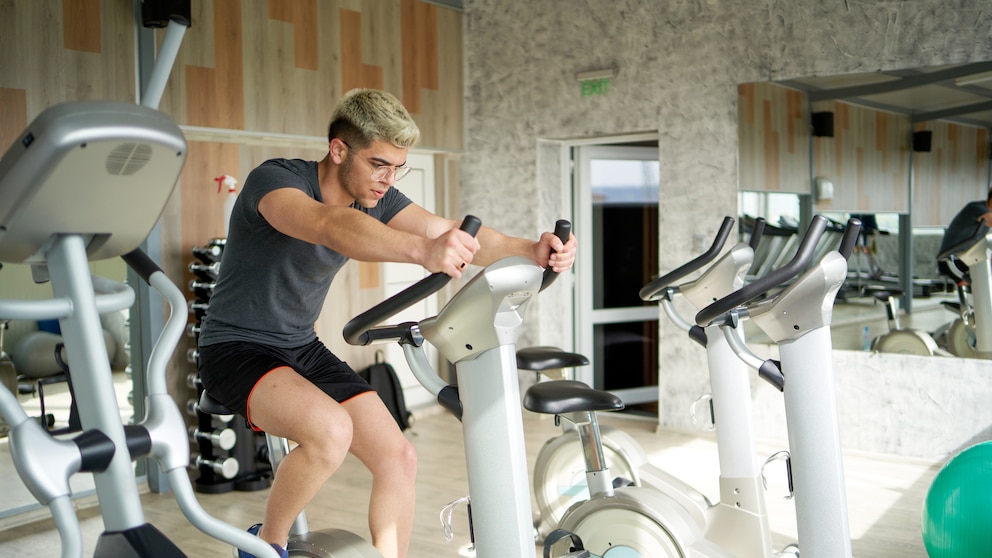
To this end, the scientists studied a small group of untrained individuals without pre-existing conditions. The eleven participating men and four women also had no regular exercise routine before. For the study, they completed a one-hour workout on a stationary bike. The intensity was moderate (65 percent aerobic capacity), so the participants could still converse during it.
Muscle Biopsy Revealed Afterburn Effect
Fifteen minutes after the one-hour training, researchers took tissue samples from the participants’ muscles and examined the mitochondria. The same was done again on the following rest days. The samples were individually examined and then compared with each other.
Mitochondria are referred to as the “powerhouses of the cells” and are crucial for energy production. The scientists could see that after the one-hour training, an afterburn effect occurred, which lasted up to 48 hours.
During this period, the mitochondria of the study participants burned 12 to 13 percent more fat-based fuel and 14 to 17 percent more sugar-based fuel. In other words, the participants’ cells showed a (though not drastically) increased energy expenditure up to two days after the training.1 After that, the benefits disappeared.

What’s Better: Treadmill or Outdoor Running?

Training These 4 Muscles Will Melt Away the Pounds
Regular Exercise Brings the Most
Even though the afterburn effect was not drastically increased according to the scientists, it was still remarkable. This study was the first to show the exact effect of just one hour of moderate exercise on untrained people.
“Regardless of which fuel the mitochondria used, the ability to burn the fuels slightly increased. It is very encouraging for people to realize that a single training session can have a health benefit,” explained study author Dr. Matt Robinson from the College of Public Health and Human Sciences at Oregon State University. At the same time, he emphasized that the benefits of a single hour of exercise would disappear after one or two days. “In the long term, you benefit from moving repeatedly and making it a regular habit.”2
Newer Studies Confirm the Effect
Meanwhile, the afterburn effect has also been confirmed by newer studies. A study published in April 2024 in the journal “Scientific Reports” with 21 untrained overweight men showed that high-intensity interval training triggers a stronger afterburn effect than moderate endurance training. Although both forms of training had a comparable calorie consumption, the oxygen consumption after the sport was higher in the HIIT sessions. At the same time, fat burning in the recovery phase also increased more significantly.3
A similar result was found in another study from 2025, published in the journal “Sports.” The researchers compared moderate endurance training with high-intensity interval training and high-intensity circuit training. Here too, the energy consumption remained elevated longer after intensive sessions than after moderate training. Both fat and carbohydrate burning were significantly increased 30 to 60 minutes after the workout. The scientists see this as further evidence that intense exertion particularly activates the metabolism and can drive calorie consumption even after exercise.4