


June 10, 2026, 6:26 pm | Read time: 4 minutes
Pilates is considered an aesthetic sport, strengthening muscles, reducing stress, improving body control, and increasing flexibility. However, anyone who tries it quickly realizes that the training is anything but effortless. Cheating or using momentum is not possible. Every movement is controlled and originates from the core. FITBOOK author and Pilates trainer Nina Ponath shows how you can start without prior knowledge–and why these five exercises below are your foundation for a new body awareness.
How to Get Started with Pilates for Beginners
When I open my Reformer Pilates studio in Hamburg in the morning, I often see people entering with a mix of euphoria, big dreams, and lots of motivation. They’ve heard that Pilates is good for the back, posture, and abs. And don’t the influencers in all those Instagram videos always look fit and enviably good? Naturally, that’s what you want too. At the same time, there’s often the fear of embarrassing oneself or even falling off the Reformer.
To alleviate this concern right away: Pilates is not a competition. It’s an invitation for your body to speak the language it has forgotten due to too much sitting in the office. You don’t need to be “fit enough” for Pilates first–you do Pilates to get fit.
The key is proper execution. Especially as beginners, we sometimes forget to actively engage the core. Then the lower back takes over, the neck tenses up, and the desired effect is lost. That’s why my approach for beginners is simple: Don’t focus on as many exercises as possible, but gradually increase and emphasize precise execution.
Also interesting: What exactly is Pilates–and which body parts are trained?
7 Effective Pilates Exercises for the Whole Body
Pilates: The 34 Traditional Exercises
5 Pilates Exercises for Beginners
Here are my five favorites that help you feel your core without overwhelming yourself.
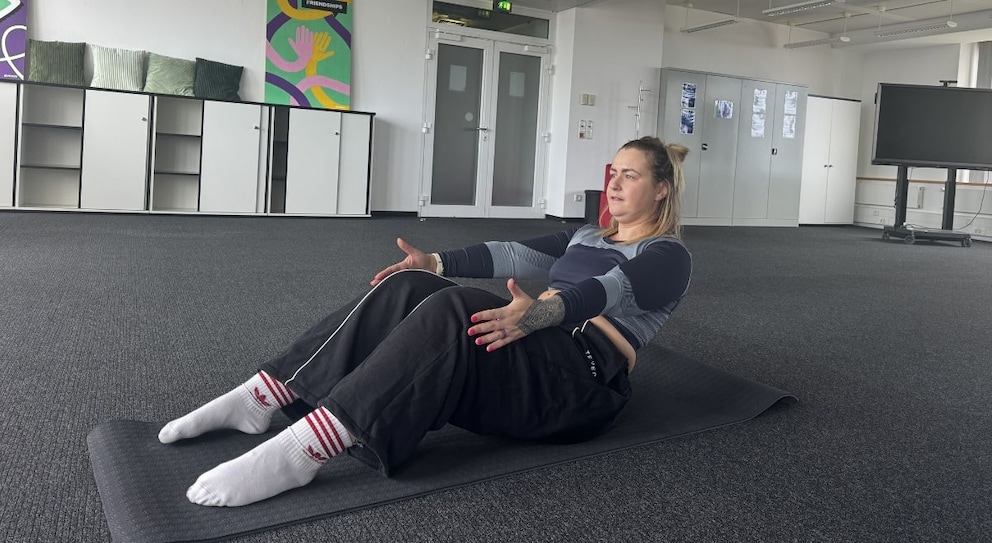
1. Half Roll Up
Purpose: It trains the rectus abdominis and promotes spinal flexibility.
How to do it: Sit upright with feet hip-width apart. Roll your pelvis backward until your spine forms a curve (a “C”). The abdomen pulls deeply inward–this is your “powerhouse.” Hold this tension for three deep breaths and then roll back up in a controlled manner.
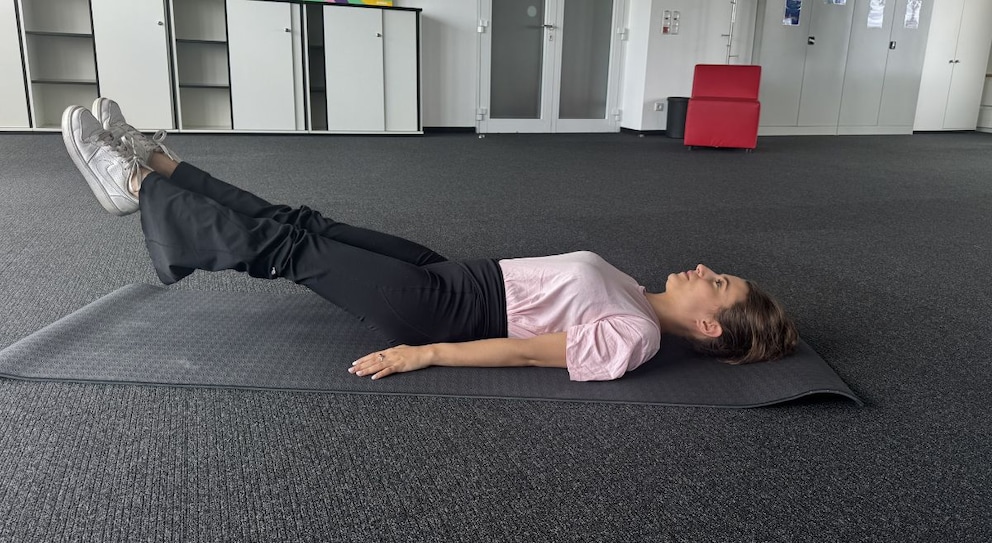
2. Lower & Lift
Purpose: Perfect for challenging the deep abdominal muscles without overloading the lower back.
How to do it: Lie on your back. Extend both legs vertically toward the ceiling and place your palms flat under your pelvis to support the lower back. Now lower both legs simultaneously–but only as far as your lower back remains firmly on the floor. As soon as you feel you’re arching your back, stop the movement. Then lift the legs back up in a controlled manner.
3. Back Leg Extension
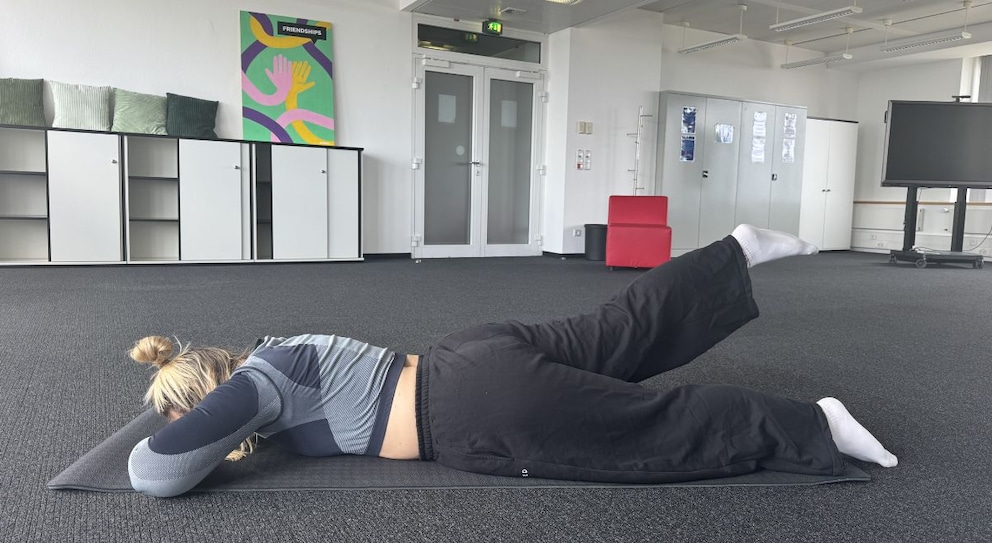
Purpose: Strengthens the entire backside, especially the glutes and lower back, and counteracts “desk shoulders.”
How to do it: Lie on your stomach and place your forehead on your hands. Tighten the glutes and lift one straight leg slightly off the ground–as if someone is gently pulling your foot. Hold the position for two seconds and then lower the leg back down in a controlled manner. Then switch sides.
4. Shoulder Bridge
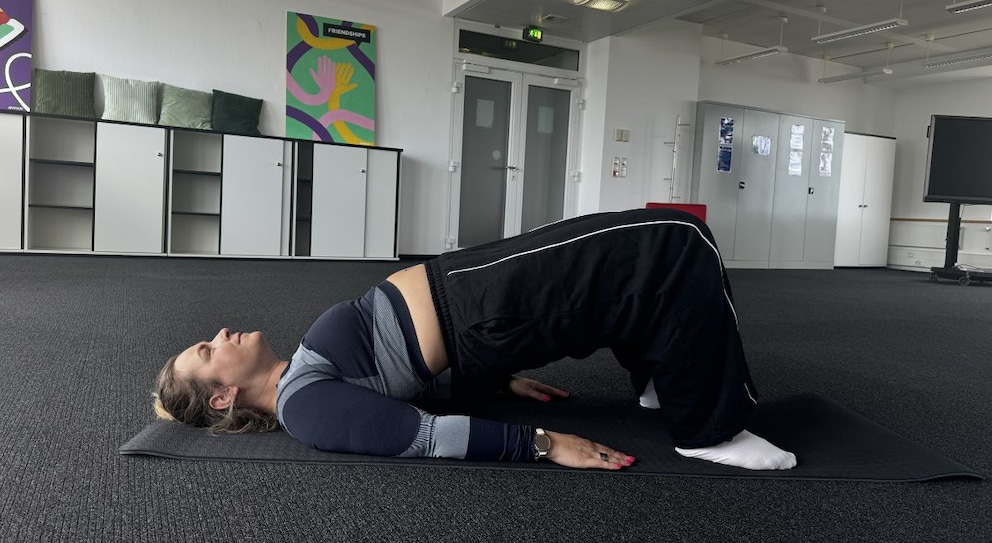
Purpose: Strengthens the glutes and hamstrings while gently mobilizing the spine.
How to do it: Lie on your back and place your feet on the ground. Slowly roll your pelvis up vertebra by vertebra until your body forms a diagonal line from knees to shoulders. Hold the position briefly, consciously tighten the glutes, and then roll back down vertebra by vertebra.
5. The Hundreds (Beginner Version)
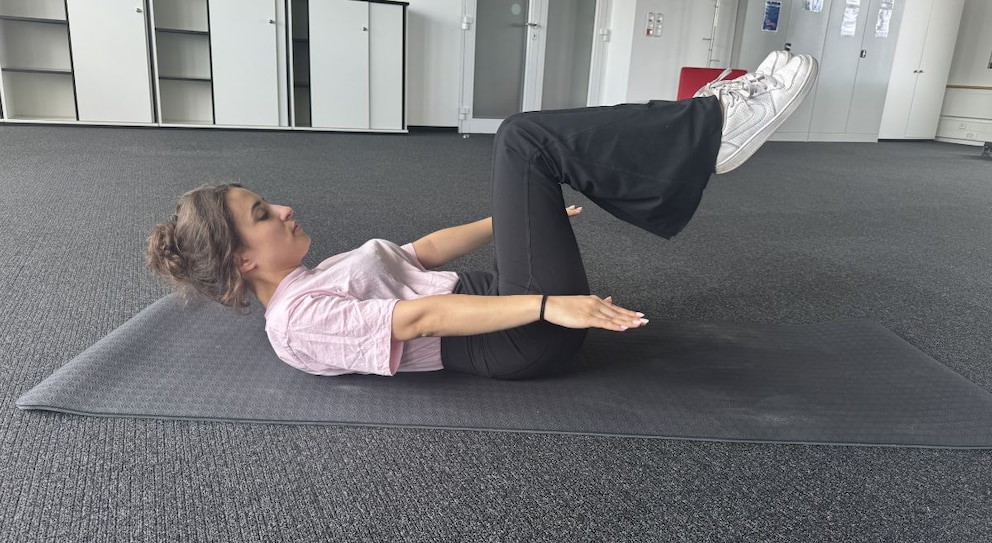
Purpose: The rhythmic breathing and arm movement immediately activate the powerhouse.
How to do it: Lie on your back and pull your knees to your chest. Lift your head and shoulders slightly and extend your arms parallel to the floor. Pump your arms with small, quick movements: five beats while inhaling, five beats while exhaling. If you feel confident, you can extend your legs slightly forward. The goal is a total of 100 beats.
Just Get Started
If you start with these five exercises today, that’s already a big success. Pilates is a process. It’s not about doing everything perfectly from the start, but about investing the first conscious breath into the movement.
My tip: Take ten minutes daily. The real magic doesn’t happen in the 60-minute power session, but through the regularity and consistency with which you focus on your core. Enjoy trying it out! You’ll notice how your body says “thank you” after a short time.