

January 15, 2026, 9:24 am | Read time: 3 minutes
Abductors provide stability with every step. Despite their crucial role for the hip and leg axis, they are often neglected in strength training–especially runners should focus on strengthening this muscle group. FITBOOK explains how to use the machine correctly and why strong abductors are so important.
Follow the FITBOOK channel on WhatsApp now!
The Correct Execution
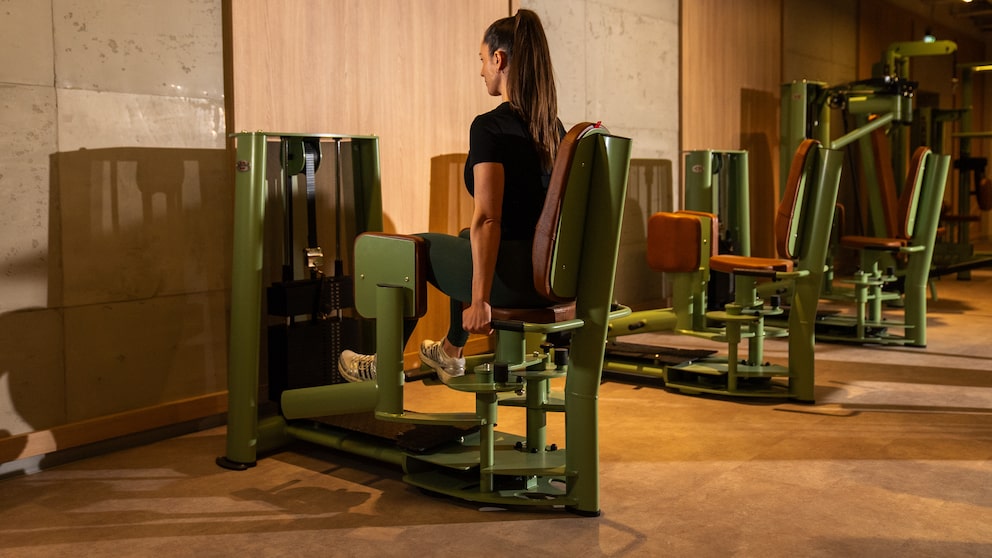
Assume Position
- The back should always be in a straight position, and the buttocks far back on the seat.
- If the backrest can be adjusted, you can choose between an upright or slightly reclined position.
- Upright – targets the gluteus maximus more
- Reclined – targets the gluteus medius more
Movement Process
- The movement is initiated from the hip in a controlled manner by slowly moving the legs outward against the machine’s resistance. The force comes specifically from the outer thigh and hip muscles, without momentum or jerky movements.
- In the end position, the legs are spread as far apart as possible without arching the back or tilting the pelvis. Maintain the muscle tension for a moment.
- Then slowly and controlled, bring the legs back inward until the starting position is reached. Even in the backward movement, maintain muscle tension; do not fully rest the weights.
- Breathe calmly and evenly throughout the exercise: exhale when spreading the legs, inhale when returning to the starting position. Keep the upper body stable, and the back in an upright, neutral position.
Why Everyone Should Train Abductors
The abductor machine is a classic in the gym–and rightly so. Abductors play a crucial role in stabilizing the hip during single-leg loads. Whether walking, climbing stairs, running, or making quick directional changes, they ensure the pelvis doesn’t drop sideways and the leg axis remains stable.
If the abductors are not sufficiently trained, the body’s statics begin to tilt–the pelvis drops, the knee collapses inward, and each step requires more control than necessary. A study shows how effective abductor training is in improving this faulty mechanics.1 After just eight weeks, a reduced pelvic drop and a more stable knee trajectory can be measured–providing prevention for future issues.
Also interesting: 5 simple exercises without equipment to stretch the hip
Runners Benefit Especially
Half of all runners regularly struggle with issues.2 A common, underestimated factor is weak abductors. Runners are particularly prone to injury when their abductors develop less strength compared to their adductors–an imbalance that affects the stability of the pelvis and leg axis with every step.3