

October 15, 2026, 6:49 pm | Read time: 4 minutes
When a Romanian weightlifting coach introduced a new variation of the deadlift to his American colleagues in 1990, they took notice. What began as a modification of the classic deadlift is now one of the most popular strength exercises: the Romanian deadlift.
Follow the FITBOOK channel on WhatsApp now!
Better than the “normal” deadlift?
Even though it might not seem like it, the Romanian deadlift and the conventional deadlift differ fundamentally. What sets the Romanian variation apart or makes it advantageous is explained below:
- Focus on glutes, hamstrings, and lower back: Since the knees remain only slightly bent during the Romanian deadlift, the load shifts primarily to the glutes, hamstrings, and lower back. In the classic deadlift, the stronger knee bend also engages the muscles at the front of the thighs more.1
- Continuous muscle tension: In the classic deadlift, each repetition starts from the floor, causing a brief loss of tension between reps. In the Romanian deadlift, however, the barbell remains in the air, ensuring continuous muscle tension throughout the set.
- Strong stretch: The Romanian deadlift involves lowering the barbell slowly and in a controlled manner, which significantly stretches the hamstrings. This combination of stretch and load is considered a particularly effective training stimulus for muscle growth.2
- Less fatigue with similar training effect: The classic deadlift often involves lifting very heavy weights, which not only challenges the muscles but also strains the entire body. The Romanian deadlift allows for intense training of the target muscles in the glutes and hamstrings with slightly lighter weights, leading to less exhaustion.
How to perform it correctly
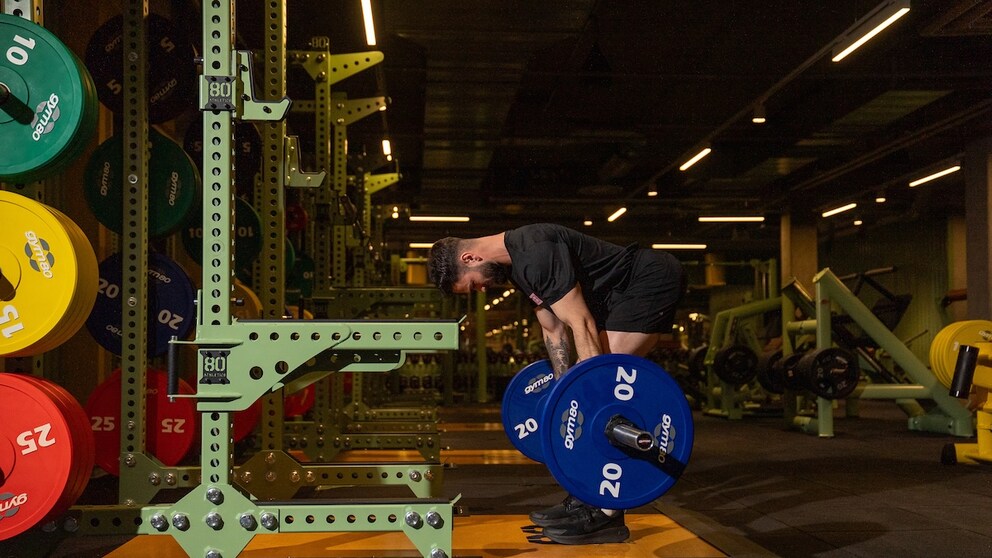
First, get into the starting position: Stand with your feet hip-width apart and point your toes forward. Grip the barbell slightly wider than hip-width with an overhand grip, keeping your arms straight. Pull your shoulders slightly back and down, lift your chest, and straighten your upper body. This creates a stable starting position for the exercise.
Eccentric Phase – Downward Movement
Push your hips back in a controlled manner as if you were trying to close a door with your butt. Keep your knees slightly bent and move them only a little. Lower the barbell close to your body, guiding it as close as possible to your thighs and shins. This helps execute the movement in a controlled way and minimizes strain on the lower back. Keep your spine neutral and straight throughout the movement.
Lower the weight in a controlled manner until you feel a significant stretch in the back of your thighs and glutes. For most trainees, the barbell will be about mid-shin height. Important: The barbell is not placed on the ground but remains in the air throughout the exercise.
Concentric Phase – Upward Movement
Push your hips forward in a controlled manner and straighten your upper body. The movement should originate from the glutes and the back of the thighs. Actively engage these muscles until you are standing upright again. Avoid overextending your back. Keep the bar close to your body as you rise.
Which muscles are trained?
The exercise primarily targets the posterior chain, including the glutes (gluteus maximus), hamstrings, and the erector spinae in the lower back. Since the knees remain only slightly bent during the Romanian deadlift, the focus is on these muscle groups. The front of the thighs primarily assists.
Proper Execution of Deadlifts With a Barbell

Squats or Deadlifts: Which Strength Exercise Is Better for You
Avoid these common mistakes
- Rounded back: Keep your back straight throughout the movement and avoid rounding your lower back.
- Barbell too far from the body: Keep the bar as close as possible to your thighs and shins.
- Excessive knee bending: Keep your knees only slightly bent. The movement should primarily come from the hips.
- Setting the barbell on the ground: Unlike the classic deadlift, the barbell remains in the air during the set.
- Overextending the back at the end: Stand up without pushing your hips too far forward or arching your back.
- Lowering too far: Go down only as far as you can keep your back straight and feel a stretch in the hamstrings.
Also interesting: What a certain fruit juice can do after exercise
Why “Romanian”?
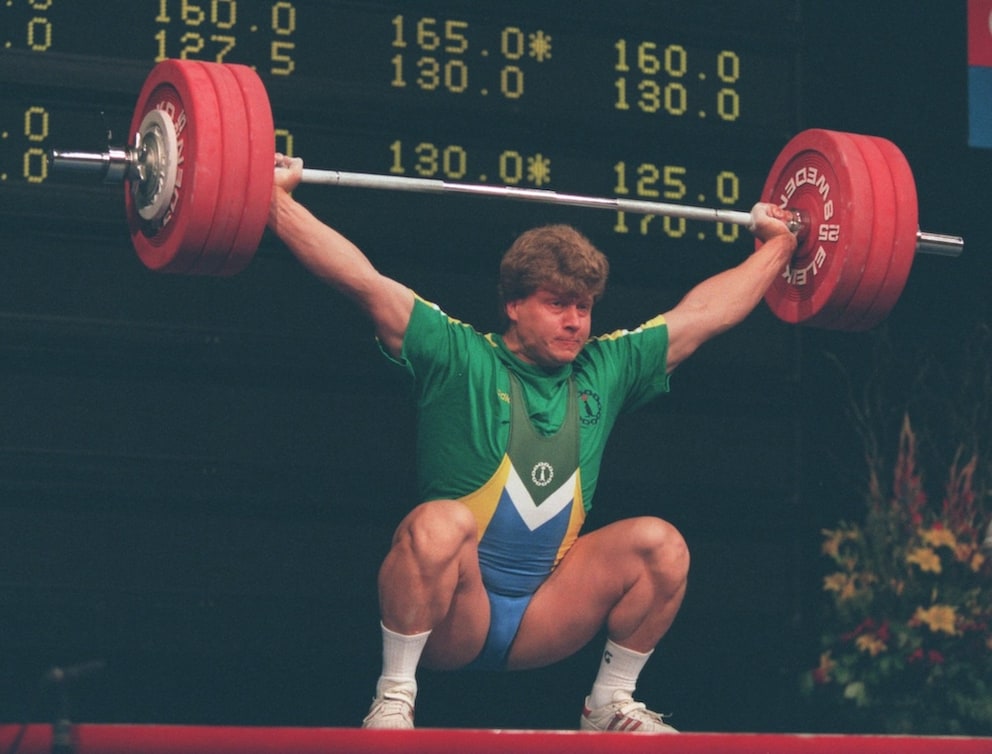
The term “Romanian” deadlift traces back to Romanian weightlifter Nicu Vlad. According to legend, Vlad was invited by the U.S. weightlifting team to San Francisco in 1990 to conduct a seminar.3 There, he demonstrated the exercise, which reportedly impressed the Americans. One of the participants later recounted the story to an industry magazine, which also recognized the exercise’s potential. Consequently, the Romanian deadlift spread internationally and became a standard in gyms worldwide.