

September 14, 2025, 3:03 pm | Read time: 5 minutes
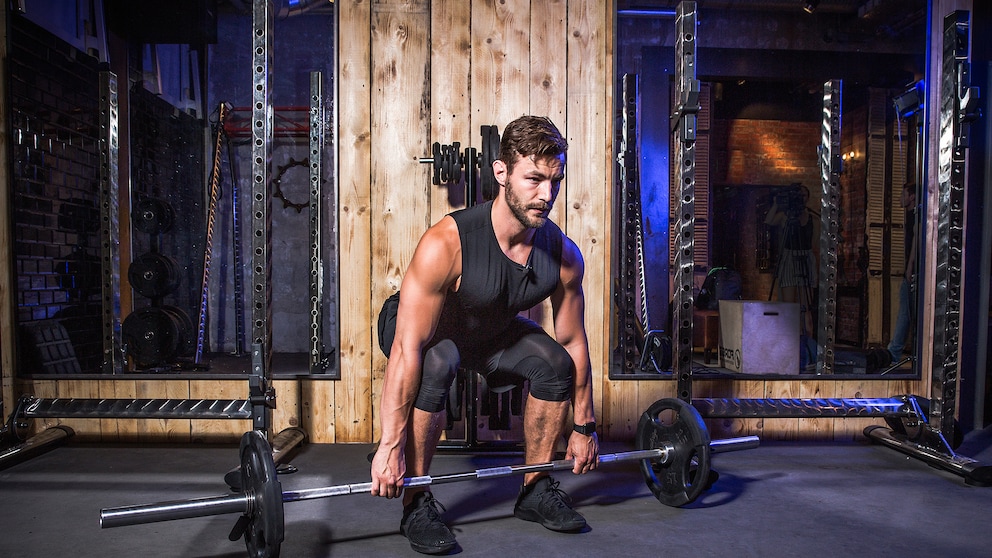
Deadlifting with a barbell trains a variety of muscles simultaneously. However, the exercise is technically more demanding than it might seem at first glance. Peloton trainer Erik Jäger demonstrates in a video tutorial how to perform deadlifts perfectly.
Follow the FITBOOK channel on WhatsApp now!
Muscles Engaged in Barbell Deadlifting (Deadlift)
Romanian deadlifting, also known by its English name deadlift, essentially simulates lifting an object from the ground with a barbell. It also trains many stabilizing and supporting muscles that we use in everyday life and can–when performed correctly–prevent many injuries. Technically, barbell deadlifting or deadlifting is a very demanding exercise–you can learn the correct execution in the video above.
The deadlift is an effective full-body exercise. This term is used when many muscles are engaged simultaneously. The advantages are clear: On one hand, you can save a lot of time during training; on the other hand, the exercise trains the interaction of several muscle groups at once–which also benefits functional fitness in everyday life (lifting, carrying, sitting). In particular, the core muscles (stabilizing muscles), as well as the legs and glutes, are trained during barbell deadlifting. Advanced athletes who use more weight also challenge the neck and forearm muscles with the deadlift.
Also interesting: How many repetitions ensure optimal muscle growth?
Barbell Deadlifting (Deadlift)–Correct Execution in 3 Steps
The Starting Position
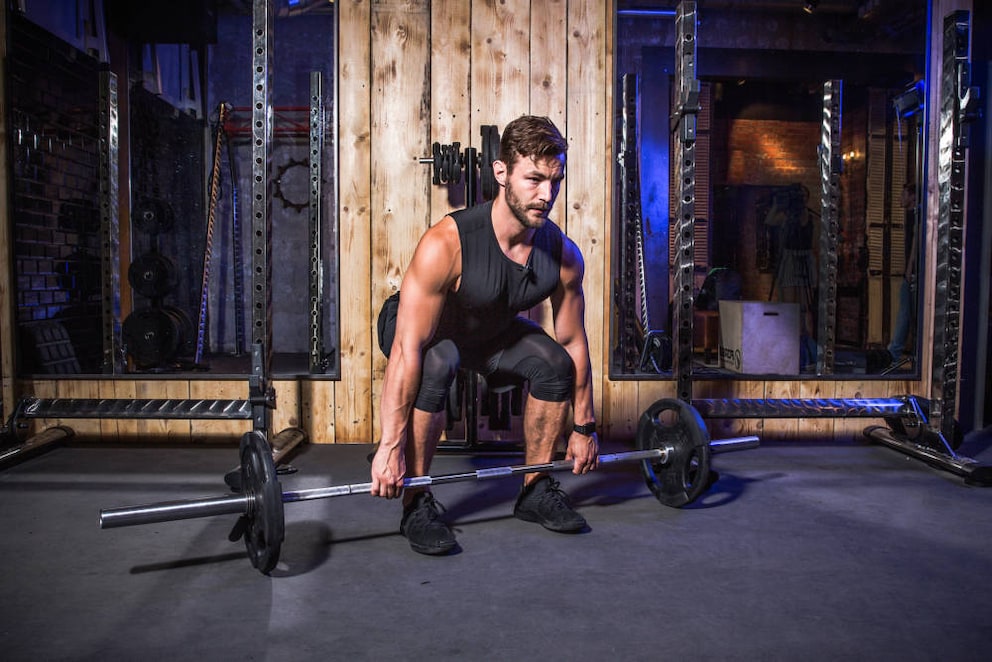
Stand shoulder-width apart directly in front of a barbell, with your shins almost touching the bar. Now open your hips (stick your buttocks out), bend forward with a straight back until you can grip the bar outside your knees with both hands, and take a deep breath. Correct your posture if necessary: keep your back straight, push your chest out, and pull your shoulders back.
Also interesting: Training according to the “Push-Pull” principle–here’s how it works
The Lift
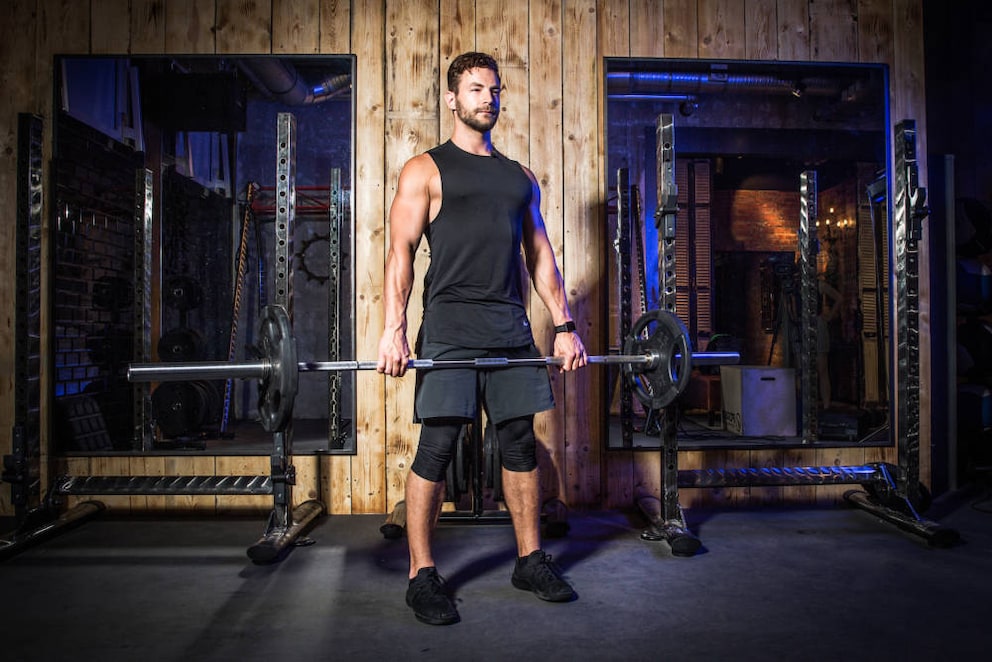
Maintain core tension and push the weight up with a straight back using your legs. The bar moves close to the shins and stops above the knees. To achieve a neutral stance (important!), bring your hips forward to the bar. The glutes should be tight, and the shoulder blades pulled back. This ensures that the core is stable and the spine is in a neutral position.
Also interesting: Nine-year-old breaks record with 111 kilos in deadlifting!
Lowering the Weight
Exhale calmly, take another breath, and prepare to lower the weight. Stick your buttocks out, bend forward with a straight back. Guide the barbell along your thighs toward the ground. When you reach your shins, reverse the movement. Always push your knees slightly outward and keep your back straight.
Squats or Deadlifts: Which Strength Exercise Is Better for You
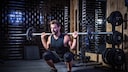
With back squats, you can really kickstart calorie burning.
4 Common Mistakes to Avoid in Deadlifting
- Don’t lift the weight with your back. Even though the exercise is called deadlifting, the power comes primarily from the legs. The core only works to stabilize and ensure a straight position of the spine. Imagine pushing your feet into the ground with all your strength. This automatically activates the correct leg muscles.
- Deadlifting is not squatting! Many people perform almost a squat during deadlifting and bend their knees too much. The movement should be controlled from the hips, and the knees should only be slightly bent.
- Don’t round your back. If you can’t bend forward with a straight back and only slightly bent knees, you should regularly stretch your hamstrings. If these are tight, the body quickly falls into compensatory positions during the deadlift. Often, the back becomes slightly rounded, significantly increasing the risk of injury.
- Don’t bend your arms! They should always be straight, and the shoulder blades pulled back.
More Useful Tips from Personal Trainer Erik Jäger
- Beginners should initially practice the deadlift without additional weight and only with the bar to learn the movements. Once you can do twelve clean repetitions, start with five kilograms per side and gradually increase.
- To make it easier to get into the correct starting position, place the ends of the bar on an elevation (such as a stepper or stacked weight plates). This makes it easier to keep your back straight!
- More than twelve repetitions are not recommended at the beginning, as concentration often wanes and technical errors creep in.
- Besides the classic deadlift (our example), there are many other deadlift variations: placing the weight on the ground, in a straight position (Romanian deadlift), or with the trap bar–a usually hexagonal tool (hence also called hex bar), with two or three grips. Each of these variations resembles the classic deadlift, but with slight changes in execution, the training focus shifts slightly. You shouldn’t get bored with deadlifting anytime soon.