



September 29, 2025, 5:55 am | Read time: 4 minutes
So-called recovery boots use air pressure chambers to massage the legs, which is supposed to speed up recovery. FITBOOK examined the studies on the promised effects and tested Reboots.
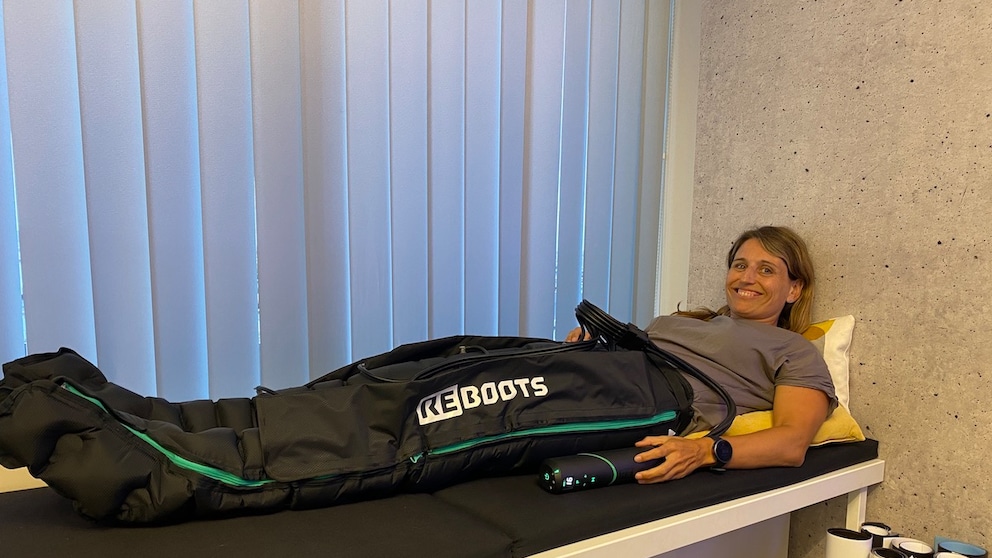
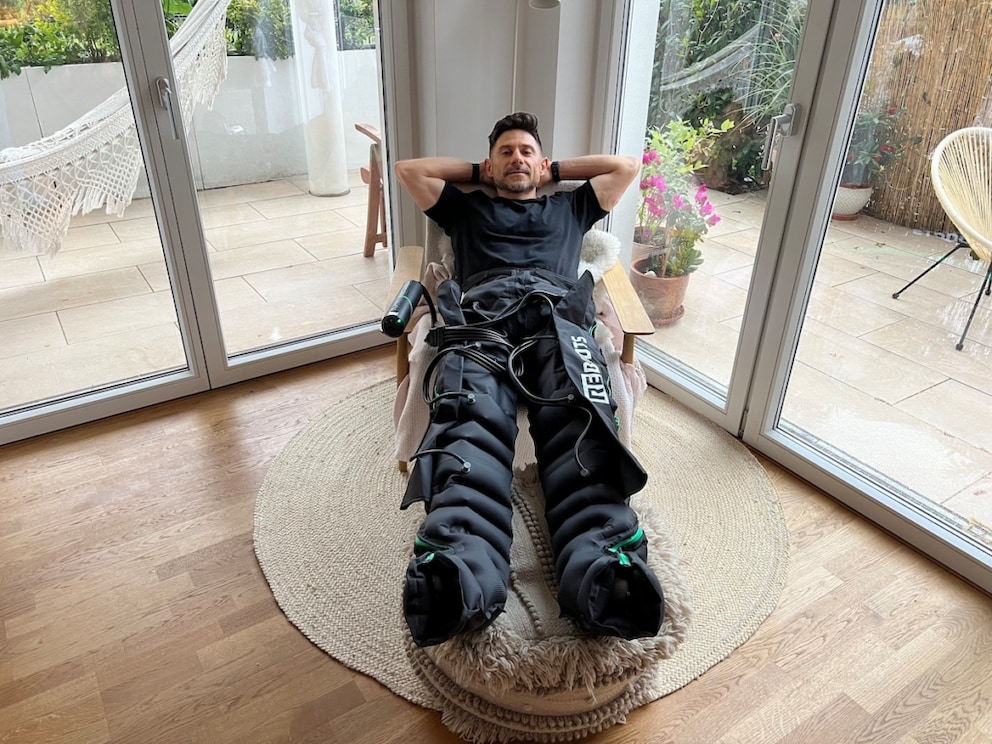
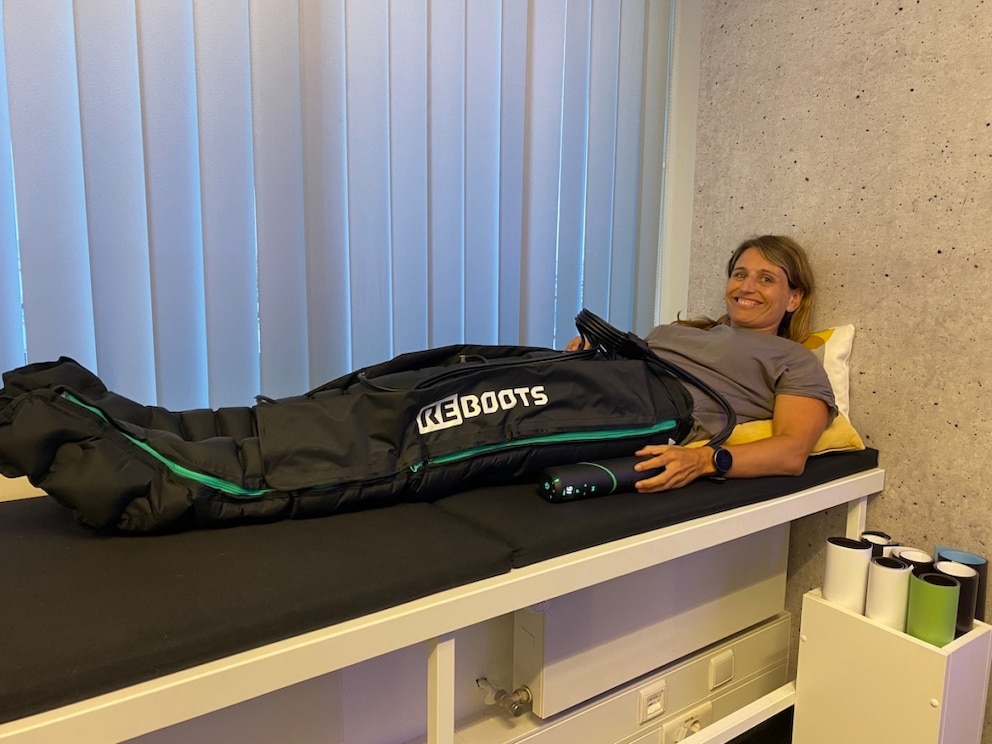
If you follow professional athletes on social media, you’ve probably seen them more than once: so-called recovery boots. These are the thick compression boots or pants that resemble space suits, in which athletes relax on the couch after a strenuous workout or competition. Wearing the boots is supposed to speed up recovery and thus help improve performance. How this is supposed to work and whether there is scientific evidence, you can read here. Additionally, FITBOOK tested the “Go Lite Pants” model from the leading brand Reboots and reports on the experience.
Overview
What Are Reboots and How Do They Work?
A good and especially fast recovery after a hard workout or competition is important to improve athletic performance. This is crucial for professional athletes, but also interesting for ambitious hobby athletes. Various factors can contribute to effective recovery, such as light cycling and stretching after a workout, quickly replenishing energy stores with proteins, carbohydrates, and other essential nutrients, staying hydrated, massages, sauna, or an ice bath. An innovative recovery option is massage stockings, also known as recovery boots. The mechanical massage of these boots is supposed to contribute to a performance-enhancing recovery phase.
Compression boots like the models from Reboots are supposed to—similar to sports massages—loosen muscles and remove metabolic waste products to reduce inflammation risk or shorten recovery time. Recovery boots consist of various air chambers and inflate at different intervals depending on the program. The pressure generated promotes blood flow, which is supposed to help transport oxygen and nutrients more effectively to cells and tissues. Depending on the device, there are different programs that vary in the level of pressure applied and the type of chamber filling (sequential and wave-like).
What Reboots Offer–According to Studies
The focus of science has so far been on the promised faster recovery and prevention of muscle soreness through Reboots. For example, researchers analyzed in a 2013 study after a so-called Wingate test—an ergometer test where maximum effort is exerted for 30 seconds to determine anaerobic performance—the lactate development.1 Wearing the recovery boots showed a faster breakdown of lactic acid and thus faster recovery.
In a study published in 2020, 52 basketball and handball players followed a specific recovery protocol after competition that included recovery boots (IPC, short for “Intermittent Pneumatic Compression”) and cold water immersion (CWI).2 The recovery boots were inflated for 20 minutes (sequential pressure: 200 mmHg), and CWI was applied for twelve minutes at twelve degrees. Thanks to this combination, the athletes were able to maintain recovery, pain perception, and hydration status during a tight competition schedule, according to the scientists. Due to the anti-inflammatory and muscle-recovery mechanisms, IPC can also be used in treating delayed-onset muscle soreness.
Also interesting: What Is More Effective for Recovery–Rest Day or Active Recovery?

Tested! Lidl’s Crivit “Carbonlite 1.0” in the Recreational Runner Review

7 Days of Hyrox: My Introduction to the Trend Sport
Reboots Experience: FITBOOK Tested Recovery Boots
Reboots Experience, Part 1
Reboots Experience, Part 2
What Do Reboots Cost and Are There Alternatives?
Depending on the model, Reboots cost between 449 euros (Go Lite Boots) and a hefty 2,199 euros (One Pro Pants). The latter scores with multiple overlapping chambers that allow for faster massage and additional features like personalization and smart control. A massive product that is probably more suitable for stationary use, such as for professional athletes in a training center or a rehabilitation clinic. Hobby athletes are likely well-served with the “Go” or “Go Lite” variants.
Besides Reboots, there are, of course, other providers specializing in recovery tools, including recovery boots. These include Blackroll (Compression Boots for 499 euros), Compex (Compex Ayre for 649 euros), or Pulsio (Pulsio Compression for 712 euros).
Which price category is sensible depends heavily on individual needs. A product comparison of an offer from one provider or between providers is worthwhile. Also, checking a price comparison portal or waiting for discount events like Black Week, etc., can often save several hundred euros.
Sources