

January 21, 2026, 11:28 am | Read time: 3 minutes
Lunges are simple and can be done anywhere—and they’re also versatile. Even slight modifications to the exercise can engage additional muscles. For example, side lunges specifically target the inner thighs.
Whether in a home gym or at the fitness studio, side lunges can be easily integrated into any workout and intensified with the addition of weights. However, proper execution is crucial to target the right muscles and avoid injuries.
Overview
Muscles Trained with Side Lunges
Just like traditional lunges, the side variation targets the front thighs and glutes. Additionally, it primarily engages the adductors, or the inner thighs, supported by the hamstrings, or the back of the thighs.
Benefits of Side Lunges
This exercise strengthens and stretches the inner thighs simultaneously. Moreover, side lunges are easy to perform and have a low risk of injury since they are done with body weight.

What Lateral Squats Train and How to Do Them Correctly

7 Effective Exercises for the Glute Muscles
How to Perform Side Lunges Correctly
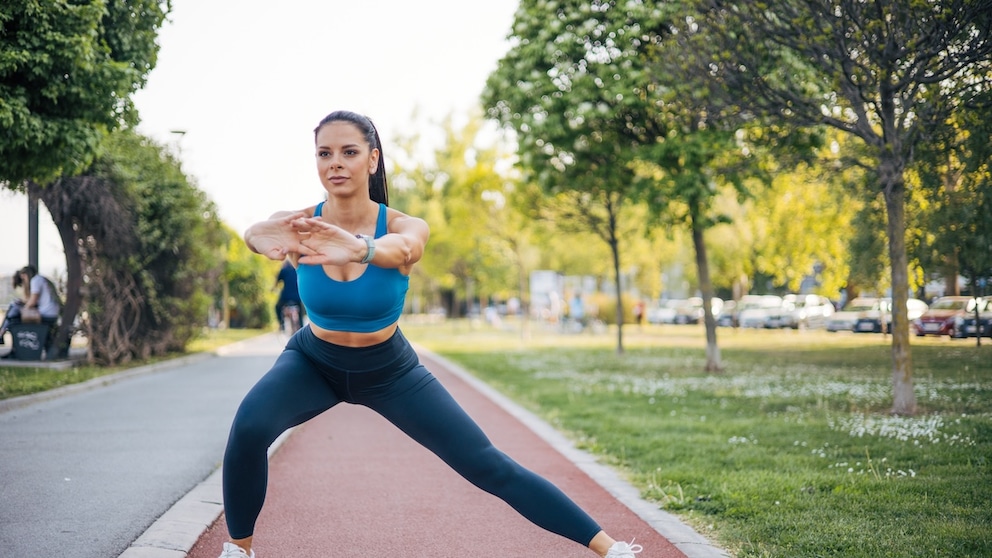
Start with a hip-width stance, keep your torso straight, and lean slightly forward. Your lower back should form a slight arch. Hands can be held in front of the chest or placed on the hips. Keep your gaze forward and your core engaged throughout the exercise.
Now take a wide step to the side with your left foot, keeping the leg aligned with your body. Bend the left knee and move your body in the same direction until you reach a 90-degree angle. The right leg remains straight. Push back up from the left heel without lifting the foot off the ground. Move to the right side, bending the knee and performing the side lunge.
You can vary the exercise by returning completely to the starting position. This means after performing the lunge, push up from the heel and return to a hip-width stance. Then repeat the process on the other side.
Mistakes to Avoid
Many confuse side lunges with lateral squats. While both bodyweight exercises are similar in movement, the difference with lateral squats is that you remain in the lowest position and shift from right to left and vice versa. In side lunges, you stand up before lowering into the one-sided squat again.
In side lunges, ensure your back remains straight, even if slightly leaned forward. Also, when bending the knee, do not let it extend beyond the toes. It’s important to stabilize it sufficiently to prevent it from collapsing inward or outward.
During the bend, it’s common for the heel to lift off the ground, but this should be avoided. Keep the entire foot on the ground throughout the exercise.