

July 8, 2026, 10:01 am | Read time: 5 minutes
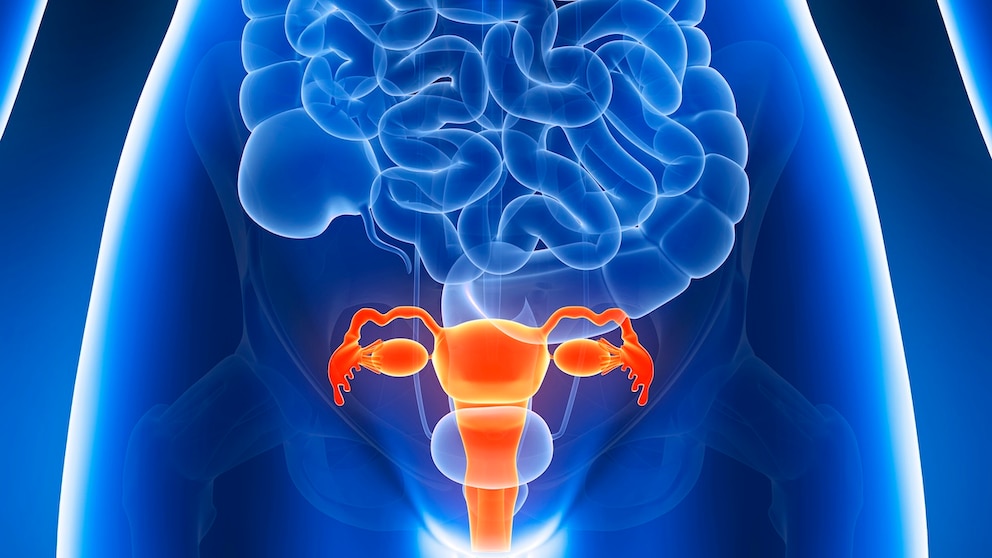
Endometriosis is one of the most common gynecological conditions—yet it often takes many years to diagnose. A new study now shows that women with endometriosis differ significantly from healthy women based on certain hormones in the blood. The findings could eventually help make the condition easier to diagnose and provide new insights into the disease’s development. FITBOOK spoke with one of the study’s authors, Dr. Douglas Gibson from the University of Edinburgh, about this.
Notable Hormonal Changes in Endometriosis
The researchers found that the hormone composition in the blood of women with endometriosis differs significantly from that of healthy women. Particularly notable were the so-called 11-oxygenated androgens. These are hormones primarily produced in the adrenal glands. Although androgens are often referred to as male sex hormones, they naturally occur in women and perform important functions.
Especially the hormone 11-ketotestosterone was elevated in women with endometriosis—regardless of how advanced the condition was. Using several of these hormone levels, the scientists developed a model that could distinguish women with endometriosis from healthy women with high accuracy. The results suggest that these hormones could form the basis for a blood test to diagnose endometriosis in the future.
A major advantage: Unlike many other hormones, these levels hardly fluctuate over the course of the monthly cycle. This makes the results particularly reliable. The hormone pattern is so specific that it can even distinguish endometriosis from other hormonal disorders such as polycystic ovary syndrome (PCOS).
How the Researchers Proceeded–159 Participants with Endometriosis
For the study, the scientists analyzed blood samples from 216 premenopausal women. Endometriosis was confirmed in 159 participants through laparoscopy, while 57 women without endometriosis served as a comparison group. Using a very precise laboratory method, the scientists determined various hormone levels and then examined whether typical differences between the two groups could be identified.1
Endometriosis is a chronic condition where tissue similar to the uterine lining grows outside the uterus. It can cause severe pain, inflammation, and fertility issues. While the role of estrogens is well-researched, little is known about other hormones. Therefore, the researchers focused on androgens, often labeled as male sex hormones, which also play important roles in women.
Further Study Results in Detail
The blood tests showed that the hormone composition in women with endometriosis differed significantly from that of healthy women. Among other things, the levels of hormones such as dehydroepiandrosterone (DHEA), androstenedione, and testosterone were elevated.
The changes were particularly pronounced in the so-called 11-oxygenated androgens. While some of these hormones were present in lower amounts, 11-ketotestosterone was especially elevated. This hormone acts similarly to testosterone and was detectable even in the early stages of the disease.
The researchers then examined whether these changes could be used for diagnosis. Even individual hormone levels could distinguish women with and without endometriosis quite well. However, the highest accuracy was achieved with a model that combined several measurements. In an additional evaluation, more than 95 percent of women with endometriosis were correctly identified.
The researchers themselves were surprised by this result. “We were surprised to see such a significant finding related to adrenal androgens,” explains study author Dr. Douglas Gibson. It was particularly remarkable that “11-ketotestosterone was significantly elevated in endometriosis.” Since endometriosis has so far been considered primarily an estrogen-driven disease, research has mainly focused on the ovaries.
Test Could Also Work While Taking the Pill
Another key point: The hormone levels are apparently not affected by taking the pill. Patients would not need to interrupt their hormonal treatment for the test.
This disease increases the risk of diabetes by 46 percent

This Is the Biological Reason Why Women and Men Perceive Pain Differently
What This Specifically Means
The results suggest that in addition to estrogens, androgens from the adrenal cortex could also play an important role in endometriosis. According to the authors, this could eventually pave the way for a blood test to diagnose the condition. However, before such a test can actually be used, the results need to be confirmed in further studies.
Whether the altered hormone levels contribute to the development of the condition or are merely a consequence remains unclear. In the long term, they could also provide new starting points for the development of targeted therapies.
The researchers are currently testing the results in a larger patient group. If the findings are confirmed, a blood test could be developed relatively quickly, according to the researcher. “Depending on the health system and regulatory requirements, this could be possible within a few years,” says Gibson.
Study Assessment and Possible Limitations
The strengths of the study include the precise determination of hormone levels, the confirmed endometriosis diagnosis of all participants, and the validation of the prediction model on an independent dataset.
However, the study also has limitations. It only shows a correlation between endometriosis and altered hormone levels but cannot clarify whether these changes cause the condition or result from it. It is important to note that the researchers calculated the activity of the involved enzymes indirectly but have not yet measured it directly in the tissue. Additionally, the study predominantly involved women from Europe, so it is unclear whether the results are transferable to other populations.
Even though the developed models achieved high accuracy, further studies with larger and independent participant groups are necessary. Only then can it be determined whether the hormone markers are suitable for a blood test in clinical practice.