


January 6, 2026, 3:17 am | Read time: 8 minutes
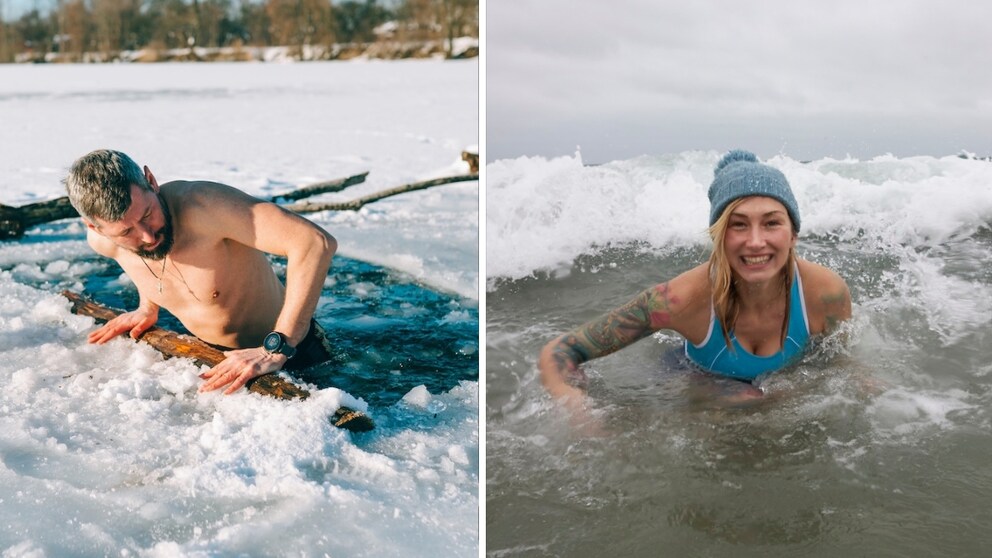
For recovery after intense training and to promote health, ice baths have been trending for years. But do all people benefit from “cold therapy”? Studies and experts increasingly suggest that women react differently to ice bathing than men. FITBOOK explains the current state of knowledge.
Wim Hof is probably one of the most famous advocates of ice bathing for health promotion. And cold therapy has long been embraced in professional sports. Fans will recall the ice tub images of various soccer players. More and more people are trying the ice bathing trend. However, research on the actual effects of this “icy pleasure” is still in its infancy. There is scientific evidence that cold therapy positively affects blood pressure, the immune system, hormones, the cardiovascular system, and metabolism, can alleviate inflammatory diseases, benefit mental health, and promote recovery after sports.1,2,3,4 But there are also studies that could not confirm positive effects or even refuted them. And: Indicators are accumulating that the potential benefits may apply more to men than to women.
Body Reaction to Cold
When we get (too) cold, it’s stressful for our body because it has to maintain our body temperature. That’s why blood vessels constrict in the cold, minimizing energy loss. Blood circulation changes, focusing on vital organs. Muscles contract, causing the typical shivering and trembling—muscular micro-movements that help maintain or increase body temperature.5
This reaction to dropping outside temperatures is fundamentally the same for all people. And this stress response of the body to cold is the mechanism through which ice baths are supposed to be health-promoting. Just like exercise is a healthy stressor.
Women React to Cold Earlier Than Men
Thus, it would only be logical that cold therapy is equally effective for men and women. But it’s not just an everyday myth that women react differently—namely earlier—to cold than men. This is confirmed by a study from 2018 that compared 43 healthy individuals aged 16 to 35 (20 men and 23 women). The women’s cycle phases were considered to account for hormonal effects.6
Women began shivering at higher temperatures on average than men. While 65 percent of women shivered at 11.3°C, only 25 percent of men did. The subjective feeling of cold also set in earlier for women: They perceived the temperature as “colder than neutral” from 22.1°C and “cool” from 18.3°C. Men felt these sensations much later—at 20.3°C and 14.6°C, respectively.
Additionally, women felt more uncomfortable during the entire cold exposure than men and rated their intensity of chills significantly higher. Skin temperatures differed only partially depending on the measurement site. At the end of the cooling protocols, hand temperature was lower in women than in men. Even though subjective warmth perception showed individual differences within a gender and the ratio of body surface to body mass played a role, the study results clearly show that gender influences how early someone reacts to cold and how strongly.
In summary, women generally feel the cold faster and begin to shiver sooner. But does the female body also react differently to ice bathing or cold therapy?
Also interesting: The Mistake Many Make After the Sauna
Ice Bathing May Be Bad for Women’s Fertility
Chinese researchers explored this question in a study published in 2025. They conducted experiments on mice to investigate the possible influence of cold exposure on hormones and fertility.7 Although many steps remain between the significance of animal studies and evidence of effects in humans, the Chinese study provides remarkable clues that should be further researched.
The scientists used ten mice; five formed the study group, and five the control group. Over 21 days, they conducted daily six-minute ice baths with 4°C cold water on the mice in the first group. The control group was not exposed to cold. To determine the effect of cold therapy, the scientists recorded the mice’s body weight. At the end of the study, they took blood samples and tissue samples from the uterus and ovaries, as well as abdominal fluid. They also analyzed the levels of important sex hormones.
It was found that cold exposure led to biological changes in the female animals. The cold-exposed animals gained weight, and the levels of sex hormones increased, which the researchers interpreted as a sign of hormonal dysregulation. Changes in genes were detected in the uterus and ovaries, particularly affecting pathways linked to inflammatory processes. The abdominal fluid also contained signs of inflammation.
Simply put, cold therapy apparently triggered inflammatory reactions in the reproductive organs of the female test animals. Applied to women, this could mean that ice bathing poses a risk of disrupting cycles and fertility and potentially promoting gynecological conditions like endometriosis.
Ice Bathing and Recovery After Sports
It is not only the previously mentioned soccer players who rely on cold after intense physical exertion to prevent sore muscles and promote recovery. The practice has also become established in other sports, for both men and women. During the Women’s Soccer World Cup, the players of the German team used the ice tub as a recovery tool.8
Professional sports experts seem convinced of the effect. But it is not scientifically proven beyond doubt. This also applies specifically to the effect on women. A study published in 2025 indicated that cold therapy had no impact on recovery in women.9
The study included 30 healthy, physically active female participants with an average age of 23. They were randomly divided into three groups. One group bathed in cold water, the second group received a warm bath, and the third group rested (control group). The intervention took place for ten minutes immediately after an intense sports session and again 20 minutes later. Subsequently, various physiological parameters (muscle oxygen saturation, skin and core body temperature, heart rate) and recovery markers (isometric maximum strength, muscle swelling via ultrasound, subjective muscle soreness) were measured at several time points up to 72 hours after training.
The results for the hoped-for effect of cold therapy were sobering. None of the markers developed more positively with cold baths than with warm baths, and even compared to pure rest time, no significantly better recovery effects were observed.

Ice bathing burns bad body fat

The Mistake Many People Make After the Sauna
What Happens During Ice Bathing for Women—According to an Expert
Dr. Stacy Sims, a sports physiologist and nutrition scientist, is among the women’s fitness experts who consistently advise women against ice bathing in interviews or at least aim to set realistic expectations.10 In November 2025, she also published a report on her website titled “Cold Plunging for Women: Why Colder Isn’t Always Better.”
In evaluating the effectiveness of ice baths, she distinguishes between two different goals: promoting general health and recovery after training.
Goal: Improve Health and Metabolic Processes
Here, Sims’ verdict is: Men benefit from ice bathing, women do not. Immersing in nearly ice-cold water triggers a stress response in the body. Blood vessels in the skin constrict, catecholamine levels (adrenaline, noradrenaline) increase, and there is a massive activation of the sympathetic nervous system.
This has advantages for men. For them, it leads to pronounced metabolic adaptations, such as stronger activation of brown adipose tissue, better ability to retain heat, and more significant changes in glucose metabolism. For women, the same extreme reaction can go too far. Cortisol levels may increase, thyroid activity may decrease, and the hormonal and metabolic benefits that should be achieved may be weakened.
The possible reason lies in the previously mentioned greater sensitivity to cold in women. This makes cold a greater stress factor for them than for men. And stress is known to be positive and can lead to health-promoting adaptations, such as in the form of exercise. In excessive amounts, stress causes negative effects like weight gain or the promotion of diseases. Because the female body reacts to extreme cold with a stressed nervous system and an increase in cortisol, this can disrupt the cycle and affect thyroid function over time.
Should women completely avoid cold showers or baths for the sake of their health? No, they should not or need not expose themselves to the same icy cold (typically 4°C) as men. Dr. Sims recommends water temperatures of 14 to 15°C and an exposure time of two to five minutes for women, referring to a corresponding study.11
Cold therapy can also be useful for alleviating acute discomfort, such as in the context of menstruation or conditions like endometriosis.
Goal: Recovery After Training
To get the best out of recovery, Dr. Sims explains that baths with a water temperature of 10 to 12°C ten minutes after the training session are the method of choice. However, if you not only want to prevent sore muscles but also train and recover to become faster, fitter, or stronger, you should not overdo it with the baths. Daily bathing is counterproductive, and she apparently does not recommend it to amateur athletes. In her opinion, cold baths are more effective in competitive sports and specifically after competitions, not after everyday training sessions.
Conclusion
Experts and studies show that women generally react differently to temperatures and thus cold therapy than men. Women who endure ice baths hoping to benefit similarly to their male partners may be disappointed. They might be pleased to learn that it doesn’t have to be so icy cold to achieve positive effects on health and recovery.
As in many areas of health and fitness, these are often observations and initial clues in animals. Further research is needed to sufficiently understand the effects of ice bathing in women and men. Gender-independent but individual factors could also play a role and, contrary to all expectations, make ice bathing disadvantageous for certain men but beneficial for certain women. It remains exciting to see what future research will uncover.