

October 23, 2026, 6:29 pm | Read time: 4 minutes
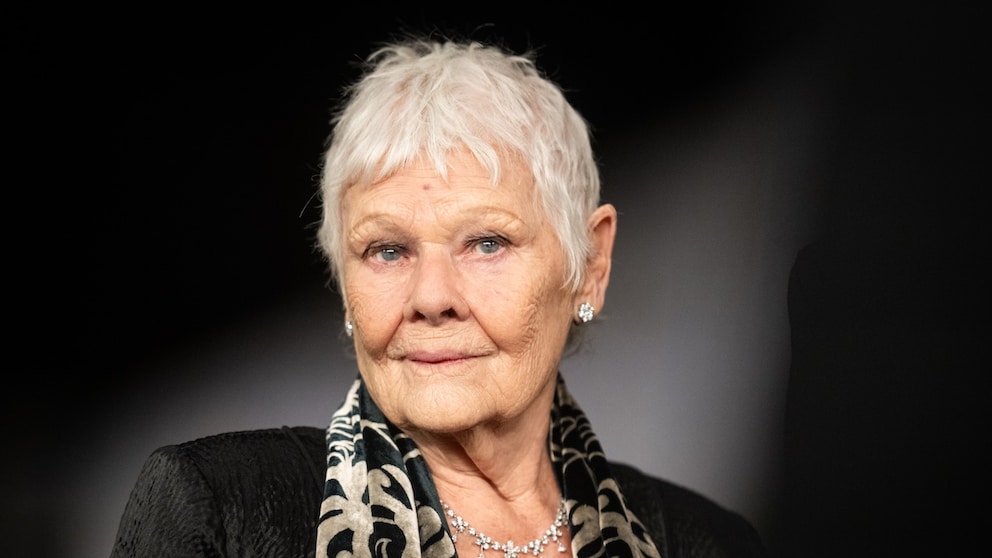
Whether as the charismatic “M” in the James Bond films or on the theater stage, Dame Judi Dench (91) has captivated millions for decades. However, things have quieted down for the Oscar winner. The reason: Dench suffers from age-related macular degeneration (AMD), which is gradually diminishing her eyesight. FITBOOK explains how this eye condition has changed the life of the acting legend, the moving words she uses to describe it, and what lies behind the diagnosis.
Judi Dench Speaks Openly About Losing Her Eyesight
On October 22, the British actress appeared on the BBC’s “Radio 4.” The discussion was not only about her illness but also about the many highlights and humorous anecdotes from her decades-long career. Among her greatest achievements is winning the Oscar for Best Supporting Actress for her portrayal of Queen Elizabeth I in “Shakespeare in Love.” Dench also made film history in 1995 when she first took on the role of the intelligence chief “M” in “GoldenEye”–the first woman ever to do so.
Dench received the diagnosis of “age-related macular degeneration” back in 2012. Since then, her eyesight has progressively worsened. The actress makes it clear how much the condition now limits her life with moving words: “I can no longer stand on stage. I can no longer do a play. I can no longer make a film. I can no longer read.” Recognizing people has also become difficult for her. She sometimes mistakes people and approaches the wrong ones, even “almost giving them a hug” before realizing her mistake.
“You just can’t let it get you down,” the 91-year-old emphasizes. Instead, one must learn to cope with the limitations, adapt to the condition, and above all: “just keep going.”
Surprising Effect of Smoking on This Organ
Who Should Avoid Instant Coffee–and Why
Age-Related Macular Degeneration
Age-related macular degeneration, or AMD, is a chronic eye condition that becomes more common with age. While only about one percent of those aged 65 to 75 are affected, the figure rises to 10 to 20 percent among those over 85.1 However, the condition usually does not lead to complete blindness.
The affected area is the so-called macula, a part of the retina responsible for sharp vision. As the condition progresses, what you look at directly becomes increasingly blurry or distorted. Everyday tasks like reading or recognizing faces can become more difficult–as is the case with Dame Judi Dench.
Doctors distinguish between two forms of AMD: dry and wet. The dry variant usually progresses more slowly, and treatment options are currently limited. In contrast, wet AMD can significantly worsen vision in a short time. However, it can be treated with medications that are injected directly into the eye.
What Increases the Risk for AMD?
As is often the case, it can be a combination of several factors. The most important factor cannot be influenced: age. As one gets older, the risk of the eye condition increases significantly. However, genetic predisposition also plays a role. Cases of macular degeneration in the family can increase one’s risk of developing the condition.
Also of interest: Matthias Steiner: “You are really completely on your own”
One modifiable risk factor is smoking. Several studies show a connection here. In a U.S. study with 2,810 participants, active smokers had an 83 percent higher chance of developing early AMD compared to non-smokers.2
For former smokers, the risk was increased by 42 percent, although this difference was not statistically significant. The amount also seems to play a role. From at least 11 pack-years, the chance of early AMD was increased by 67 percent after considering other influencing factors. Another study with 547 patients with wet AMD also showed that active smokers developed the condition on average 5.5 years earlier than those who never smoked.3 The results thus suggest that smoking not only increases the risk for AMD but could also accelerate the onset of the condition.