


October 29, 2025, 10:01 am | Read time: 5 minutes
In Germany, about 950,000 people live with a gout diagnosis. Approximately eight out of ten patients are male, and the disease usually appears after age 40. FITBOOK discusses the causes of this lifestyle disease and specific behavioral recommendations to prevent it. Gout can be avoided!
Gout is a metabolic disorder where joints become severely inflamed and painful. This can lead to joint damage over time.1
Overview
Causes of Gout
The disease occurs because too much uric acid (hyperuricemia) accumulates in the body and deposits in various areas, such as joints, tendons, and bursae. This leads to severe inflammation, known as a gout attack. However, it can take years for this to happen. Men are primarily affected, usually after age 40. The conclusion of a study published in the journal “Arthritis & Rheumatology” is that many people suffering from gout-related joint pain don’t have to.2 More on their findings to follow.
What Are the Symptoms?
Gout often appears suddenly, frequently after consuming a lot of meat and alcohol. Stress, other strains, or an infectious disease can also trigger a gout attack.
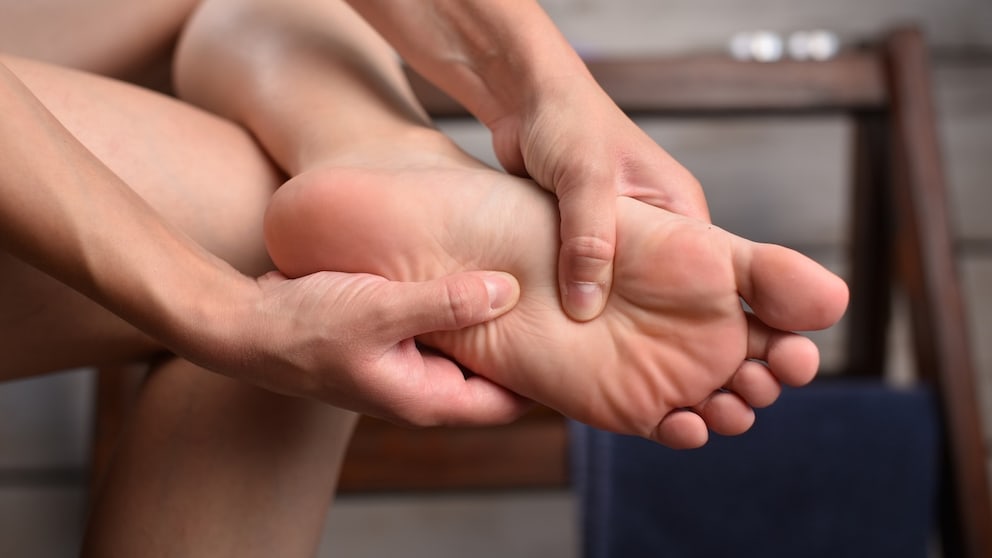
The most common warning sign is an inflamed base joint of the big toe, which becomes hot, swollen, sensitive to touch, and discolored from red to bluish. Symptoms can also occur in the knee, ankle, hand, or finger joints.
As the disease progresses, so-called gout nodules (tophi) can form, which are usually not painful. They develop when uric acid salt deposits in the body, such as on the earlobes, toes, finger joints, Achilles tendon, or in the bursa at the elbow. Early treatment of the metabolic disorder can prevent gout nodules.
If uric acid salt deposits in the kidneys, it initially causes no symptoms but impairs kidney function. Kidney stones can form.
Diagnosis
The diagnosis is typically made through a combination of medical history, physical examination, and lab tests. The most important lab test is determining the uric acid level in the blood. Levels above 6.5 mg/dl (hyperuricemia) indicate a risk but are not alone proof of gout, as other conditions can also cause elevated uric acid levels. During an acute attack, the uric acid level may even appear normal, so a follow-up measurement after two to three weeks is advisable.
Only about ten percent of people with hyperuricemia actually develop gout. A definitive diagnosis is achieved when uric acid crystals are detected in the joint fluid during a joint puncture. Ultrasound examinations can also show characteristic deposits. X-rays provide clues only after a prolonged course of the disease, when larger crystal accumulations have formed.
Treatment
Acute Treatment
During an acute attack, the focus is on relieving pain and inflammation. Classic pain relievers like ibuprofen or diclofenac (NSAIDs) are used. Colchicine can also help—it is usually well tolerated in low doses—and is additionally used to prevent further attacks. In severe cases, cortisone is used, which may be injected directly into the affected joint.
Long-Term Treatment
A permanent reduction of the uric acid level becomes necessary after the second attack, if gout nodules (tophi), joint damage, or impaired kidney function are present. The goal is a uric acid concentration below 6 mg/dl, and below 5 mg/dl for tophi.
The standard medication is allopurinol, which inhibits uric acid formation and can reduce existing deposits. If allopurinol is insufficient or unsuitable due to impaired kidney function, febuxostat is available as an alternative. Both drugs can be combined with benzbromarone, which increases uric acid excretion through the kidneys—adequate hydration is important here.
Since lowering the uric acid level can paradoxically trigger new attacks initially, prophylaxis with low-dose colchicine for three to six months is recommended.
For patients who cannot tolerate the mentioned medications or for whom they are ineffective, the biologic canakinumab is available as another option for severe, treatment-resistant gout.
Symptoms of Arteriosclerosis – You Should Take These Warning Signs Seriously
Which Value Is More Indicative: Cholesterol or Triglycerides?
Diet for Gout
Diet plays a central role in the treatment and prevention of gout. Since uric acid forms from purines, affected individuals should avoid purine-rich foods. These include many types of meat, seafood, and legumes. Foods with more than 150 milligrams of purine per 100 grams are considered unfavorable.
Alcohol consumption should also be greatly restricted, as it increases the uric acid concentration in the blood. This also applies to soft drinks and fruit juices containing fructose.
Overweight is another risk factor. However, affected individuals should avoid radical diets or fasting cures, as they can trigger new gout attacks. Instead, moderate weight reduction, regular exercise, and a balanced diet are recommended.
Milk and dairy products can have a preventive effect because they promote the excretion of uric acid through the kidneys.
Findings from the Gout Study
Which Risk Factors Are Most Significant?
Researchers led by Dr. Hyon K. Choi from Harvard Medical School in Boston identified four risk factors in their 2019 observational study:
- Overweight (Body Mass Index over 25)
- Increased alcohol consumption
- A diet high in meat, salt, and sugar
- Increased use of diuretics
The scientists found that each of the four factors studied had a so-called dose-response relationship with the uric acid level. For example, the risk of elevated uric acid levels was 44 percent for overweight, 12 percent for increased use of diuretics, 9 percent for a diet high in meat, salt, and sugar, and 8 percent for increased alcohol consumption.
Behavioral Tips to Prevent Gout
- Lose excess weight
- Drink alcohol in moderate amounts
- Eat as little meat, salt, and sugar as possible
- Ensure reduced use of diuretics
Dr. Choi summarizes the benefits of the first three recommendations as follows: “The expected health benefits go far beyond hyperuricemia and gout, extending to typical comorbidities such as cardiovascular problems and diabetes.” So, those who actively prevent gout also indirectly protect themselves from more serious diseases.