


September 5, 2025, 1:50 am | Read time: 5 minutes
While impeccably styled beauty influencers on social media promote a new skincare line for their “morning routine” with “super glow,” the reality in front of the mirror is quite different for most teenagers and young adults. More than half of all 15- to 24-year-olds in Europe struggle with acne.1 But what exactly is acne, why does it primarily affect us during adolescence, and what helps against pimples and the like?
Follow the FITBOOK channel on WhatsApp now!
What is Acne?
Acne and pimples are not the same. While almost every teenager deals with a pimple or two, the so-called “acne vulgaris” is a chronic inflammatory skin condition where many pus-filled pimples and even large nodules can form.
This occurs because the so-called sebaceous gland follicles become inflamed. A sebaceous gland follicle is where our hair is “anchored.” You can imagine it like this: A hair sits in a kind of “tube” in the skin (the follicle). On the side of this tube hangs a small “bag”–the sebaceous gland. It pushes its oil into the hair canal, and from there, it reaches the outside, oiling the skin and hair. This entire “unit” is called a sebaceous gland follicle. And it is these follicles that become inflamed in “acne vulgaris,” especially on the face, chest, and back.2 This leads to blackheads, painful nodules, pustules, and in severe cases, larger nodules or cysts.
Unlike a common rash, acne is often long-lasting and can be psychologically distressing.3 Acne can occur at any age, but it primarily affects teenagers and young adults.
Also interesting: Fibromas–what helps with skin tags?
Causes of Acne–and why it particularly affects teenagers
There are four main factors in the development of acne: increased oil production, skin cell buildup (skin cells in the hair follicle area are not shed as they should be), bacterial colonization, and an inflammatory immune response.4
Young people are particularly affected because many hormonal changes occur during adolescence, which also increase the oil flow from the follicles. Buildup disorders block the pores, leading to blackheads. The bacterium “Cutibacterium acnes,” a natural resident of the skin, colonizes these clogged follicles and increasingly triggers inflammation. Teenagers are also particularly focused on their appearance. Overzealous skincare, misinformation from social media, and psychological stress further exacerbate the situation.
Acne also has a genetic component: Some genes control hormones or the fat metabolism in the skin, affecting oil production and inflammation.5 Other genes influence how hair follicles develop and how the skin regenerates. Thus, you are more likely to be affected if acne “runs in the family,” meaning parents or siblings have already been affected.
Additionally, being overweight, smoking, lack of sleep, or stress increase the risk of an acne outbreak–whereas a large overview study found no clear connections with many foods often associated with acne (chocolate, sugar, dairy products, fast food). However, research suggests that these foods can exacerbate the severity of an acne outbreak.6
Also interesting: How to recognize a lipoma and how it is treated?
What to do about Acne?
Proper skincare can make acne flare-ups less frequent and less severe. However, please do not follow the 15-step cleansing routine of some influencers (who are only promoting the associated products), but opt for simple, gentle skincare that protects the skin barrier: cleansing with pH-neutral, oil-regulating products, at most twice a day. Excessive washing, exfoliating, or aggressive cleansers promote skin irritation and inflammation.
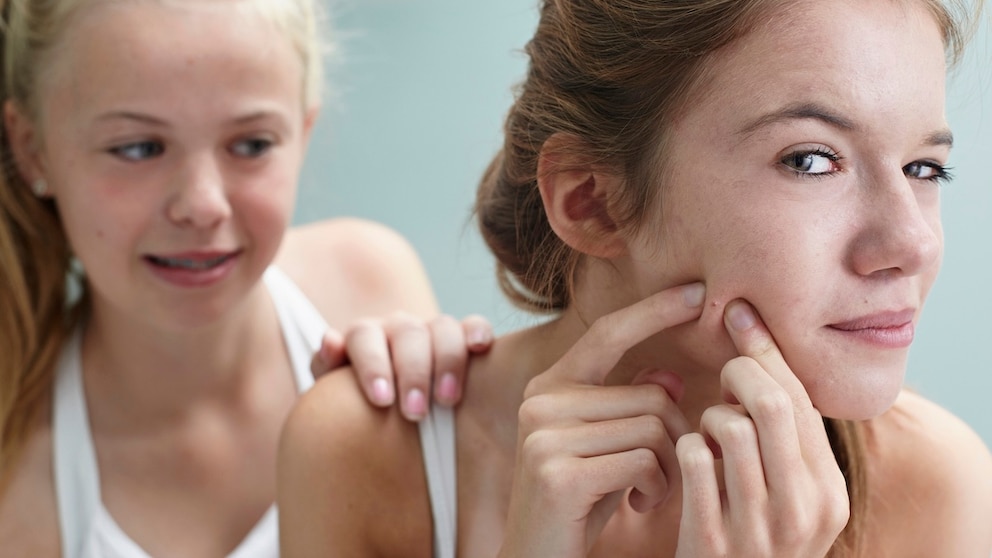
If pimples and blackheads are already present, all dermatologists will advise: Do not squeeze them–this can lead to infections and scarring. The bacteria can penetrate even deeper into the skin. However, for many, it is difficult not to tackle pimples or blackheads. The recommendation then is: Only with very clean hands (preferably after a shower) and only work on the “candidates” that require little handling or no aggressive squeezing.7
Even during an acne flare-up, the rule is: do not wash too often, use unscented creams, and apply light, oil-free sunscreen. Reducing stress, such as through exercise, relaxation, and sufficient sleep, not only supports the skin’s appearance but also psychological well-being.

Small Pimples on the Buttocks–What Helps Against “Buttne”?

Hydrogen Peroxide in Skincare–How Harmful Is It?
Which Medications Help?
There are countless remedies for acne complaints–both over-the-counter and prescription. Before resorting to creams and pills, a visit to a dermatology practice is advisable. Usually, a combination therapy with various active ingredients is necessary, tailored to the individual condition, to effectively combat acne. For mild acne, creams and ointments with active ingredients such as benzoyl peroxide, retinoids, or azelaic acid can be prescribed–they have antimicrobial, decongestant, and anti-inflammatory effects. For moderate to severe cases, antibiotics (as creams or tablets) may also be used. Unfortunately, it usually takes two to three months for an acne medication to show effects. Patience and consistent therapy are therefore important!8
Long-term Effects and Complications
Acne is not only annoying, painful, and embarrassing during an acute outbreak–it can also leave visible scars or pigment disorders in the long term. Scars can be atrophic (sunken) or hypertrophic (raised). Good skincare and medical supervision help minimize these damages.
But acne also causes significant psychological distress: Many sufferers experience shame, low self-esteem, and social anxiety. They withdraw and have a higher risk of depression and anxiety disorders.9 It is therefore important to understand and educate: Acne is not a matter of poor hygiene but a skin condition that almost everyone experiences at some point in their lives.