

August 4, 2026, 3:03 pm | Read time: 4 minutes
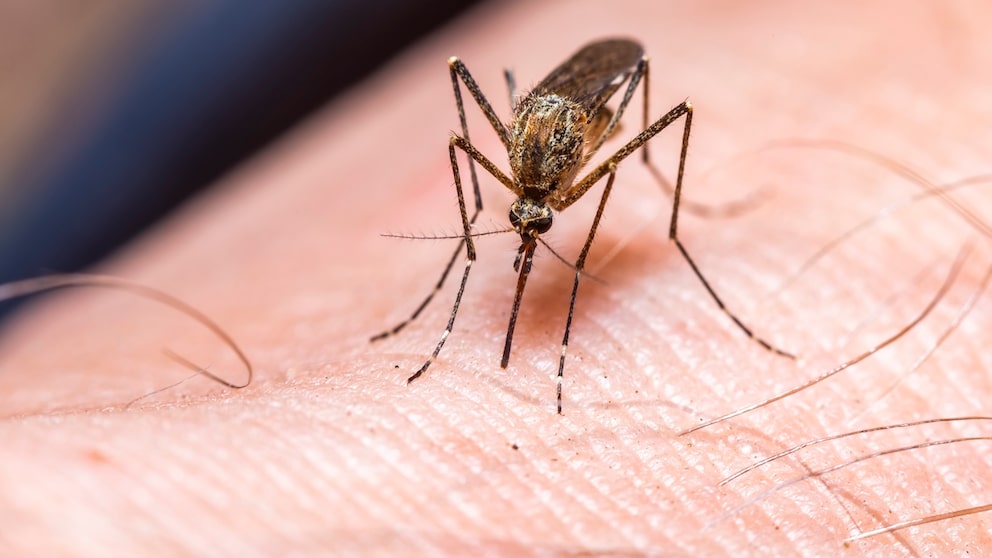
Why are some people constantly bitten by mosquitoes while others are largely spared? A new study suggests that the answer isn’t solely in individual body odor. Apparently, it also depends on the mosquito species, as different types seem to prefer different people.
Mosquitoes Have Different Preferences
The current study involving 119 adults shows that not all mosquitoes have the same taste. The three species studied each preferred different individuals. None of the participants were simultaneously among the particularly attractive “favorite victims” for all three species. Additionally, the results suggest that both certain odor compounds and the composition of skin bacteria play an important role.
How the Study Was Conducted
Researchers at Florida International University examined why some people are more attractive to mosquitoes than others and whether different mosquito species have the same preferences. They tested 119 adults aged 18 to 59 for their attractiveness to three disease-transmitting mosquito species: the yellow fever mosquito (“Aedes aegypti”), the Asian tiger mosquito (“Aedes albopictus”), and the southern house mosquito (“Culex quinquefasciatus”).1
The scientists analyzed how strongly the mosquitoes reacted to the participants. They also examined the skin’s odor compounds and the skin microbiome, which is the totality of bacteria living on the skin. The goal was to determine which biological factors influence attractiveness to different mosquito species.
Body Odor and Skin Bacteria Influence Attraction
The researchers found that the attractiveness of the test subjects varied depending on the mosquito species. On average, 89 percent of the yellow fever mosquitoes flew toward the odor source. For the southern house mosquito, this figure was 43 percent, and for the Asian tiger mosquito, it was 27 percent.
It was particularly striking that the attractiveness ratings of the three species hardly matched. Someone who was particularly attractive to one mosquito species didn’t have to be for the others. The correlations between attractiveness values were consistently weak. Moreover, there was no person who was among the most attractive participants for all three species simultaneously.
The analysis of body odors also revealed species-specific patterns. For “Aedes aegypti” and “Culex quinquefasciatus,” high attractiveness was often associated with the absence of certain odor compounds. In contrast, for “Aedes albopictus,” the opposite was true: certain scent compounds were more common in particularly attractive individuals.
Additionally, the researchers examined the skin microbiome. They found a total of 246 different types of bacteria, with only one present in all participants. Certain bacteria were associated with high or low attractiveness for individual mosquito species. However, three bacteria were found in particularly attractive individuals across all three mosquito species: “Corynebacterium kefirresidentii,” “Cutibacterium granulosum,” and a variant of “Staphylococcus epidermidis.” The authors suspect these microbes may provide general signals for an attractive host.
Another finding: The yellow fever mosquito was slightly more attracted to men than to women. This difference was not observed in the other two mosquito species.
WHO Warns of Chikungunya Fever: These Are the Symptoms
Festival Experiment Shows Which People Are Especially Attractive to Mosquitoes
Strengths and Weaknesses of the Study
The strengths of the study include the relatively large number of participants—119 people—and the parallel investigation of mosquito attraction, skin odor, and skin microbiome under standardized conditions.
The authors note that the lab experiments only partially reflect real-life situations. The southern house mosquito was tested in the lab only with worn nylon stockings, not directly on the arm. This could slightly affect the results compared to actual skin contact. Further studies are now needed to verify the findings.
What Other Studies Show on This Topic
That individual attractiveness is not random was already shown by a study from Rockefeller University in 2022.2 There, 64 volunteers wore nylon stockings on their forearms for three years, and their scent was then presented to yellow fever mosquitoes. Particularly attractive individuals had significantly higher amounts of certain carboxylic acids in their skin fat—and their attractiveness remained largely stable over the entire period.
The search for new protection strategies is now also focusing on skin bacteria. A U.S. research team targeted the production of lactic acid in “Staphylococcus epidermidis” in 2024—precisely the bacterial species linked to high attractiveness in the current study.3 Applied to the skin of mice, the altered bacteria reduced mosquito attraction by up to 64 percent over 11 days. Whether this can be developed into protection for humans remains uncertain—experiments on humans have yet to be conducted.