

July 10, 2026, 3:24 pm | Read time: 8 minutes
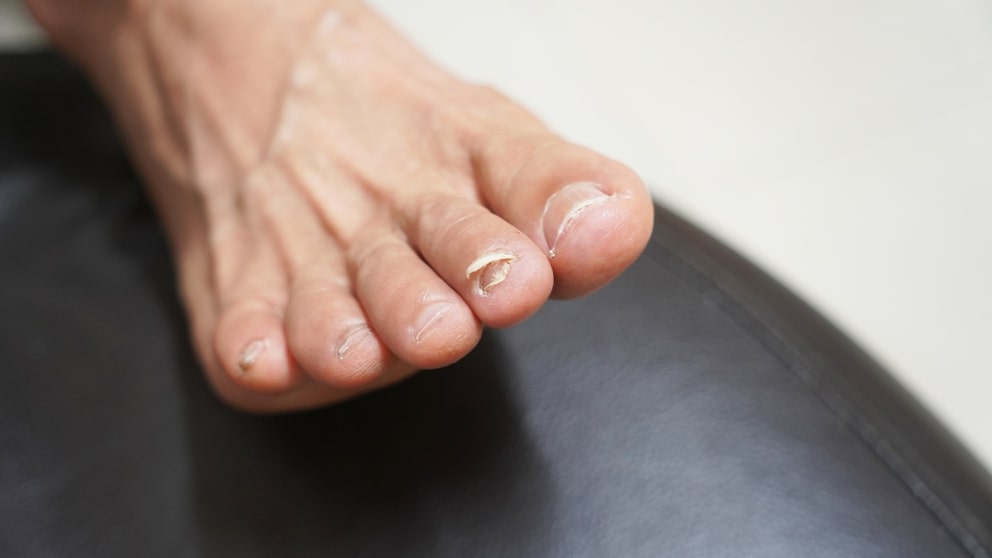
When fingernails or toenails turn yellow to light brown and thicken, it suggests a possible nail fungus. Not a pleasant sight—but usually painless and without itching. Still, the infection shouldn’t be taken lightly. FITBOOK explains how to detect nail fungus early, what truly helps against it, and how to effectively prevent it.
Where Does the Fungus Come From?
Nail fungus usually doesn’t appear out of nowhere; it often follows another fungal infection, such as athlete’s foot. Tiny pathogens enter through small injuries or cracks in the skin and then infect the nail. Toenails are particularly at risk. The environment there is often warm and moist—ideal conditions for fungi. The nail may turn yellowish to brown, thicken, become brittle, and in advanced cases, partially detach. Nail fungus is sometimes seen as merely a cosmetic issue, but if untreated, it can progress and affect surrounding tissue. The later the treatment, the longer it may take.1
How to Recognize Nail Fungus?
Nail fungus (medically known as “onychomycosis”) often begins subtly—and that’s what makes it so tricky. Initially, there’s just a slight discoloration, often at the outer edge of the nail. But over time, the changes become more pronounced. Here are the most common symptoms:
- Discoloration: The nail turns yellowish, whitish, or brownish. Initially spotty, later more widespread.
- Thickening: The nail plate thickens and partially lifts from the nail bed.
- Brittleness: The nail splits, becomes porous, or starts to crumble.
- Dull Shine: Healthy nails have a slight shine. Fungus-infected nails often appear matte and translucent.2
- Detachment: In advanced cases, the nail may partially or even completely detach.
Toenails, especially the big toe, are most commonly affected. Fingernails are less often affected but still at risk, particularly in people with frequent water exposure or small injuries around the nail.
Important: The earlier the treatment begins, the better the fungus can be contained. If unsure, seek medical advice. A definitive diagnosis is usually made through a lab test.
These Variants Exist
Distal Lateral Subungual Onychomycosis
By far the most common form. The fungus initially infects the skin around the nail, such as at the nail edge or under the nail tip, and then works its way into the nail plate from below. It slowly spreads there, making the nail soft, brittle, and yellowish.
Proximal Subungual Onychomycosis
Much rarer but particularly insidious: In this variant, the fungus attacks directly at the nail root, where the nail is formed. From there, the infection spreads across the entire nail plate. This form occurs more frequently in people with weakened immune systems.
White Superficial Onychomycosis
In this form, the infection is limited to the top layer of the nail plate. The fungus (usually Trichophyton) grows exclusively on the top layer of the nail. The result: The nail shows whitish spots or appears milky discolored. This variant is considered relatively treatable.
Total Onychodystrophy
In this stage, the fungus has destroyed the entire nail—including the nail bed and root. The nail plate is completely damaged, brittle, discolored, or even completely detached. Treatment is particularly lengthy and requires a lot of patience. Sometimes, complete removal of the nail is the only option.
Causes
Walking barefoot without flip-flops in the swimming pool, sauna, or shower area of the gym—and it happens: Fungi, waiting on warm, damp floors for new “host feet,” have an easy time. They don’t need much: A small injury, a fine crack in the nail, or slightly softened skin is enough for them to settle in.
Frequency in Old Age?
Nail fungus occurs more frequently with age. Studies show that the risk increases significantly with age. In the age group over 65, a prevalence of up to 50 percent is described.3 The reason is that circulation decreases with age, and nails grow more slowly. This makes them more susceptible to fungal colonization. Additionally, diseases such as diabetes or vascular diseases increase with age and can weaken the immune system. Foot care also becomes more challenging as mobility and vision decline, so the fungus often goes unnoticed for a long time.
Nail fungus is usually caused by so-called “dermatophytes.” These are fungi that thrive on skin, hair, and nails. But yeast or mold can also be culprits. The pathogens penetrate the nail and multiply where they are hardly disturbed: under the thick horn plate. Toenails are particularly affected because they often have a warm, moist climate due to shoes, socks, and sweat. An existing athlete’s foot can also serve as an entry point for a later nail infection.
Diagnosis
If the nail shows discoloration, a brittle structure, or unusual thickening, a fungal infection may be present. Many immediately think of nail fungus and are often right, but not always. Psoriasis, eczema, or injuries can also change nails similarly. To be sure, more than just a look at the outer appearance is needed. The first step is to visit a dermatology practice. The dermatologist examines the affected nail closely and checks for typical signs such as color, texture, and spread. Usually, a sample of the affected nail material is then taken and examined in the lab. Depending on the method, it takes a few days to weeks for a result.
- Direct Microscopy: Here, the material is examined under a microscope for fungal structures.
- Fungal Culture: An attempt is made to “cultivate” the pathogen to determine which type of fungus is responsible for the infection.
- PCR Test: Modern labs use molecular genetic methods to detect fungal DNA. This is particularly precise but not standard everywhere.4
Identifying the exact fungus is important because not every drug works against every pathogen. Thus, determining the fungus lays the foundation for targeted treatment.

Recognizing, Treating, and Preventing Athlete’s Foot

Yellow Fingernails? What Helps and What to Avoid
Treatment
Nail fungus is stubborn but treatable. Since nails grow slowly, it can take several months for a healthy nail to fully regrow. The key to successful therapy is the right combination of medication, patience, and consistent application. Spontaneous resolution without treatment is generally not expected.
- Topical Treatment with Lacquer or Cream: If the infection is still limited, meaning less than 50 percent of the nail plate is affected and a maximum of three nails are affected, a topical treatment is usually sufficient. Special antifungal lacquers or creams are used, applied regularly. The nail should be roughened or pre-treated with a urea ointment to allow the active ingredients to penetrate better.5,6
- Systemic Therapy with Tablets: For more severe or advanced infections, such as when multiple nails are affected or the fungus has penetrated deep into the nail bed, experts recommend a combination of topical and systemic treatment.7 Antifungal tablets like terbinafine or itraconazole are used to fight the pathogen from the inside out. The medication is taken for several weeks to months and should be monitored by a doctor due to possible side effects.
- Laser Therapy: A newer method is laser therapy, where the affected nail is irradiated with infrared light. The goal is to destroy the fungal structures without damaging the nail. The effectiveness of this method is not yet conclusively determined according to studies.8
- Home Remedies: Vinegar, tea tree oil, or baking soda are often recommended as home remedies for nail fungus. However, their effectiveness is not scientifically proven. They can at best be supportive but do not replace medical treatment.
Stiftung Warentest: Sobering Conclusion
In June 2026, Stiftung Warentest published a report on products against nail fungus.9 The findings on the product landscape against nail fungus were sobering. Over-the-counter options include only creams, ointments, or nail polishes—no tablets. Stiftung Warentest tested six over-the-counter medications and five so-called medical products available in drugstores. A clear difference emerged. While the medications contain an active ingredient that chemically kills the fungus, the medical products work only physically. They merely soften the affected nail so it can be filed off afterward but do not combat the fungus itself. These over-the-counter, physically acting products failed completely in the test.
How to Prevent?
The risk of nail fungus can be prevented through simple hygiene measures. It starts in the swimming pool or sauna: Walking barefoot through wet areas like showers or changing rooms increases the risk of infection. Therefore, the rule is: Do not walk barefoot in public showers, changing rooms, or spa areas.
Other things to watch out for in everyday life:
- Keep feet dry: Thoroughly dry after showering, especially between the toes.
- Change socks daily: Preferably made of breathable materials like cotton.
- Ventilate and disinfect shoes: Regularly air out sports shoes and, if necessary, treat with antifungal spray.
- Nail care: Do not cut nails too short, and avoid sharp corners or injuries to the nail bed.
- Use personal tools: Nail scissors, files, etc., should be used by only one person and cleaned regularly.
- Strengthen the immune system: A well-nourished body offers less opportunity for the fungus to attack.
And very important: Take athlete’s foot seriously! It is often the entry point for a nail infection. If you notice itching, redness, or scaling on your feet, act early.