


July 6, 2026, 4:16 pm | Read time: 4 minutes
Oral health doesn’t begin and end in the mouth. In fact, inflamed gums can literally affect the kidneys, according to a study. The finding that periodontitis and initially asymptomatic kidney diseases may be interrelated could revolutionize early detection. FITBOOK explains the background.
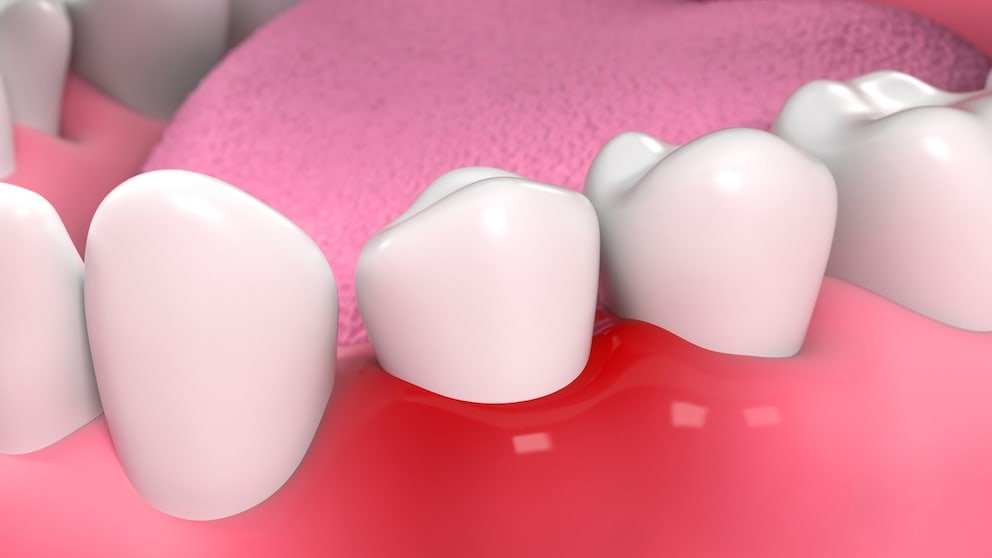
Bleeding gums, often associated with periodontitis, can apparently have effects far beyond the oral cavity. Periodontitis is a chronic inflammation already linked to cardiovascular diseases and diabetes. Researchers at the University Medical Center Hamburg-Eppendorf suspect a close connection between periodontitis and early kidney damage. This is an important research question, as nearly ten percent of the population has kidney health issues, sometimes without knowing it. Can their impending, sometimes lifelong, suffering be alleviated or even prevented thanks to these new insights?
Study with Over 6,000 Adults
The study, published in the journal “International Journal of Oral Science,” included 6,179 participants from the Hamburg City Health Study.1 At the start, all participants received comprehensive medical and dental examinations. The following health data were collected:
- Age, gender, education level
- Smoking status
- Alcohol consumption
- Diabetes
- High blood pressure
- Lipid metabolism disorders
- Kidney function
- Periodontitis by severity or presence
Kidney Function and Inflammatory Markers
Regarding kidney health, the researchers examined two established markers. One was the eGFR (estimated glomerular filtration rate), which indicates how well the kidneys are working. The other was the uACR (urinary albumin-to-creatinine ratio). Albumin is a protein that normally doesn’t appear in urine. Rising levels indicate initial damage to the kidney filters. Additionally, the researchers measured two blood markers for systemic inflammation: hsCRP and interleukin-6 (IL-6). This allowed for a fairly accurate picture of how periodontitis and kidney diseases are related, considering possible confounding factors. And this was long before symptoms could no longer be ignored.
These Connections Found Between Periodontitis and Kidney Diseases
The analysis revealed a clear link between poor periodontal health and declining kidney function. Among people with normal kidney function, 14 percent had severe periodontitis. With moderately impaired kidney function, it was already 36 percent. The frequency had more than doubled. Additionally, 39 percent of individuals with significantly elevated albumin levels suffered from periodontitis. With each deterioration in oral health, kidney function also declined. This was true even after accounting for age, gender, diabetes, and smoking.

What Role Did Inflammations Really Play?
The researchers initially assumed that chronic inflammation could fully explain the connection. However, the inflammatory marker hsCRP only accounted for about 35 percent of the link between periodontitis and impaired kidney function. This suggests that the connection is not solely due to inflammatory processes.
Therefore, the researchers believe that other mechanisms are also involved. For example, bacteria from the oral cavity could enter the kidneys via the bloodstream. Oxidative stress could also play a role by damaging blood vessels and kidney tissue. This effect could be particularly pronounced in diabetes and other metabolic disorders.
Amazing Effects of Fasting Mimicking Diet on Periodontitis

New Substance Appears to Protect Against Periodontitis
What Makes Kidney Diseases Particularly Insidious
Since chronic kidney disease often causes no symptoms for years, it is frequently only discovered when the kidneys are already significantly damaged. Early warning signs are therefore all the more important. This is where oral health could play a larger role in the future. “Our results show that the condition of the gums could indicate the onset of kidney damage,” explains study author Prof. Dr. Ghazal Aarabi in a press release.2
If the results are confirmed in further studies, a dental examination could help identify people at increased risk for chronic kidney disease earlier. Aarabi and her team also want to investigate whether treating periodontitis could slow the progression of early kidney disease.
Also interesting: 6 foods that are healthy for the kidneys
Strengths and Weaknesses of the Study
The study provides clear evidence that periodontitis can occur in the early stages of chronic kidney disease. This is supported by the large number of participants, numerous examinations, state-of-the-art measurement methods, and the analysis of possible biological mechanisms via inflammatory markers.
However, it is not possible to determine whether periodontitis causes kidney disease or vice versa. Since the study was conducted at only one point in time, it could not be determined which condition occurred first. Additionally, the results are initially only applicable to people in the Hamburg area. Their applicability to other populations, cities, countries, etc., must therefore be examined.