


October 12, 2025, 9:07 am | Read time: 6 minutes
Legal, cheap, seemingly harmless—nitrous oxide is considered “the party drug” with many advantages. It’s particularly easy to consume. A quick inhale and euphoria sets in within seconds, but fades after just a few minutes. What many don’t know: the brief high can have life-threatening consequences. In the Netherlands, the use of the drug had already increased in 2019. The enthusiasm went so far that the first nitrous oxide store was even opened. In Germany, nitrous oxide is freely accessible and legal to purchase. According to the Narcotics Act, it is officially not classified as a drug.1 Besides mild intoxication, it can lead to numbness, dizziness, oxygen deficiency, or, in the worst case, death by suffocation.
What Is Nitrous Oxide?
Nitrous oxide is a colorless, sweet-smelling compound of nitrogen and oxygen. Originally, it was used in dentistry—for example, to sedate restless patients. Today, it is still used in anesthesia and is also utilized in the chemical industry and agriculture.
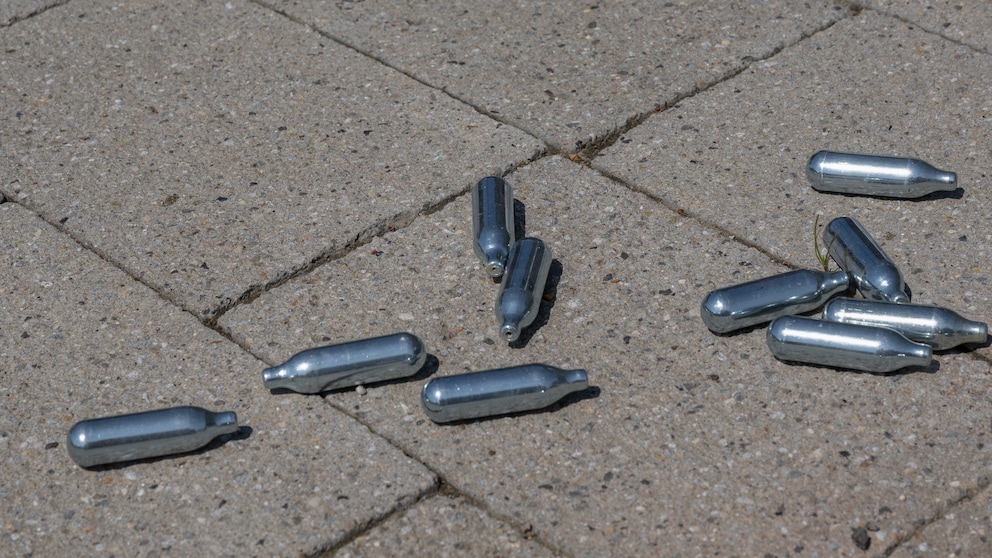
As a recreational drug, nitrous oxide is typically consumed from small steel cartridges, which are actually intended for whipping cream. Using so-called “crackers”—special opening devices—the gas is released and filled into balloons. Consumers inhale the gas from these. There are also larger containers that hold significantly more nitrous oxide.2
The intoxicating effect occurs immediately after inhalation: A warm body sensation, relaxation, and feelings of happiness are typical effects—often accompanied by uncontrollable giggling. These effects and the easy availability make the substance particularly attractive to young people. What many don’t know: Nitrous oxide is by no means harmless—even if the high lasts only a few minutes.
After inhalation, the gas enters the bloodstream through the lungs and from there into the brain and nervous system. It is not metabolized in the body but is completely exhaled through the lungs.3
Easy to Obtain
Nitrous oxide promises easy application. You can inhale the drug either from a balloon or a whipped cream dispenser. The drug itself is relatively inexpensive. And it is legal. Cream capsules can be purchased online or in supermarkets. Even children can buy them for little money. Bulk packages of 200 pieces are available for 50 euros.
What Are the Risks?
The effect usually manifests as strong euphoria, as well as dizziness and hallucinations. The high sets in immediately after inhalation and lasts a few seconds to three minutes, according to Andrea Piest from the emergency service for substance abuse and addiction in Berlin. However, the freely available gas can be dangerous in the short and medium term.
Vitamin B12 Deficiency and Nerve Damage
Regular use of nitrous oxide can lead to vitamin B12 deficiency and even nerve damage, according to Piest. If the balloon is not set aside during consumption to breathe normally, it can lead to oxygen deficiency in the brain and organs.
What to Watch Out for When Consuming
According to Piest, those who consume nitrous oxide should regularly set the balloon aside and inhale while lying down or sitting. This protects against injuries if coordination or circulatory issues occur.
“If sufficient breaks are taken, the risk potential for the body decreases again,” says the expert. If numbness occurs in the extremities, it may indicate nerve damage and under-supply. In this case, medical advice should be sought urgently. Piest advises informing medical personnel that nitrous oxide has been consumed so that they can respond appropriately to the side effects.
Additionally, talcum-free balloons should be used, as the mineral in talcum is not intended for inhalation. Consumption directly from the dispenser or using a mask should be avoided, according to emergency services advice. Absolutely forbidden: participating in road traffic under the influence of nitrous oxide.
Caution with Mixing with Other Substances
To minimize risks, mixing consumption should generally be avoided. Particularly, so-called “downer drugs” like GHB (liquid ecstasy), alcohol, and opiates mutually reinforce each other, according to Piest. Furthermore, the risk of fainting or vomiting is increased.
Nitrous oxide is often consumed in combination with cannabis. This is said to extend the nitrous oxide high and intensify the cannabis high. According to expert Piest, this can be especially dangerous at high doses, as both substances lower blood pressure, increasing the risk of unconsciousness.
Beginnings of Nitrous Oxide Use in the Netherlands
The traces of drastically increased consumption in the Netherlands could be seen almost daily: In parking lots, green spaces, or streets, dozens of empty metal cartridges or balloons were found, despite experts’ warnings of significant risks. The number of nitrous oxide poisonings had skyrocketed, reported the National Poison Information Center in Utrecht. While there were only 13 cases in 2015, 67 cases were reported in the first half of 2019. It involves dizziness, nausea, and paralysis symptoms.
According to the Dutch addiction report, one in five young people between 20 and 24 years old has inhaled nitrous oxide. It is also becoming increasingly popular and affordable as a party drug among those up to 35 years old. But the laughter can quickly fade. With an “average consumption” of five to ten cartridges once a month, the party drug is relatively harmless, according to the health department. However, the trend was significantly above average: More and more Dutch people would inhale up to 50 cartridges a day over a longer period, according to the latest poisoning report.
In 2023, the Ban Followed
Starting January 1, 2023, the Netherlands imposed a ban on the possession and sale of nitrous oxide. According to the Ministry of Health in The Hague, exceptions still apply, including for medical applications and use as a food additive. The use of small whipped cream dispensers filled with nitrous oxide is still permitted.4

Fatal Consequences for Children – U.S. Expert Warns Against Energy Drink Consumption

Symptoms of Vitamin B12 Deficiency and How to Address Them
Abuse Cases in Denmark
Germany’s western neighbor is not the only hotspot. In Denmark, a majority of parties also want to regulate the sale of nitrous oxide cartridges. According to authorities, abuse cases are continuously rising. In 2017, for example, the poison hotline received 18 reports, and by 2018, there were already 39.
Nitrous Oxide Use Among Youths Increases–Federal Government Responds with Stricter Laws
Although nitrous oxide has not yet played a role in the current drug and addiction report of the federal government, it is used sporadically in the party scene, according to the Office of the Drug Commissioner. Reliable figures on consumption are not yet available. However, a study by drug researchers at the University of Frankfurt in 2018 showed that the number of young nitrous oxide users had doubled within three years. According to the study, 12 percent of young people reported having tried nitrous oxide at least once.
In response to these developments, the federal cabinet passed a draft law on Wednesday, July 2, 2025, to amend the New Psychoactive Substances Act (NpSG). The goal is to effectively curb the abuse of nitrous oxide and protect children and adolescents from health risks. The new regulation also aims to prevent the abuse of so-called knockout drops. The substances gamma-butyrolactone (GBL) and 1,4-butanediol (BDO), which are used for committing rapes and robberies, are to be banned in the future.5
*With material from dpa.