

May 11, 2026, 2:35 am | Read time: 5 minutes
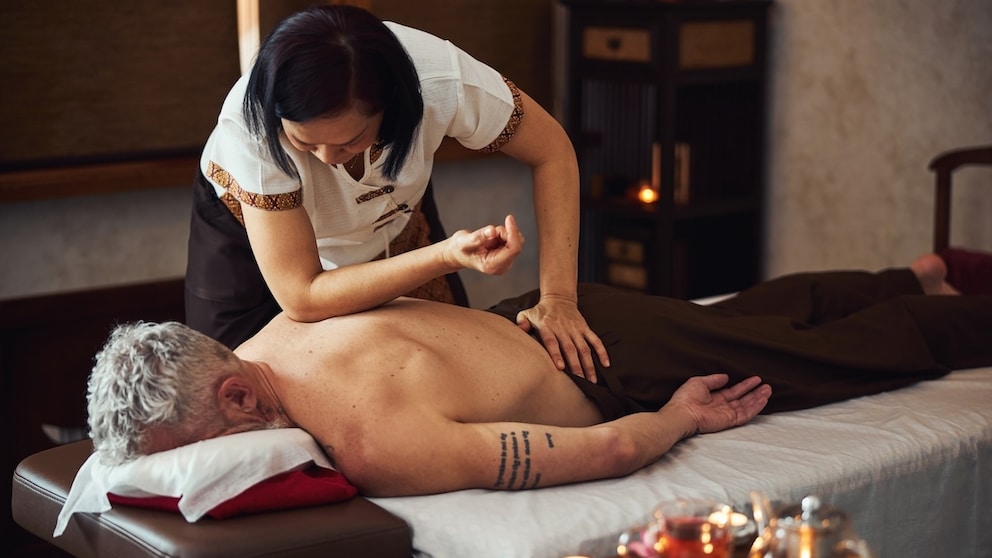
Get a thorough kneading–and it can hurt a bit: Fans of Thai massage appreciate the intense treatment, often followed by the desired feeling of deep relaxation. However, as beneficial as it can be, Thai massage is not always without risk. In rare cases, it has even led to serious complications. FITBOOK sheds light on the possible, often underestimated risks of Thai massage.
Thai Massage–a Traditional Medical Method
The traditional Thai massage (“Nuad Phaen Boran”) is a manual treatment method from Thailand; and since 2019, it has been part of the intangible UNESCO World Heritage.1 Massage therapists work on their clients’ bodies through stretching, pressure techniques, and mobilization. The treatment follows so-called energy lines and includes targeted grips with hands, elbows, knees, and feet. The goal: to relieve tension and promote balance in the body.
In its country of origin, Thailand, Thai massage is part of traditional medicine and is state-regulated. To obtain a recognized certificate and officially work as a therapist, one must complete training at a state-recognized or Thai Ministry of Health-approved school. This training must include a set minimum number of hours and both theoretical and practical content. Additionally, it may be necessary in Thailand to register with the relevant Thai Ministry of Health–this secures the title “Traditional Thai Medicine Practitioner.”
Outside Thailand, particularly in Germany, the situation is quite different: Thai massage is not regulated as a state-protected healing profession but is classified in the wellness and relaxation sector. And this comes with certain risks.
What You Should Know Before the Treatment
It should be noted in advance that Thai massages are not universally recommended for everyone. Studios often point out on their websites, for example, that one should refrain from treatment in cases of acute illnesses such as fever, infections, inflammations, fresh injuries, or open wounds. Other contraindications include cardiovascular diseases, suspected thrombosis, recent surgeries, or acute neurological events.
These warnings largely align with general medical recommendations for massage. The National Center for Complementary and Integrative Health (NCCIH) also explains that to avoid health risks, massages should be limited or conducted only after medical consultation in cases of acute infections, certain serious illnesses, or untreated medical conditions.2
Possible Risks of Thai Massage
The Swiss portal “20 Minuten” reported in 2024 about two deaths related to Thai massages. A 20-year-old singer apparently experienced paralysis after several neck and back treatments and later died of septic shock. Shortly before, a tourist from Singapore died of cardiac arrest after an oil body massage. The article warns that improper or overly intense applications in sensitive body areas can pose health risks.
Thai massages can be very intense, especially concerning stretching and pressure techniques. A common problem and tension area is the neck, where many clients seek relief. However, strong or unfavorable force application here can pose health risks in the worst case.

After the Thai Massage, I Had Completely Different Problems
“I have always enjoyed going to Thai massages. I can’t do much with gentle stroking treatments, like those known from classic massages. As a tall woman who works a lot at a desk, my complaints mainly focus on my back, shoulders, and neck. The latter was treated particularly intensively by a therapist during my last session. I enjoyed it–even though it was painful at times. I actually expected relaxation afterward. But that was not the case.
That same evening, I had trouble turning my head and felt a hardening in my neck. The next day, the complaints became even stronger. The orthopedist diagnosed a blockage; I received injections to relax the muscles. Since I also reported balance disorders and a slight tendency to lean to the right, the doctor referred me to a neurologist to rule out a stroke, among other things. Fortunately, this suspicion was not confirmed.
The orthopedist, who wishes to remain anonymous, nevertheless warned me strongly against such intense treatments. He said he knows ‘no one who has not been harmed by this strong force application in the long run.’ After this experience, I am unsure whether I will ever seek a Thai massage again.”
Neck Manipulations and Vascular Risks
FITBOOK has already reported on the so-called “Beauty Parlor Stroke Syndrome.” This involves the potential promotion of strokes through pressure or unfavorable positions in the neck area, such as an overstretched position at the sink at the hairdresser or similar strains. It can lead to “clamping of the blood supply in the neck,” explained internist Dr. Matthias Riedl. There is a particular danger for older people or those already affected by arterial calcifications.

“I lifted weights for 20 years—if only I had done Muay Thai.”

I Tried Assisted Stretching–Here’s What the Wellness Trend Offers
Enormous Quality Range of Studios in Germany
If you have already visited a Thai massage: Were you asked in advance about possible health restrictions? If so, this speaks for a responsible studio. But apparently, not all are like this.
The Thai Spa Association points out that in Germany, amid the strong growth of Thai massages, there is a significant quality range–from so-called “black sheep” to high-quality, professionally run studios with clear standards.3 To improve the level and create more transparency, the association has developed various voluntary standards and certification models. These include the Q-Standard focusing on hygiene, service, and organization, the National Skill Standard with structured testing procedures, and a three-tier quality seal with different testing requirements. However, since these standards are not mandatory, customers in Germany cannot blindly rely on every studio working professionally.
Requirements for a Safe Treatment
Thai massages can be beneficial and effective as long as they are performed professionally and individual health conditions are considered. Given the lack of uniform regulation in Germany, it is important to look closely: qualification, education, and a responsible approach to potential risks are crucial. Customers should be well-informed and choose studios consciously.