

August 17, 2026, 11:41 am | Read time: 6 minutes
Masculinity is more than just a personality trait for many men. Psychologists believe it is perceived as a social status that must be continually reaffirmed. But what happens when men feel they don’t meet this ideal? A recent review has examined how so-called threatened masculinity can affect health-related behavior.
Meat Is Considered “Typically Masculine”
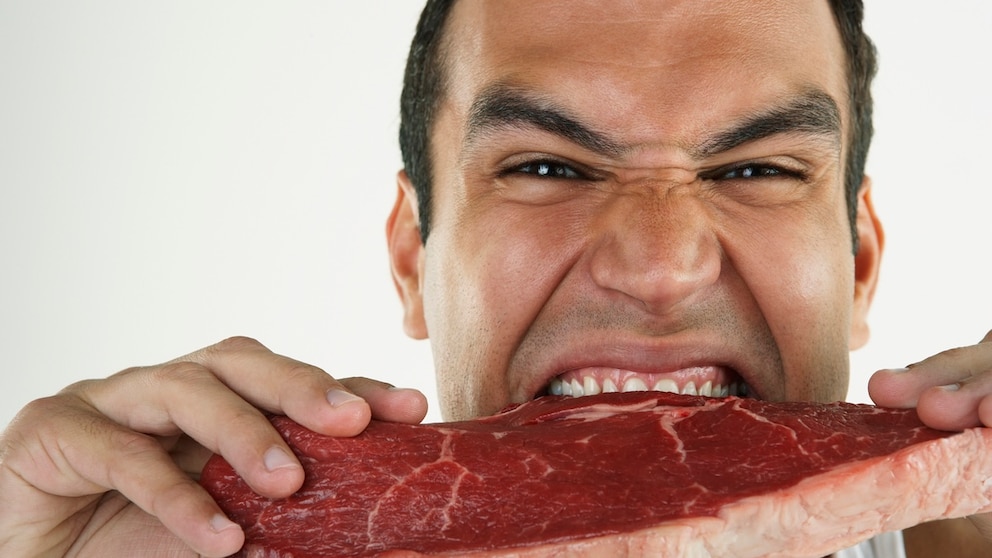
The clearest finding: When men’s masculinity is experimentally undermined, they are more likely to engage in behaviors considered typically masculine. This is particularly well-documented in eating habits. In numerous experiments, participants more frequently preferred meat, felt a stronger connection to meat consumption, and were more likely to reject vegetarian alternatives.
How the Study Was Conducted
For the scoping review—a systematic overview of existing research on this topic—a research team from the University of British Columbia in Vancouver analyzed 25 publications from 2010 to 2025, encompassing a total of 38 experiments. Only studies where men were specifically confronted with or made insecure about their masculinity, and subsequent health-related behaviors, attitudes, or physical reactions were examined, were included.1
The goal was to determine whether threats to masculinity can indeed impact health and what factors influence men’s reactions.
More Meat, More Stress, More Risk
The most frequently studied area was dietary behavior, with a total of 16 experiments on food and drinks. In 14 of these studies, meat consumption was the focus. The majority found evidence that men were more likely to choose meat or reject vegetarian options after a masculinity threat. A similar pattern was observed with drinks. After feeling insecure, men were more likely to choose stereotypically “masculine” drinks like alcohol or energy drinks. Neutral options like healthy protein shakes showed no such effect. The effects were particularly pronounced when actual behavior was measured.
Additionally, some studies found impacts on emotional well-being. Men reported feeling more shame, guilt, and anger after a masculinity threat. Stronger physical stress reactions were also observed, such as higher cortisol levels.
Results regarding body image and fitness were contradictory. Some studies showed that men evaluated their own strength or musculature more critically. Others found the opposite: Participants were more driven to build muscle or even performed better in strength and endurance tasks.
There were indications of negative consequences for risk behavior and interpersonal relationships, but the data is still sparse. Some studies suggested that men were less willing to use condoms or were skeptical of a male contraceptive pill after a masculinity threat. However, there was reassurance regarding driving: In simulator tests, insecurity did not lead to more aggressive driving. On the relationship level, negative tendencies were observed: Threatened men felt less connected to their partners.
Which Men React Particularly Sensitively?
Not every man reacts the same way to a threat to his masculinity. The study shows that personal beliefs play a significant role. Men who firmly believe that masculinity is a fragile, hard-to-maintain status (“fragile masculinity”) exhibited the strongest physical and psychological reactions under stress. Men who consider themselves particularly masculine also reacted more sensitively to insecurities. Interestingly, general conformity to societal masculinity norms did not play a decisive role in most studies in determining how intensely men reacted at the moment of threat.

Morning Urine Indicates How Stressed You Are

Major Study Reveals What Celibacy Indicates About Health, Psychology, and Environment
Strengths and Weaknesses of the Study
The strengths of the work include the systematic evaluation of existing research. The authors also considered dissertations and other unpublished works to obtain a comprehensive picture of the study landscape.
However, there are also limitations. Most studies come from Western countries, many health areas have been scarcely researched, and often the actual behavior of participants was not examined, only behavior-related decisions. Additionally, the existing experiments do not allow conclusions about long-term health effects, as they primarily captured short-term reactions to a masculinity threat.
Furthermore, the authors of the review caution about methodological issues: Over three-quarters of the experiments examined had weaknesses—such as lacking evidence of whether the insecurity in the lab was successful or because analysis plans were not registered in advance. The risk of publication bias, where mainly studies with clear results are published, cannot be entirely ruled out.
Overall, the authors assess the study landscape as solid but note that further research is needed to confirm the results and apply them to other areas of life.
Supplementary Studies on this Topic
An international study from 62 countries suggests how masculinity norms could have long-term effects.2 It showed that in countries where masculinity is particularly seen as a status that must be constantly proven, men smoked more, died more often from risk-related causes, and lived on average about six and a half years shorter than men in countries where this belief is less pronounced. The connection remained even when researchers accounted for wealth, doctor density, and equality. However, this is a comparison between countries, not individual men—a cause-and-effect relationship cannot be derived from it.
A second area identified by the current review as scarcely researched is the interaction with doctors. Here, a U.S. study with a total of 546 participants provides insights.3 Men with pronounced traditional masculinity views were more likely to delay addressing complaints, chose a male doctor more often—but then reported their symptoms more reservedly. Researchers suspect this is due to the concern of showing weakness in front of another man.