

October 20, 2026, 8:15 am | Read time: 5 minutes
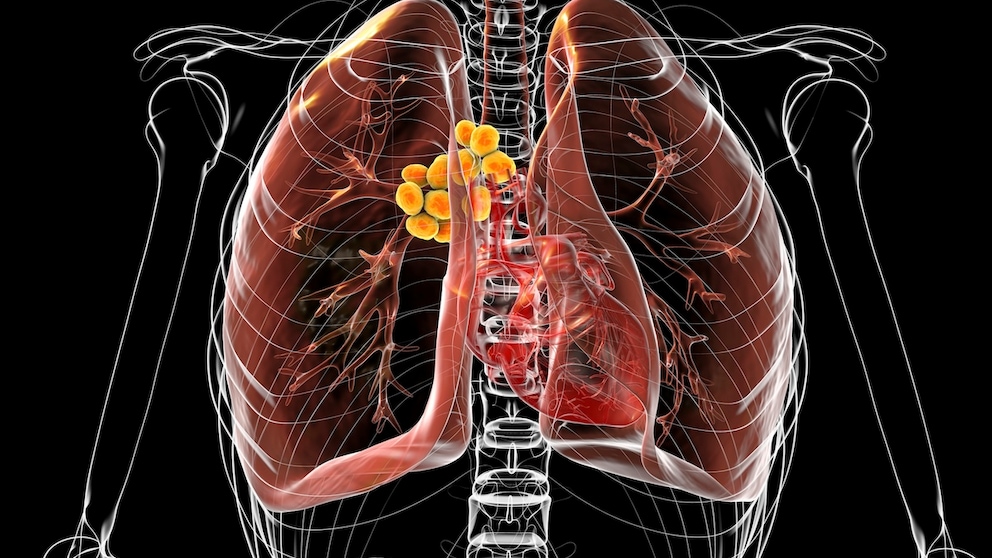
Everyone knows lung cancer, but what about lung nodules? The latter may initially seem just as frightening, but in most cases, nodules in the lungs are not a cause for panic. Over 95 percent of all lung nodules are benign. The larger a lung nodule becomes, the higher the risk that cancer is behind it. What you should know about this can be read at FITBOOK.
Follow the FITBOOK channel on WhatsApp now!
What is a Lung Nodule?
A lung nodule is a small tissue change in the lung. “Small” in this case means it measures between a few millimeters and a maximum of three centimeters. Nodules with a diameter of less than eight millimeters are rarely malignant, with a cancer risk of about one percent. Generally, the larger a lung nodule becomes, the higher the risk that cancer is behind it. However, more than 95 percent of lung nodules are benign.1 They often arise as a result of long-healed infections, such as a past pneumonia, or due to small scars, calcifications, and other benign tissue changes. Lung nodules are usually discovered by chance, such as during a chest CT scan.
Cause of a Malignant Nodule
Lung nodules are quite common in adults, with up to one in four having them. Among smokers, as many as one in two may be affected.2 A malignant nodule usually develops in a multistep process. Changes in the genetic material can cause the natural protective and repair mechanisms of the cells to fail, leading to increasingly uncontrolled proliferation of damaged lung cells. Sometimes, such nodules develop gradually from initially inconspicuous tissue changes.
A significant cause of cell damage is cigarette smoke. The risk of a malignant nodule increases with the amount smoked. Statistically, it increases by 1.2 times for every ten pack-years. Fine dust and air pollution can also increase the risk. Additionally, chronic lung diseases like COPD and age, as cell damage accumulates over a lifetime, play a role. Genetic predisposition is also a factor, as cancer in close family members can increase one’s own risk.
Risk Classification and Frequency
As part of standardized lung cancer screening (according to the established Lung-RADS system), lung nodules are classified into risk categories.2 These reference values indicate how often certain findings occur and how high the associated cancer risk is estimated to be:
- Category one (no nodules or clearly benign): about 39 percent of all scans.
- Category two (very small/unremarkable nodules, under six millimeters): about 45 percent of all scans.
- Category three (probably benign, e.g., six to eight millimeters): about nine percent of all scans.
- Category four (suspicious/increased risk, over eight millimeters or growing): about seven percent of all scans.
It is important to note that size alone serves only as an initial guide. Other medical factors play a crucial role in the precise medical assessment.

How to Identify and Treat a Lipoma

This Underrated Organ Could Protect Against Cancer
How is the Nodule Detected?
Typically, lung nodules are discovered through imaging procedures, often by chance. This can happen during an emergency room examination, due to persistent coughing, or as part of lung cancer screening. A precise diagnostic classification follows. Doctors assess the size, shape, and tissue characteristics of the nodule, as well as personal risk factors–including age, smoking habits, and family cancer history–and assign the finding to a risk category using established classification systems and risk models. If there is an increased or unclear risk, further examinations are conducted. These include regular CT check-ups, biomarker tests, and possibly a tissue sample (biopsy). The tissue sample under a microscope can provide definitive information on whether a lung nodule is benign or malignant.3
Treatment
Very Low Risk – Under Five Percent
With such a low cancer risk, invasive procedures like tissue sampling or surgeries are usually avoided. Instead, the nodule is regularly monitored via CT, approximately every three, six, or twelve months. If size and shape remain unchanged over at least two years, the nodule is considered benign.
Moderate Risk – Five to 65 Percent
If a CT finding is not clear, further examinations are necessary. The goal is to determine whether cancer is behind the lung nodule. If imaging procedures are insufficient, a tissue sample can be taken and examined under a microscope. Only such a biopsy can definitively confirm or rule out a tumor. If the suspicion is not confirmed, the nodule is monitored regularly via CT, as with a low risk. If cancer is detected, treatment begins. Depending on the findings, options include a tissue-sparing surgery, targeted radiation, or medication therapy.
Also of interest: How dangerous is pneumonia?
High Risk – Over 65 Percent
If a tissue sample confirms the suspicion of cancer, therapy is initiated. If the tumor is in an early stage and smaller than two centimeters, often the removal of a single lung segment (segmentectomy) is sufficient today. Previously, the entire lung lobe often had to be removed. If surgery is not possible or desired due to pre-existing conditions, high-precision radiation can be used. For advanced tumors or as an additional safeguard, immunotherapies, targeted medications, or chemotherapies are also used.4