

July 2, 2026, 5:57 pm | Read time: 5 minutes
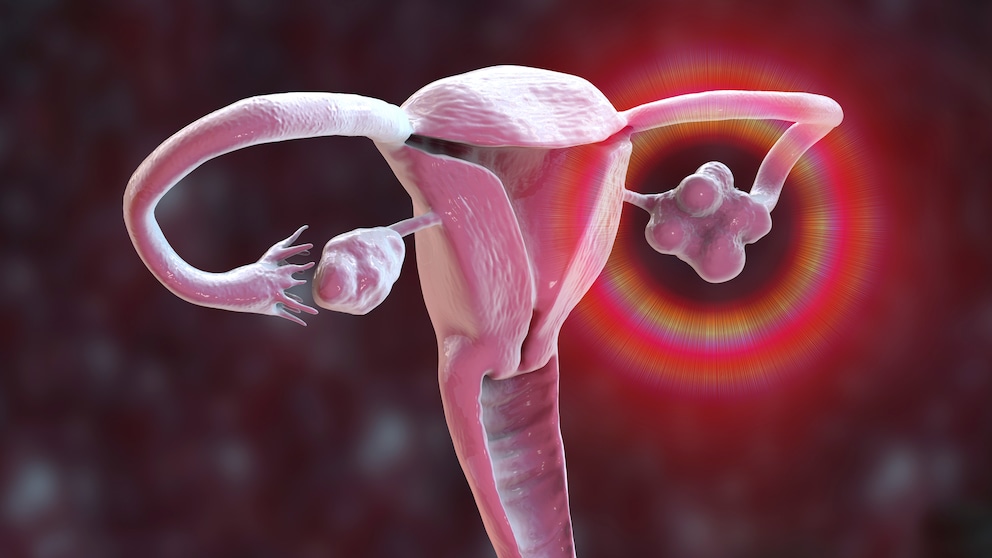
As central female reproductive organs, the ovaries produce fertilizable eggs and form the sex hormones estrogen and progesterone. However, with menopause, the supply of eggs is exhausted, and the ovaries were long considered largely inactive from this point onward. The results of a new study are all the more interesting. According to the study, the ovaries might take on a new significant function after menopause: that of an immune organ.
Menopause refers to the time of a woman’s last natural menstrual period.1 With it, the fertile phase of life ends, as the supply of follicles (egg sacs in the ovaries) is now almost completely depleted. Until now, little was known about what function the ovaries still fulfill from this moment on.
Also interesting: How women can recognize that their menopause has begun
Changed Role of the Ovaries After Menopause?
There were already indications that the ovaries are not entirely biologically inactive after menopause. These come from a study of 28 healthy women aged between 50 and 75 years, which a research team led by Francesca E. Duncan from Northwestern University has so far published as a preprint.2 The analysis showed that a specific protein pattern of the ovaries continues to change even decades after menopause. In younger postmenopausal women, researchers found increased proteins related to cell structure and gene regulation. In older participants, however, proteins involved in inflammatory processes, tissue remodeling, and innate immune defense were increasingly detected. Additionally, the researchers found evidence that the ovaries might release more signaling proteins associated with general aging processes in the body.
A new study, which includes experiments with mice and also involves researcher Duncan, builds on these observations.3
Details of the Study
The scientists examined the ovaries of female mice in three life phases:
- at two months old, when the animals are fertile,
- at 18 months (reproductive age), and
- at 24 months in the post-reproductive phase.
One ovary from each animal was histologically examined (tissue examination), while the other was used for genetic analysis.
In the tissue samples, the researchers determined the number of follicles, among other things. They also used special staining methods to make the collagen content in the tissue visible. Increased collagen deposition is considered a typical feature of fibrosis, an age-related hardening and structural remodeling of tissue.
Additionally, the researchers used a method called bulk RNA sequencing. This technique reveals which genes are particularly active in a tissue and allows conclusions about which biological processes are intensified or downregulated at different ages.
Finally, the team analyzed which immune cells are detectable in the ovary and examined genes whose products might be released from the ovary to other body regions.
How the Ovaries Change
The number of follicles decreased significantly with age–this was expected. In mice, the supply was almost depleted by 18 months, and in 24-month-old animals, no further significant decline was observed. At the same time, there was an increasing remodeling of the tissue, which the researchers attributed mainly to increased collagen deposition.
On a molecular level, the changes were particularly pronounced. Comparing young and post-reproductive mice, the researchers identified 8,515 differently regulated genes. Many genes important for egg maturation, hormone production, and other reproductive processes showed significantly reduced activity. At the same time, the activity of genes associated with immune reactions, inflammatory processes, and communication between immune cells increased.
More Immune Cells in the Tissue of Post-Reproductive Mice
The observed genetic changes were also reflected in the tissue. The research team found significantly more T cells, macrophages, and multinucleated giant cells in the ovaries of older animals–all of which are part of the immune system. Additionally, the ovaries of 24-month-old mice continued to differ from those of 18-month-old animals. The researchers interpreted this as evidence that molecular remodeling processes occur even after the end of reproductive capability.
Furthermore, the researchers identified numerous genes whose products might be secreted by the ovary. Many of these are associated with inflammatory reactions or immunological processes. A possible explanation could be that the post-reproductive ovary sends signals to other organs.

How Collagen Affects Biological Age, According to a Study

Can Certain Substances Slow Aging? The Current State of Research
Possible Significance of the Results
The ovaries are apparently not biologically inactive after the end of their reproductive function–that is, after menopause. At least in the mouse model, they instead develop properties that could be associated with immune processes and the defense against pathogens.
Whether new therapies can be derived from this in the future is still completely open. However, the study authors hope that the observed changes can also be confirmed in humans. This could help better understand the biological changes in the female body after menopause.
The researchers suspect that inflammation-promoting signaling substances from the ovaries could influence age-related changes in other organs. But this is still just a suspicion, as the possible connection was not part of the present study. It would at least be conceivable to specifically influence the inflammatory processes in the ovary without disturbing the hormonal balance.
Limitations
Although mice are generally well-suited as models for studying reproductive aging, they differ in several respects from humans. Therefore, the results cannot be directly applied to women.
It should also be noted that the RNA sequencing used only captures gene activity. What effects this has on the entire body is still only speculative. Additionally, the researchers cannot say for certain whether more immune cells actually migrate into the ovary or whether the ovarian cells increasingly develop immune-like properties.
Further studies are therefore necessary, especially on human tissue, the researchers emphasize. Only then can the significance of the observed changes for the health of women after menopause be reliably assessed.