

November 29, 2023, 4:18 pm | Read time: 6 minutes
Many athletes crave fresh air even in the cold season. But is running, cycling, and the like healthy in freezing temperatures? And how should one dress for it? FITBOOK spoke with a true endurance expert: former Olympic swimmer Micha Østergaard. Additionally, there are tips from a medical professional.
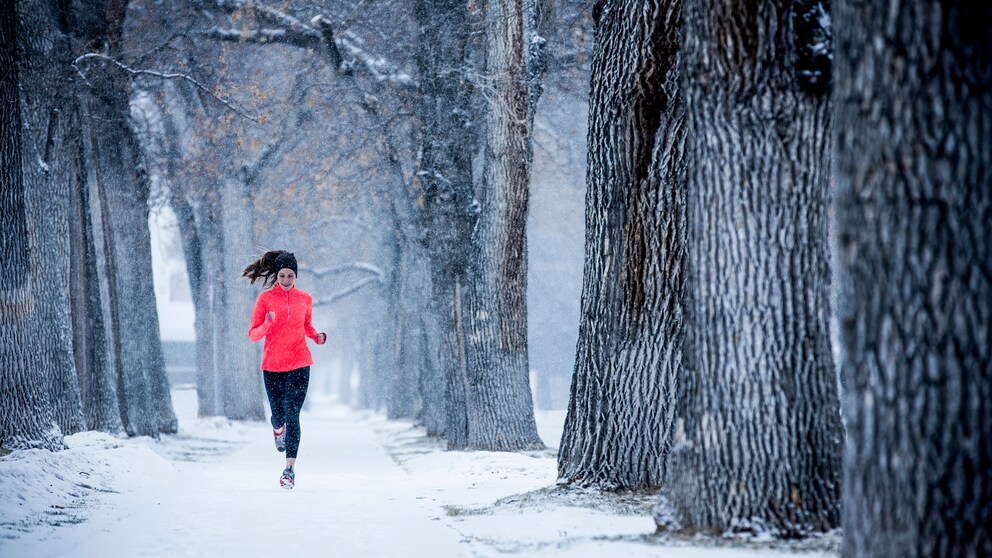
Exercising in the cold isn’t necessarily harmful to your health if you keep a few things in mind. Physical activity is extremely important for the immune system–in every season. When circulation is stimulated, the heart pumps more blood through the vessels, which also boosts immune cells. “Especially those who brave the elements and familiarize their bodies with different temperature dimensions strengthen their immune defenses. It toughens you up,” says former Danish professional swimmer Micha Østergaard to FITBOOK. A general practitioner explains at what temperatures it becomes too cold for outdoor sports and what to watch out for when training in the cold.
Follow the FITBOOK channel on WhatsApp now!
Overview
- Which sports are suitable for outdoor and winter?
- How should I dress for outdoor sports in winter?
- And when it gets really icy?
- What to watch out for during training?
- Health: When is it too cold for outdoor sports?
- The problem with cold, dry air in the airways
- Conclusion and nasal oil tip for recreational athletes
- Sources
- Sources
Which sports are suitable for outdoor and winter?
Assuming you’ve been active in the summer, jogging, walking, Nordic walking, hiking, or cycling are no problem even at lower temperatures. Fitness expert Micha Østergaard advises against starting a sport under these extreme conditions. Beginners’ bodies would be more prone to injury due to overexertion.
Also interesting: Winter hiking is great! Even better with these tips
How should I dress for outdoor sports in winter?
Don’t dress too warmly. According to Østergaard, you should still feel slightly chilly when you leave the house. Movement will quickly make you sweat. Therefore, wearing functional clothing is crucial. The best options are synthetic fibers like microfibers and polyester, which are lightweight, durable, and maintain their shape. Synthetic fibers are particularly good at wicking moisture and drying quickly. Cotton, on the other hand, is completely unsuitable as a first layer: “It gets wet and cools the body down,” explains the former professional swimmer.
And when it gets really icy?
At certain temperatures, windproof clothing becomes essential. Østergaard recommends softshell jackets and pants, which are particularly durable yet lightweight due to multiple laminated membrane layers. “Below seven degrees, you should always wear a hat or headband,” she advises. The reason: The body’s temperature regulation occurs largely through the forehead. In subzero temperatures, also protect the airways from biting cold, ideally with a thin scarf as a mouth cover.
With ice and slipperiness, the risk of slipping logically increases. For your feet, trail running shoes, for example, are suitable as they have more tread on the outsoles and therefore provide a secure grip in muddy and slippery terrain.
What to watch out for during training?
- In the cold, don’t overexert yourself during sports. Warm up slowly; runners should jog at a moderate pace for the first five to ten minutes.
- Breathe through your nose, not your mouth, so the air is pre-warmed. Breathing through the nose during physical exertion requires a lot of energy from the body. Of course, at a certain level of exertion, you have to breathe through your mouth–even in the coldest weather; FITBOOK explains the issues that can arise from this further down.
- If your lungs start to burn or something begins to hurt, you should end the training session.
Also interesting: These date-almond energy balls provide energy for the whole day
Health: When is it too cold for outdoor sports?
To avoid any health risks, FITBOOK spoke with general practitioner Dr. Michael Feld. He notes that sensitivity to cold during outdoor workouts depends on physical constitution. “In severe cold, muscles cramp and become stiff. As a result, physical responsiveness, such as to obstacles on the running track, is not as good as it should be.”
- Top athletes can best assess for themselves at what temperatures it becomes too cold for them
- Regularly active recreational athletes should avoid outdoor sports at temperatures below minus five degrees
- Untrained individuals should refrain from outdoor sports at zero degrees Celsius
- People with a history of heart disease are better off indoors even at low positive temperatures
People with heart problems should avoid outdoor sports in subzero temperatures
The German Heart Foundation advises that people with heart problems should avoid strenuous physical activities outdoors in subzero temperatures.1 At very low temperatures, blood vessels constrict. This means the heart muscle receives less blood and therefore less oxygen, leading to increased blood pressure. Patients with high blood pressure and those with heart weaknesses, atrial fibrillation, and other heart diseases should therefore avoid outdoor sports and physical exertion, such as shoveling snow. Instead, affected individuals can go for walks to get fresh air and train indoors.
The problem with cold, dry air in the airways
More serious issues can also arise. The colder the air, the less water vapor it can hold. Feld explains the problem this poses for outdoor athletes: “The sensitive bronchi and blood vessels in the nasal sinuses need well-moistened air.” Normally, the nasal mucosa ensures this by warming the air and providing it with 90 percent humidity when inhaling.
Since you breathe through your mouth when jogging at a certain exertion level, the very cold, dry air enters the airways unfiltered. This causes significant irritation. You can recognize this by a painful burning sensation in the lungs. “The bronchi and sinus mucosa contract, and oxygen passes through less effectively,” Feld explains. The colder the air, the higher the risk of catching a cold and respiratory diseases like coughs or bronchitis.
Also interesting: What helps against mucus in the airways while running?

How the Buteyko Method Affects the Body

6 Exercises for Mobility Training at Home to Improve Your Flexibility
Conclusion and nasal oil tip for recreational athletes
Recreational athletes should limit their outdoor activities to winter walks at temperatures below minus five degrees. Even then, it doesn’t hurt to follow a doctor’s advice to make the nose’s job easier: “Apply some nasal oil or a re-fatting ointment in the nose!” This way, the inhaled air is more reliably humidified, and the risk of a runny nose is minimized.