


September 29, 2026, 7:50 am | Read time: 6 minutes
“Age spots often seem to appear suddenly overnight. In reality, they are the result of a process that has developed over years: UV radiation stimulates pigment production, and eventually, the effects become visible. The good news is that age spots are generally harmless and can be effectively treated from a cosmetic perspective,” says Dr. Derendorf, a specialist in dermatology and venereology.
What Are Age Spots?
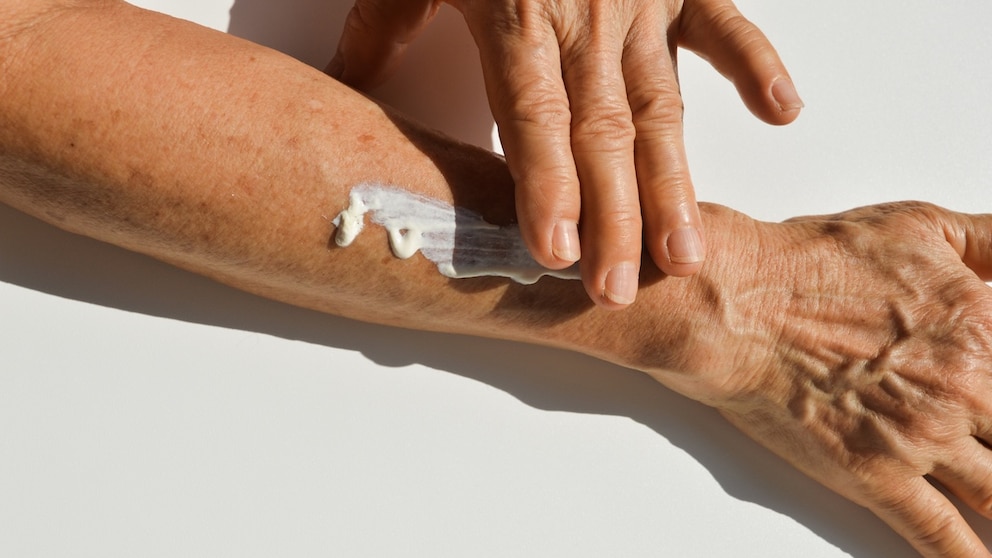
Age spots (medically known as solar lentigines) are flat, usually light to dark brown skin changes. They are classified as pigment disorders, specifically benign, localized hyperpigmentations of the skin. They primarily occur in areas that have been exposed to increased UV radiation over the years. Typical areas include the backs of the hands, the face, the forearms, and sometimes the décolleté and shoulders.
Why Are the Hands Particularly Affected?
The hands are among the body parts that are exposed to UV radiation practically all year round. Unlike the face, they are often forgotten when it comes to sun protection.
Also interesting: Fibromas–what helps with skin tags?
Are Age Spots and Sun Spots the Same?
Generally, age spots and sun spots refer to the same skin changes. The term “sun spots” (scientific term: lentigo solaris) describes the cause, namely long-term UV exposure, while “age spots” indicates that they become more visible with increasing age.
Why Do People Get Age Spots?
Age spots do not appear suddenly; they are the visible result of long-term UV exposure. “UV radiation can trigger changes in skin cells and influence melanin production or pigment storage,” explains Dr. Derendorf. “Eventually, these changes become visible as noticeable spots on the skin. Frequent, severe sunburns can further accelerate this process.”
Also interesting: Body areas that need special UV protection
Do You Only Get Age Spots as You Age?
Age spots become more common with age because UV exposure accumulates over many years. They are particularly common from middle age onward. However, it’s not just age that plays a role, but especially the amount of UV radiation the skin has been exposed to over a lifetime. The natural aging process also has an impact, as the skin shows different repair and pigmentation processes with age. In fact, age spots can also appear at a younger age, especially if the skin has been exposed to a lot of sun over a long period.
Are Age Spots Lighter in Winter?
Unlike freckles, age spots do not usually disappear in winter. However, their color can intensify in summer due to additional UV radiation, making them appear lighter in winter.
Can Age Spots Be Removed?
“If you want to get rid of age spots for cosmetic reasons, you have several options. The first step is to determine whether it is indeed a harmless solar lentigo,” says the expert. “Not every new brown skin change is automatically an age spot.”
Harmless Age Spot or Better to See a Doctor?
“A typical age spot is flat, evenly brown, clearly defined, and changes little over time,” explains the dermatologist. “In contrast, spots that appear new or change, grow quickly, have irregular borders, show multiple shades, itch, bleed, or differ significantly from other skin changes are noticeable. If a spot suddenly looks different from the others, it should be shown to a dermatologist. When in doubt, it’s better to have it checked once too often than to treat a supposed age spot cosmetically on your own.”

Sunburns in Children? Far from Rare
Are Small Red Dots on the Skin Dangerous?
Medical Methods for Removing Age Spots
Laser Treatment
Pigment lasers specifically target the melanin in dark skin changes. The pigment is altered by the treatment so that the body can subsequently break down the treated pigment residues. Depending on skin type, number, and severity of the spots, different laser systems may be suitable. The treatment is considered low-risk, but redness, crusts, or temporary pigment changes can occur. Especially with more pigmented skin, there is also a risk of subsequent hyperpigmentation. Therefore, the treatment should only be performed by experienced specialists.
IPL Therapy
IPL stands for Intense Pulsed Light. It is not a laser but broad-spectrum light that can target pigments and significantly lighten age spots.
Cryotherapy
In cryotherapy, also known as cold therapy, individual pigment spots are treated with liquid nitrogen. The treated skin area is deliberately damaged and then renewed. The procedure can be effective but can also cause blisters, crusts, or temporary or longer-lasting pigment changes. Which method is appropriate depends on factors such as skin type, location, and number of spots.
Chemical Peels
Chemical peels can also visibly lighten age spots. Certain acids are applied to the skin to remove dead skin cells and stimulate skin renewal. Depending on the preparation, glycolic acid or trichloroacetic acid (TCA) may be used. The strength of the peel depends on factors such as the active ingredient, concentration, and skin type. Since overly strong or improperly applied peels can cause skin irritation and pigment changes, stronger peels for age spots should only be performed professionally by a dermatologist. Consistent sun protection is especially important afterward, as the treated skin can be particularly sensitive to UV radiation.
Cosmetic Methods: Creams and Serums
“If you want to rely on cosmetics for removal, you should keep your expectations realistic. A cream can lighten age spots, but it usually cannot remove a pronounced individual lentigo as reliably as a dermatological procedure. Typical active ingredients used for pigment disorders that can promote lightening include retinoids, vitamin C, alpha hydroxy acids, and azelaic acid,” explains Dr. Derendorf.
Does Aloe Vera Help Against Age Spots?
Aloe vera can care for and soothe the skin. However, this does not imply that it removes or significantly lightens existing age spots.
Also interesting: Everything you need to know about skin cancer
What Can You Do Yourself Against Age Spots?
“The most important step is not necessarily the removal of existing spots, but consistent UV protection for prevention. Even after successful treatment, new age spots can develop,” advises Dr. Derendorf. “For the face, hands, and other uncovered body parts, a broad-spectrum sunscreen with at least SPF 30 is recommended, preferably SPF 50 in high UV exposure. Additionally, clothing, shade, and a hat or cap can help. The hands should not be forgotten when applying sunscreen. This is also important if a laser, IPL, or cold treatment has already been performed. The treatment removes the visible spot but does not change the decades-long UV exposure that led to its formation.”
With expert advice from Dr. Derendorf, a specialist in dermatology and venereology. Dermatology Practice at St. Anna Square in Munich.