

March 19, 2026, 8:56 pm | Read time: 5 minutes
Many people sleep poorly. They lie awake for long periods, don’t feel refreshed in the morning, drink large amounts of coffee to get through the day, and take melatonin to become sleepy. Chronobiologist Satchin Panda from the Salk Institute in California has been studying how modern lifestyles affect our internal clock for years. In an interview for FITBOOK, I asked him why so many people struggle with sleep problems and what high doses of melatonin can lead to.
Many people struggle with sleep problems. Why is that?
“Many want to perform at their best during the day. The internal engine is constantly running at full speed, driven by stress and caffeine. Sleep, however, requires the opposite: a conscious shutdown. No mechanic would repair a car while the engine is running. Yet that’s exactly what we do. We rev the engine all day and keep our minds awake in the evening with bright lights, expecting to simply close our eyes and fall asleep immediately. This expectation is unrealistic. Often, there’s also an unfavorable sleep environment. It’s rarely truly dark, and it’s often too warm.”
Many turn to melatonin for sleep problems. Yet we would naturally produce more of the hormone if we exposed ourselves to more daylight during the day.
“That’s true. We’ve known this since 2004, when a study showed that exposure to about 5,000 lux of daylight led to an increase in nighttime melatonin production. We recently confirmed this observation in our own study. However, we still don’t know the exact underlying mechanisms.”
Satchin Panda: “Melatonin Can Remain in the Body for a Long Time”
Melatonin is often very highly dosed. What can that lead to?
“When people take high doses externally, it’s particularly unfavorable in combination with late meals. Additionally, melatonin can remain in the body for a long time, sometimes until the next afternoon, at a level that’s typically characteristic of the middle of the night. The result is feeling groggy and lethargic. To counteract this, many then turn to a double espresso. In the evening, melatonin follows again. Many believe they are controlling their internal clock this way, but in reality, they are just fighting the side effects.”
I love my coffee. Is it still sensible to occasionally take a caffeine break?
“I personally reduce my coffee consumption, for example, between Thanksgiving and New Year, sometimes abstaining completely for a week. I notice the difference very clearly. Without coffee, I get tired around 9 p.m. and sleep seven to eight hours deeply and restfully. For the rest of the year, I often think coffee has no effect, but in fact, I sleep less and more shallowly with coffee.”
You once suggested drinking a glass of warm water instead of coffee in the morning to wake up.
“That actually works. It helps warm up the body, which is a prerequisite for waking up. Additionally, a glass of warm water stimulates bowel movement.”
“How to Minimize Disruptions to the Circadian System”
Apart from caffeine and melatonin, there’s a fundamental question about the timing of sleep: Some people are convinced that sleep before midnight is particularly healthy. Does it make a difference for the circadian rhythm when you sleep?
“If someone, for example, lives in Berlin but goes to bed at 1 a.m. and wakes up at 9 a.m., then this person is essentially living in the time zone of Beijing. I see no problem with that as long as it’s consistently handled that way every day and eight hours of sleep are achieved. That’s exactly what we advise shift workers, who might only come home at midnight and go to sleep around 1 a.m. They should keep their sleep rhythm constant, even on days off. This way, disruptions to the circadian system can be minimized.”
About the Person
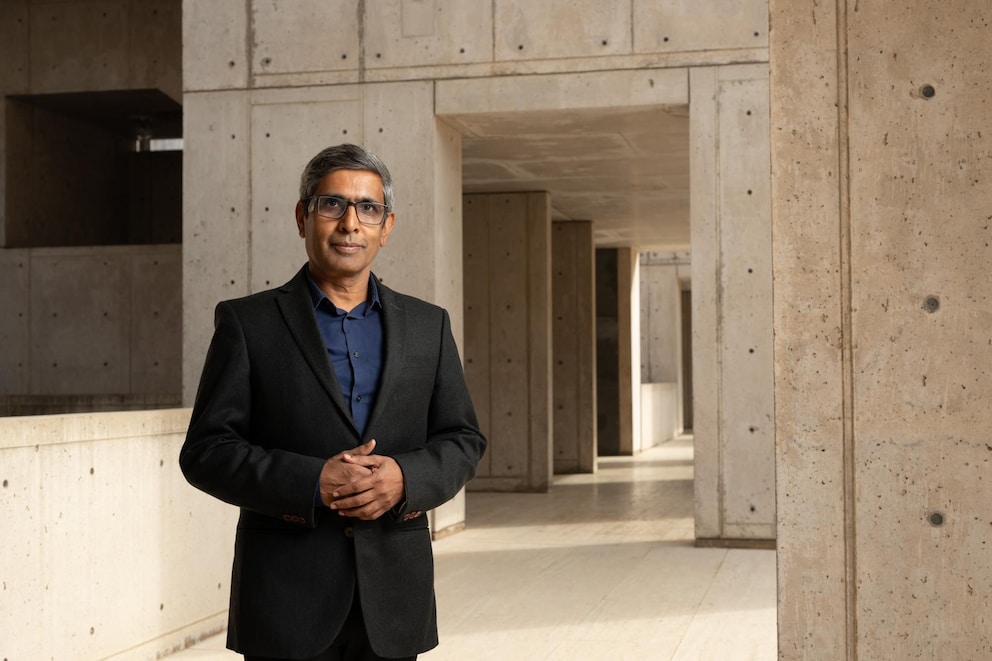
Satchin Panda is a professor at the Salk Institute in California and one of the world’s leading chronobiologists. He researches how the internal clock affects metabolism and sleep and the role intermittent fasting plays in the human body. Panda is also the author of several books, including “The Circadian Code – Sleep Well, Lose Weight, Be Healthy”.
Shift workers often see less daylight. Are there health benefits to aligning one’s daily rhythm more closely with the natural solar cycle, such as waking up with sunrise and going to sleep with sunset?
“There are no reliable comparative studies on this. First, it would need to be clarified what outcome is being considered: subjective well-being or objective medical parameters. If people live in a stable rhythm over the long term, I generally see no problems. I’ve met police officers in San Diego who have been working shifts for 30 or 35 years, consistently on either early or late shifts for three months at a time. They are healthy, neither alcohol-dependent nor smokers, and show no increased risk for relevant diseases. That surprised me. The key seems to be that the shift remains constant and sufficient good sleep is possible. Under these conditions, no negative effects appear to be evident.”