


August 4, 2025, 1:01 pm | Read time: 4 minutes
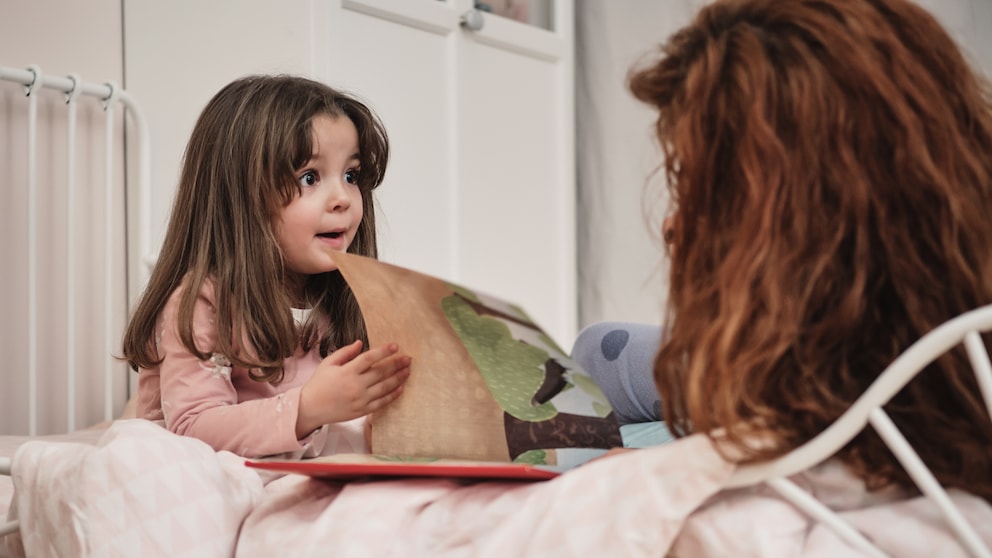
A hospital stay can be an emotional burden for children—fear, separation, and uncertainty dominate daily life on the ward. But a new study shows: A simple, effective method significantly helps against children’s fear in hospitals—without medication. Reading stories aloud (also known as storytelling) was as effective for young patients as a painkiller in reducing anxiety. And: This method was even more effective than the previously established play therapy. A second study from Brazil provides additional evidence, with surprising biological effects that one would not have expected in children.
What Was Studied and Why?
For children, a hospital stay is often a highly stressful experience. They are taken out of their familiar environment, separated from parents or siblings, and undergo medical procedures they often do not understand. This situation can lead to intense fears—with negative consequences for their well-being, recovery, and cooperation with medical staff. Parents also often find the situation very stressful, which in turn affects the children.
There were previous indications that both play therapy and reading stories—known as storytelling—can alleviate children’s fears. But which method works better? This question was at the center of the new study. The goal was to develop specific, age-appropriate recommendations for the emotional support of children in hospitals.1
Study Design and Methods
The study was conducted as a randomized, controlled trial at a single hospital, involving 75 hospitalized children aged three to ten. They were randomly divided into three groups:
- Storytelling Group:
Children were read an age-appropriate book on two consecutive days to provide them with security and orientation through stories. - Play Therapy Group:
Here, children could also play with toys or do crafts for 30 minutes on two consecutive days to process hospital procedures playfully. - Control Group:
No specific intervention was provided.
Two recognized methods were used to assess anxiety:
- Standardized Questionnaire – Spence Children’s Anxiety Scale (SCAS) to measure children’s anxiety
- Observations by nursing staff who were unaware of the group assignments (a method known as blinding in the context of studies)
Measurements were taken over three days by nursing staff. Factors such as age, gender, and previous hospital stays were statistically considered.
Also Interesting: How to Childproof Your Home
Impact of Storytelling on Children’s Fear in Hospitals
The results are clear: Storytelling significantly reduced anxiety in children more than play therapy or no intervention.
To make the change measurable, the study used a scale to illustrate the changes clearly.
The Numbers:
- Storytelling Group:
The average anxiety score dropped from 0.32 (Day 1) to 0.14 (Day 2) and 0.12 (Day 3). This was a statistically significant decrease of nearly 60 percent. - Play Therapy Group:
The scores decreased from 0.32 to 0.15 (Day 2) and 0.23 (Day 3). The decline was noticeable but not statistically significant, meaning it was not clearly demonstrable. - Control Group:
The anxiety scores were 0.32 (Day 1), 0.17 (Day 2), and 0.26 (Day 3). On the third day, anxiety even slightly increased again.

How an App Helps Breast Cancer Patients with Metastases

Study Finds Possible Reason Why Girls Are More Prone to Depression Than Boys
What Do the Results Mean?
Storytelling is shown to be a highly effective, simple, and non-invasive method to alleviate anxiety in hospitalized children—especially younger ones. Play therapy was less effective in the Iranian study—and even counterproductive for older children. Supplemented by the biological results from Brazil, it is clear: Reading aloud is more than entertainment—it is a therapeutic tool.
For older children (eight to ten years), no significant effect was observed—other measures should be considered when planning interventions. The data also suggest gender-specific differences that should be taken into account when planning interventions.
Conclusion
The research suggests that storytelling significantly reduces anxiety and is an effective, simple, and non-invasive method to alleviate anxiety and pain in hospitalized children, especially younger ones. Supplemented by the biological findings from Brazil, it is clear: Reading aloud is more than entertainment—it is a therapeutic tool.