


June 22, 2026, 2:23 pm | Read time: 4 minutes
Medications and psychotherapy are considered important components of depression treatment, especially when quick help is needed. However, exercise might help sooner than previously thought. A French study shows that after just a few weeks of a supervised fitness program, initial positive effects on depression can be seen. Those who think of classics like running or weight training will be surprised: It was about Nordic walking.
The researchers deliberately chose Nordic walking: It is considered aerobic exercise, which studies have shown to be particularly effective against depression.1 For beginners or older people, it is often less intimidating than running. Health authorities also recommend it as optimal exercise for mental health. What the scientists additionally demonstrated: Nordic walking can work surprisingly quickly in the case of depression.
How the Study Was Conducted
Physical activity can alleviate depressive symptoms. However, it is less well-researched how quickly initial improvements become noticeable. Researchers from France wanted to investigate how the symptoms of people with moderate to severe depression develop during a ten-week exercise program. They also examined whether individuals with more severe symptoms particularly benefit from the exercise.
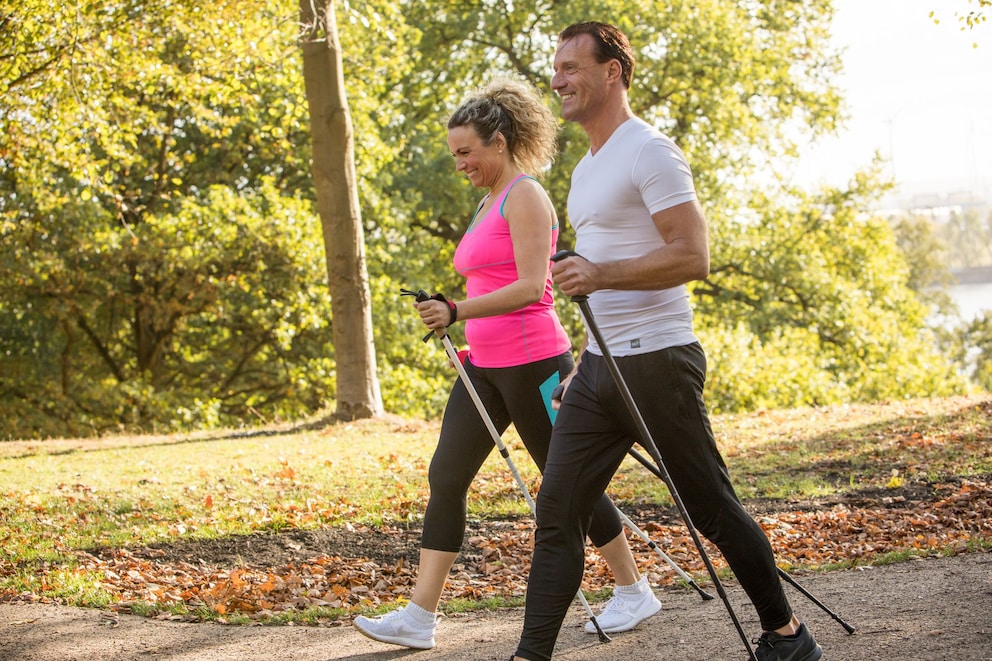
Sixty-four adults with moderate to severe depressive symptoms participated in the randomized controlled study. The average age was 50 years, and most participants were women. They were randomly assigned to either a Nordic walking group or a control group. The training group completed a one-hour, supervised Nordic walking session twice a week for ten weeks at moderate intensity. The control group received only informational materials about depression.2
Nordic walking is a joint-friendly endurance sport that involves walking with special poles and also trains the upper body muscles. The depressive symptoms were recorded at the beginning of the study and after five and ten weeks using a standardized questionnaire. The researchers then compared the changes in both groups.
Noticeable Improvements After Just a Few Weeks
The Nordic walking program led to a significant improvement in depressive symptoms, while the symptoms in the control group changed little. In the training group, the average BDI-II score, which measures the severity of depressive symptoms, dropped from around 27 points at the start to just under 17 points after five weeks and to about 13 points after ten weeks. In the control group, the scores remained largely unchanged.
It was particularly striking that most of the improvement occurred in the first five weeks (the first half of the ten-week study period). Although the symptoms continued to improve afterward, the additional benefit was significantly smaller. People with severe depression benefited more than participants with moderate symptoms. Their depression scores decreased significantly more in the first five weeks.
After five weeks, about half of the participants already showed a clinically relevant improvement. After ten weeks, this proportion rose to 70 percent among participants with severe depression. The results suggest that regular, supervised Nordic walking can noticeably reduce depressive symptoms within a few weeks—especially in people with more pronounced symptoms.

This Training Helps Against Panic Attacks

Long-COVID Patients Should Focus on This Training
What This Means in Practice
The results could also have practical significance for the treatment of depression. Since those affected often suffer from a lack of motivation and energy, long-term exercise programs can pose an additional hurdle. The prospect of noticeable improvements after just a few weeks could make it easier to start regular physical activity.
The study also suggests that people with severe depression could particularly benefit from a structured exercise program. At the same time, it remains unclear what training duration is optimal in the long term. However, the results support considering supervised endurance programs as a useful addition to existing treatment options.
Study Evaluation and Possible Limitations
The strengths of the study include the randomized design, high participation rate, and repeated measurements, which allowed for precise observation of the timeline. However, there are also limitations: There was no detailed information on other treatments, such as medications or psychotherapy. Additionally, participants knew whether they were part of the training program, which could have influenced their self-assessment of symptoms.
Furthermore, the control group was relatively small and did not receive a comparable group activity. Therefore, it is not certain which part of the effect is due to the exercise itself and which to factors like social contacts or trainer supervision. Since more than 90 percent of the participants were women, the results are only partially applicable to men. On the positive side, no adverse events were reported during the ten-week study.