


June 15, 2026, 2:56 am | Read time: 7 minutes
Muesli has been considered one of the healthiest breakfasts for years. But a look at the ingredient list of many ready-made products shows: Not every mix is as balanced as its reputation suggests. While oats are a nutrient-rich base, crunchy mueslis and granolas can contain a lot of sugar. So how healthy is muesli really—and should it be on the breakfast table every day?
Muesli Is Not All the Same
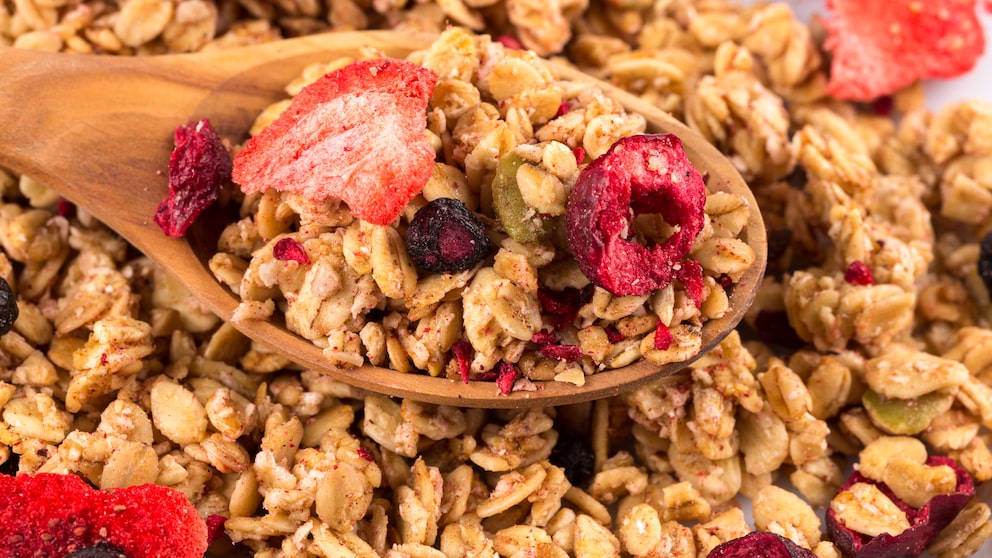
When people talk about muesli, they don’t always mean the same product. In addition to classic flake mixes, you’ll find crunchy mueslis, chocolate mueslis, protein mueslis, or so-called granolas on the shelves. The latter are roasted muesli mixes that are particularly popular for their crunchy pieces.
Accordingly, the nutritional values also vary. While some products consist mainly of whole grain flakes, others contain larger amounts of sugar, syrups, or fats. The term muesli alone says little about how balanced a product actually is.
A Swiss Doctor Made Muesli World-Famous
The fact that muesli is now found on breakfast tables around the world is thanks to Swiss doctor Maximilian Bircher-Benner. Around 1900, he developed a meal for his sanatorium patients made of soaked oats, grated apples, nuts, lemon juice, and condensed milk. The so-called “Birchermüesli” is considered the precursor of today’s muesli.
The name also comes from Switzerland. “Müesli” is the Swiss German diminutive of “Mus” and means something like “little mush.” While Bircher-Benner originally served his creation as a light evening meal, muesli is now mostly eaten for breakfast—usually in a significantly different composition than the original.1
What Sets Oats Apart From Many Breakfast Cereals
The foundation of many classic mueslis is oats. They contain complex carbohydrates, fiber, protein, and minerals such as magnesium, iron, and zinc.
Particularly well-known are the so-called beta-glucans. These are soluble fibers naturally found in oats. They can help slow the absorption of carbohydrates, resulting in a less dramatic rise in blood sugar levels after eating. At the same time, the feeling of fullness often lasts longer.2
Studies also suggest that beta-glucans can positively affect cholesterol levels.3,4
Crunchy, Sweet–and Often Significantly Higher in Sugar
This is exactly where many ready-made mixes differ from classic oats. Especially crunchy mueslis and granolas often contain additional sugar sources. The typical crunchy pieces usually form only through ingredients like honey, syrups, or other sweeteners that bind the flakes together during baking.
Research shows that the differences can be significant. While some products contain relatively little sugar, others have more than 20 grams of sugar per 100 grams. Those who generously reach for the muesli box in the morning often consume much more sugar than expected.
When “Natural Sweetness” Is More Marketing Than Guidance
Many manufacturers advertise with terms like fruit sweetness, date syrup, or apple juice concentrate. This initially sounds healthier than regular table sugar. However, for the body, the source of the sugar often makes less of a difference than the packaging suggests. These ingredients also provide sugar and increase the product’s energy content.5
Therefore, it’s worth taking a look at the ingredient list. Sugar often hides behind names like glucose syrup, fructose syrup, dextrose, maltodextrin, or barley malt extract.
Why Some Mueslis Make You Hungry Again Faster
A breakfast with many quickly available carbohydrates can cause blood sugar levels to rise rapidly. The body responds with increased insulin secretion. When blood sugar drops significantly again, hunger often returns more quickly.
Oats behave differently. Due to their high fiber content, carbohydrates are digested more slowly. Energy is provided more evenly, which many people perceive as longer-lasting satiety.
Dried Fruits: Healthy Extra or Hidden Calorie Source?
Raisins, dates, or dried cranberries are among the most popular muesli ingredients. They provide fiber and various micronutrients, but also contain significantly more sugar and calories per unit of weight than fresh fruit due to water loss.6
This doesn’t make dried fruits unhealthy. However, those who eat muesli regularly are usually better off with fresh fruits like apples, berries, or seasonal fruits. Dried fruits are more suitable as a supplement than as a main ingredient.
Nuts Provide Nutrients–but Also Plenty of Energy
The same goes for nuts. Almonds, hazelnuts, or walnuts provide unsaturated fatty acids, plant-based protein, and important vitamins and minerals. Walnuts, in particular, are often highlighted for their omega-3 fatty acid content. At the same time, nuts are high in energy. Even a small handful provides a considerable amount of calories. Therefore, the quantity matters here as well.
Does Portion Size Ultimately Decide?
One aspect often underestimated when it comes to muesli is the portion size. Manufacturers often calculate with amounts of about 40 to 50 grams per serving. In everyday life, however, many people’s bowls are significantly fuller. Then there’s milk or yogurt, fruit, nuts, and other ingredients.
So a supposedly light breakfast can quickly become a very energy-rich meal—even if the individual ingredients are generally considered healthy.

Granola Versus Muesli – Which is Healthier?

Can a Smoothie Replace Breakfast?
Should Muesli Be on the Breakfast Table Every Morning?
There is no universal answer to this. A muesli made of oats, fresh fruit, and a moderate amount of nuts can be part of a balanced diet. However, this does not mean that every muesli mix is automatically a good choice for every day.
Especially with heavily sweetened crunchy or chocolate mueslis, it’s worth taking a closer look at the ingredient list. They often differ significantly from what many consumers associate with a classic muesli.
Conclusion
Muesli can be a healthy breakfast—but it isn’t always. What matters is not the label on the package, but the composition. Oats provide fiber, protein, and important minerals and form the basis of many balanced mueslis. At the same time, many ready-made products show that a supposedly healthy breakfast can quickly become a sugar trap. Those who pay closer attention to ingredients and portion sizes get a much better picture of what’s actually in the bowl.