


July 2, 2026, 11:00 am | Read time: 7 minutes
Eating a variety of colorful fruits and vegetables is a common dietary tip—and for good reason. Different health-promoting phytochemicals are present in foods depending on their color. A large-scale study from 2025 took a closer look at the impact of flavonoids on the aging process, with remarkable results!
Aging–but Healthy!
“The goal of medical research is not only to help people live longer but also to ensure they remain healthy for as long as possible,” explains study author Dr. Nicola Bondonno in a press release.1 The background of her research is the increasing importance of healthy eating in old age. While flavonoids—phytochemicals with anti-inflammatory and antioxidant properties—have already been linked to a lower risk of cardiovascular diseases and certain cancers, it was previously unclear how regular consumption of flavonoid-rich foods affects various aspects of aging.
Therefore, Bondonno’s team investigated in 2025 in an international study whether a higher intake of flavonoid-rich foods reduces the risk of negative health aging effects.2 These included frailty, reduced physical performance, and poor mental health. The research focused particularly on long-term changes due to the consumption of such foods on aging symptoms.
Which Foods Are High in Flavonoids?
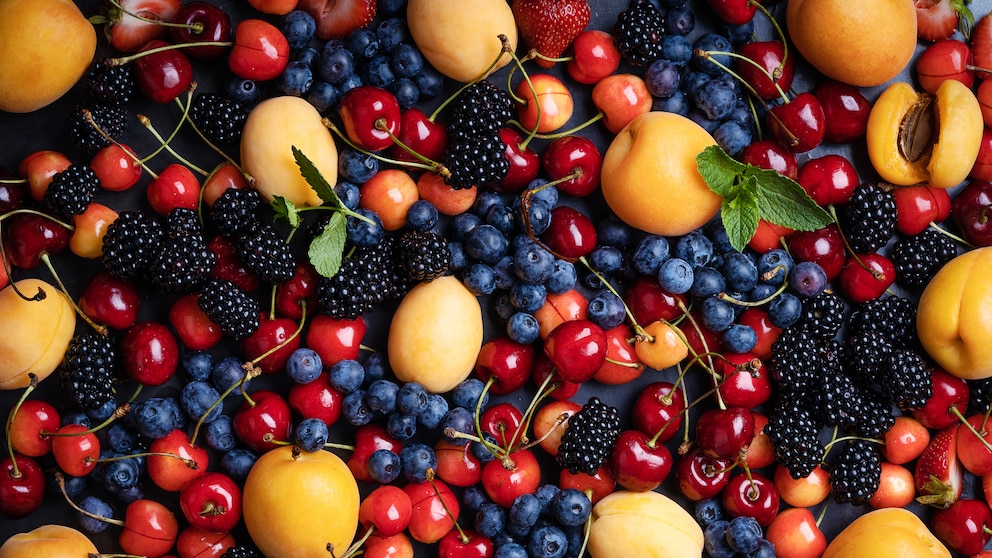
Phytochemicals are found—as the name suggests—in plant-based foods. As plant pigments, the group of flavonoids is responsible for the red, blue, light yellow, and purple colors of many types of vegetables and fruits, but they are also found in soy, dark chocolate, and tea.
Examples of flavonoid-rich foods:
- Blueberries
- Apples
- Grapefruit
- Grapes
- Oranges
- Onions
- Celery
- Carrots
- Kale
- Bell peppers
- Red wine
- Coffee
Nearly 90,000 Participants Took Part
The study was conducted by scientists around Nicola Bondonno and Aedín Cassidy (Queen’s University Belfast and Edith Cowan University) in collaboration with researchers from the Harvard T.H. Chan School of Public Health. The data for the study came from two large prospective cohort studies. One was the Nurses’ Health Study, conducted from 1990 to 2014 with 62,743 women, and the other was the Health Professionals Follow-up Study, which examined 23,687 men aged 60 and older from 2006 to 2018.
Participants completed food frequency questionnaires (FFQs) every four years, a common tool in nutritional science. Based on the FFQs, the study authors calculated the “Flavodiet Score”—a measure of the intake of flavonoid-rich foods. Additionally, total flavonoid intake and various subclasses (such as flavanols, anthocyanins) were recorded. Health aging effects—frailty, physical function limitations, and mental health issues—were assessed through self-reports. For statistical analysis, the researchers used Cox regression and adjusted the analyses for numerous potential confounders such as age, smoking behavior, physical activity, and energy intake.
Women Benefit Especially from Flavonoids
In the press release, Bondonno summarizes: “Our research shows that people who consume more flavonoids tend to age better.” But what does that mean in detail?
In the Nurses’ Health Study, there was a clear link between a flavonoid-rich diet and healthier aging. Women with the highest Flavodiet Score had lower risks for various aging symptoms compared to the lowest group:
- 15 percent lower risk of frailty
- 12 percent lower risk of physical impairment
- 12 percent lower risk of poor mental health
The positive effects were particularly strong with higher consumption or increased intake of tea, red wine, apples, blueberries, and oranges. An increased overall intake of flavonoids and the flavonoid subclasses studied was also associated with a lower risk of all examined aging symptoms.
And What About the Men?
In the male comparison group (Health Professionals Follow-up Study), however, the associations were generally weaker. The most significant effect was seen in the protection against poor mental health in men with the highest Flavodiet Scores. The study authors note, however, that the stronger associations in women could also be due to differences in the follow-up time between the two cohorts—not necessarily gender-specific effects, which are still under-researched.
Just Three Extra Servings of Berries Are Worth It for Both Genders
If you’ve realized while reading that your current diet contains few flavonoid-rich foods, you can do your health a favor by increasing the number of servings. Professor Eric Rimm from Harvard explains in the press release: “We found that participants who increased their intake of flavonoid-rich foods by three servings per day had a six to eleven percent lower risk for all three aging outcomes and a 15 percent lower risk for poor mental health in men.”
Significance of the Results
These results support the assumption that flavonoid-rich foods could be an effective and easily implementable part of a diet that promotes healthy aging. Particularly encouraging for flavonoid newcomers: The observed effects occurred not only with consistently high consumption but also with increases over time—suggesting that it is worthwhile to adjust the diet even in old age. While women in the study benefited more, men also showed certain advantages, especially regarding mental health. Practically, this means that those who regularly incorporate foods like berries, apples, oranges, or tea into their diet could significantly reduce their risk of age-related limitations. These findings could be of great importance not only for health-conscious individuals but also for doctors and caregivers–for example, when advising older people on preventing frailty and isolation.

Women who incorporate this into their diet can reduce their risk of breast cancer.

What Are Phytochemicals and Why Are They So Healthy?
Study Context and Possible Limitations
The study benefits from the high quality and long duration of the underlying cohort studies and the large number of participants. It provides robust evidence of a link between a flavonoid-rich diet and healthier aging, especially in older women. However, certain limitations should be noted: The results are based on self-reported data on diet and health status, which can lead to biases. Moreover, these are observational data—a causal relationship cannot be definitively established. The differences between men and women also remain unclear and require further research. Since the data come from U.S. cohorts, it is also unclear to what extent the results can be generalized to other populations. The authors themselves emphasize the need for further studies—especially those that specifically address gender-specific effects.
Conclusion
Eric Rimm summarizes the results: “Overall, these findings highlight the potential of simple dietary changes to influence overall quality of life and contribute to optimizing healthy aging.” Flavonoid-rich foods like apples, berries, oranges, and tea can particularly help women stay fit as they age. The study shows that both consistently high and increased intake of these foods over time are associated with a lower risk of frailty, physical impairments, and mental health issues in old age. Despite certain limitations, the results provide a strong argument for a plant-rich, flavonoid-focused diet in old age.