


June 1, 2026, 8:32 am | Read time: 5 minutes
Who says you have to go to the supermarket for superfoods? Sometimes they grow right under your nose. Goutweed makes it easy. Often dismissed as a weed, this member of the carrot family grows in many places: in gardens, forests, meadows, and along riverbanks. It’s worth picking some on your next walk. FITBOOK nutrition expert Sophie Brünke explains what makes goutweed so healthy.
What Goutweed Is and How to Recognize the Herb
Goutweed (Aegopodium podagraria) is a native wild herb from the carrot family. It’s also known by names like bishop’s weed, ground elder, or wild masterwort. Many gardeners find it a nuisance: As a persistent “weed,” it spreads quickly through underground runners.1
Learn more about goutweed in the garden from our colleagues at myHOMEBOOK.
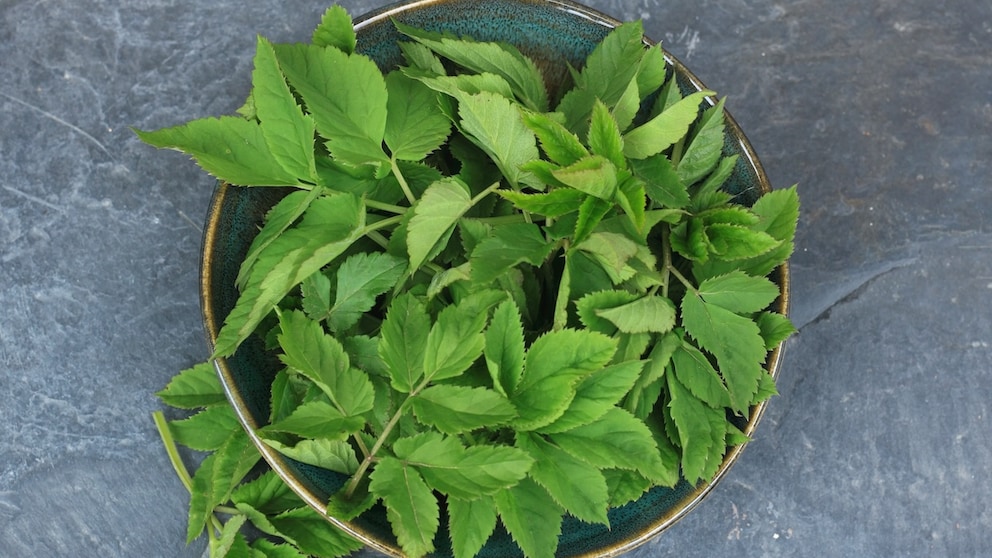
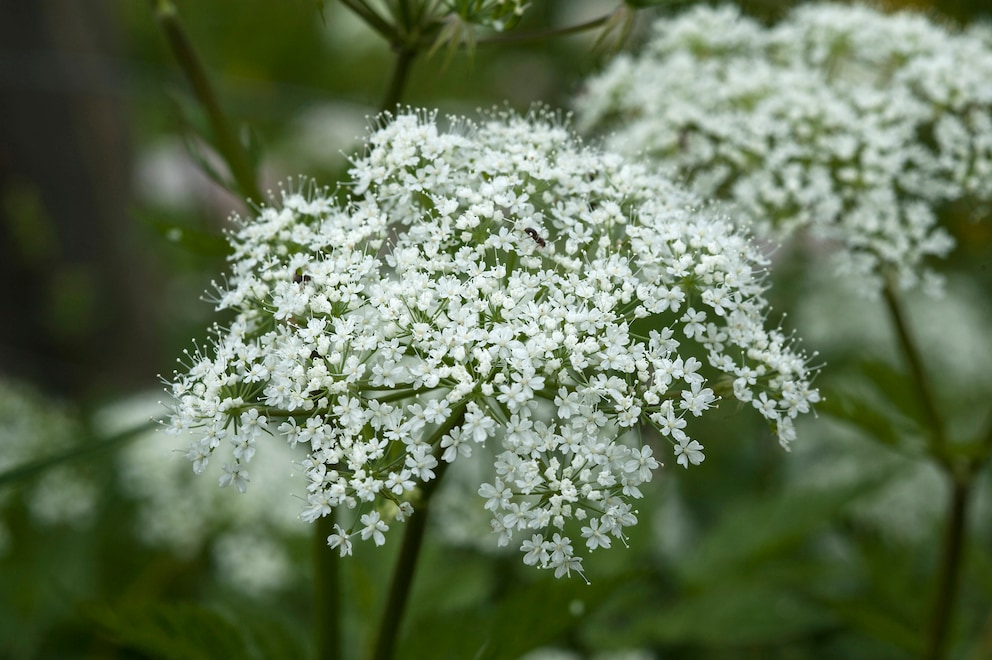
An old farmer’s rule helps with identification: the “three-three-three” rule. The leaves are divided into three parts, the individual leaf groups are often divided again into three, and the stem is triangular. Depending on the location, goutweed grows about 30 to 100 centimeters tall. Also typical are the small white flowers that grow in flat umbels from May to September.2
When collecting, the young leaves are particularly interesting because they are more tender and can be used well in the kitchen. Goutweed is described as having a slightly nutty taste, reminiscent of parsley, carrot, or spinach. But be careful: Goutweed can be confused with other members of the carrot family, including poisonous ones like fool’s parsley.
Goutweed as a Medicinal Plant: What Is the Herb Supposed to Help With?
Goutweed is more than an edible wild herb. It is also traditionally used as a medicinal plant. The plant is particularly associated with gout: The botanical name Aegopodium podagraria already hints at this–”Podagra” means gout. In this condition, excess uric acid crystals deposit in joints, tendons, or organs. Folk names like goutweed or zipperlein herb indicate what goutweed was primarily used for in the past. The reason: Goutweed is said to have diuretic and alkalizing effects. This is supposed to help the body excrete uric acid–a point that plays a role in naturopathy, especially for gout.3
In folk medicine, goutweed is also said to help with rheumatism, joint problems, and sciatica. It may also have anti-inflammatory and soothing effects, such as for insect bites and sunburn. For this, the herb was consumed as a tea, applied externally as a poultice, or used as a bath additive.4
These Nutrients Are in Goutweed
Goutweed is a real powerhouse: The weed provides, among other things, vitamin C, vitamin A, and minerals like potassium, magnesium, calcium, copper, and iron. The levels of vitamin C and potassium are particularly notable. Depending on the source, the vitamin C content is about 150 to 200 milligrams per 100 grams of goutweed–that’s already twice as much as an adult needs per day!5,6,7 For comparison: Kale provides “only” half as much, and lemons provide only a quarter. The small green leaves of goutweed also contain a surprising amount of potassium: 528 milligrams per 100 grams. Bananas, which are also touted as high in potassium, provide about 350 milligrams for the same amount. Adults need 4,000 milligrams of the mineral daily.8
In addition, goutweed contains secondary plant compounds, such as essential oils and polyphenols. These have antioxidant effects and protect cells from premature aging.
Also interesting: Bone broth–health booster or overrated hype?
Proven or Traditional? What Research Says About Goutweed
There is currently no scientific evidence that goutweed effectively treats gout in humans. The assumption that the herb could help is based on its high potassium content. This dissolves uric acid crystals, and the diuretic effect flushes them out. It sounds plausible, but it is not proven by studies.
Goutweed is still interesting: Reviews describe various bioactive plant compounds, including polyphenols and polyacetylenes like falcarinol and falcarindiol. Some of these substances are associated with antioxidant and anti-inflammatory effects. Laboratory and animal studies provide initial indications, such as that goutweed extracts can scavenge free radicals and influence inflammatory processes. This makes the traditional use for joint problems understandable–but it does not replace proof of effectiveness for gout or rheumatism.9,10