

September 23, 2021, 10:27 am | Read time: 4 minutes
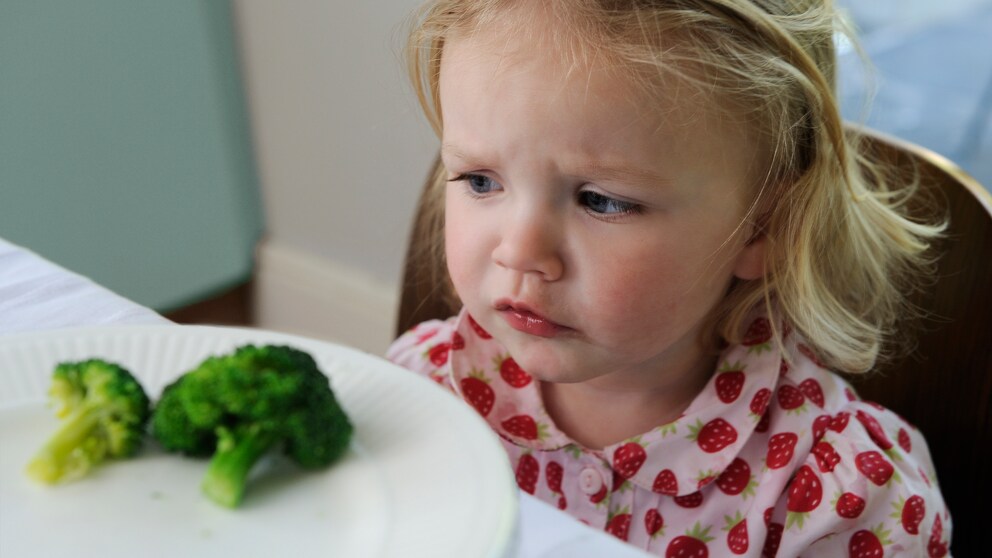
When broccoli is served, many children wrinkle their noses. Adults, on the other hand, often find the vegetable quite tasty. A study now provides clues about what makes the difference between young and old.
Broccoli, cauliflower, or red cabbage are not only all types of cabbage but are also often equally unpopular with children. Many parents will be familiar with this. They want to feed their offspring healthily, but all they hear from the children at the sight of broccoli and the like is “yuck, gross.” But why? An Australian study has now investigated this very question.
Overview
Does Broccoli Taste Different to Children and Adults?
Admittedly, there are certainly adults who can’t stand one or more of the mentioned types of cabbage because they can have a rather bitter taste. As a previous study from 2016 found, children are even more sensitive to bitter tastes.1 Additionally, cabbage vegetables produce strongly smelling, sulfur-containing volatile compounds from the breakdown of S-methyl-L-cysteine sulfoxide (SMCSO), a unique amino acid-like sulfur storage compound.2
How we perceive food–both in taste and smell–depends on the bacteria in our oral cavity. This oral microbiome, as science demonstrated in 2008, can vary from adult to adult.3 In contrast, children have a microbiome that is very similar to that of their parents. Based on this, researchers from the Australian science agency “Csiro” wanted to find out to what extent the perception and evaluation of the sulfur compounds in cabbage varieties differ between individuals and between adults and children.
Also interesting: This preparation could make broccoli even healthier
Can Children Simply Not Stand the Smell of Broccoli?
For the study, researchers first identified the main odor-active compounds in raw and steamed cauliflower and broccoli. They used gas chromatography-olfactometry for this. This is a technique that allows volatile compounds to be isolated and then used for a smell test. Ninety-eight families with children aged six to eight participated in this. They evaluated the chemical compounds separately, with dimethyl trisulfide, which smells rotten and sulfurous, scoring the worst.4 Interestingly, children and adults were quite in agreement during the smell test.
Also interesting: What parents can do to get children to eat more vegetables
The Role of the Oral Microbiome
The mere smell cannot explain why children tend to have a greater aversion to broccoli, cauliflower, or red cabbage than their parents or other adults. Therefore, in the second step of the study, the scientists tested what happens when the vegetable comes into contact with the bacteria in the oral cavity while eating. The oral microbiome can indeed amplify these volatile compounds, such as those from vegetables.5
For this, the research team mixed saliva samples with raw cauliflower powder (representative of all the cabbage varieties considered) and analyzed the resulting compounds. The team discovered significant differences in the production of volatile sulfur compounds between participants, but very similar results when comparing parents and their children.
Planting and care tips for growing broccoli in the garden are available from our colleagues at myHOMEBOOK.

Effect and Proper Preparation of Bay Leaf Tea

What Parents Can Do to Encourage Kids to Eat More Vegetables
Taste Buds Get Used to Strong Aromas
While children whose saliva produced high amounts of volatile sulfur compounds generally disliked raw cabbage vegetables, it was different for their parents. From this, the researchers conclude that many people’s taste buds get used to the foods over time.
with material from dpa
Sources
- 1. Mennella JA, Bobowski NK, Reed DR (2016). The development of sweet taste: From biology to hedonics. Reviews in Endocrine and Metabolic Disorders
- 2. Marks HS, Hilson JA, Leichtweis HC et al. (1992). S-Methylcysteine sulfoxide in Brassica vegetables and formation of methyl methanethiosulfinate from Brussels sprouts. Journal of Agricultural and Food Chemistry
- 3. Starkenmann C, Le Calvé C, Niclass Y et al. (2008). Olfactory Perception of Cysteine−S-Conjugates from Fruits and Vegetables. Journal of Agricultural and Food Chemistry
- 4. Frank D, Piyasiri U, Archer N et al. (2021). In-Mouth Volatile Production from Brassica Vegetables (Cauliflower) and Associations with Liking in an Adult/Child Cohort. Journal of Agricultural and Food Chemistry
- 5. Frank D, Piyasiri U, Archer N et al. (2018). Influence of saliva on individual in-mouth aroma release from raw cabbage (Brassica oleracea var. capitata f. rubra L.) and links to perception. Heliyon