


August 18, 2026, 7:58 am | Read time: 5 minutes
Whole grain bread, porridge, fruit, yogurt, or perhaps an egg? A healthy breakfast can look quite different. As a nutrition expert, I believe it’s not a single food item that’s crucial, but rather a balanced composition. With a few simple basic rules, you can supply your body with important nutrients in the morning and create a good foundation for the day.
These Foods Are Part of a Healthy Breakfast
After the overnight fasting period, the body needs fluids and energy again. An ideal balanced breakfast combines several nutrient groups. Whole grain products like whole grain bread, rolls, or oats are particularly suitable. Add protein-rich foods like natural yogurt, quark, cheese, or eggs, along with fresh fruits and vegetables. Nuts and seeds provide valuable unsaturated fatty acids.1
A simple guide for the breakfast table:
- Natural yogurt, quark, cheese, or eggs
- Whole grain bread, rolls, or oats
- Fresh fruit
- Nuts and seeds
- Water or unsweetened herbal and fruit tea
- Vegetables like tomatoes, cucumbers, or bell peppers
If you don’t feel hungry in the morning, you don’t have to force yourself to have a big meal. In this case, breakfast can take place later. The key is to maintain a balanced nutrient supply throughout the day.
Whole Grain Products Keep You Full Longer
When it comes to bread, rolls, and cereal products, it’s worth choosing the whole grain variety. Whole grain contains more fiber and plant protein compared to white flour. Fiber-rich foods keep you full longer and contribute significantly to daily fiber intake. Adults are recommended (according to the German Nutrition Society) to consume at least 30 grams of fiber per day. You can start your day with some of this through whole grain bread, oats, fruits, and vegetables.2
A simple breakfast could consist of whole grain bread with quark or cheese and plenty of raw vegetables. Eggs also pair well with vegetables, such as in scrambled eggs or an omelet with tomatoes, bell peppers, or zucchini. Highly processed meats like salami or bologna should not be regulars on the breakfast table. Frequent consumption of processed meat is linked to an increased risk of certain cancers.
Oats Are a Good Base for Muesli and Porridge
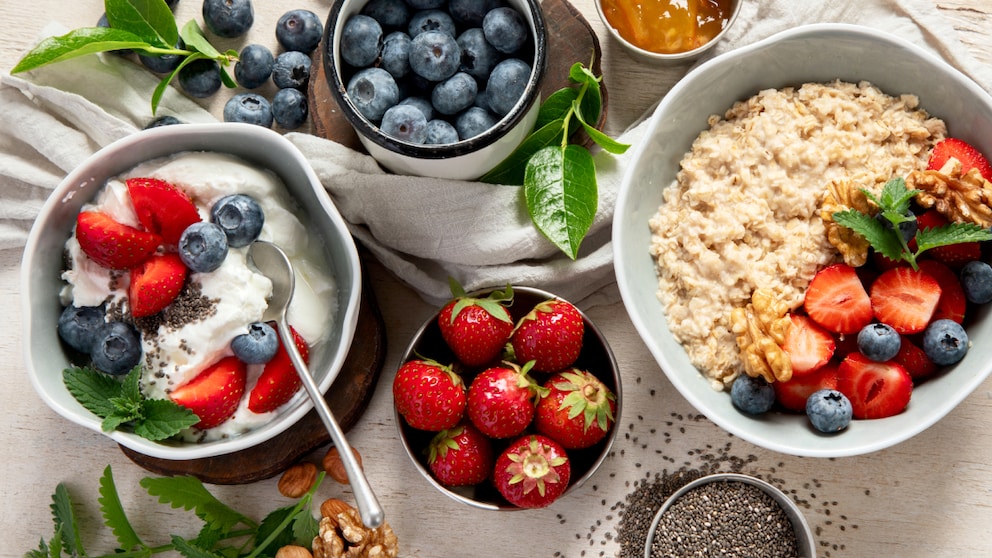
Oats are particularly versatile and are excellent for a balanced breakfast. They are whole grain products and provide fiber, protein, vitamins, and minerals. As muesli, porridge, or overnight oats, they can be combined with natural yogurt, fruits, nuts, and seeds. Blueberries or other fresh fruits add extra vitamins and minerals. Walnuts, flaxseeds, or chia seeds enhance the breakfast with unsaturated fatty acids.3
Overnight oats are especially practical for people with little time in the morning. The oats are soaked the night before and stored in the refrigerator overnight. Soaking helps the body better absorb certain minerals.
A bit of dark chocolate with at least 70 percent cocoa content can occasionally be added to muesli. Due to its high energy content, the amount should remain moderate.

How a Good Breakfast Affects Our Body

Oatmeal, Muesli or Eggs for Breakfast? Expert Weighs In
Reduce Sugar at Breakfast as Much as Possible
Many typical breakfast products contain significantly more sugar than one might expect. This includes sweetened mueslis, chocolate spreads, and some fruit yogurts. A better alternative is natural yogurt with fresh fruit. Muesli can also be easily made from oats, nuts, seeds, and fruits. This way, the sugar content can be much better controlled.4
Fruit naturally contains sugar but also provides fiber, vitamins, and minerals. Fruit juices, however, should be consumed in moderation as they contain relatively high sugar levels and are less filling than whole fruits.
Protein and Healthy Fats Are Also Beneficial
In addition to complex carbohydrates, protein and fat also play an important role. Natural yogurt, quark, cheese, and eggs are suitable protein sources for the morning. Nuts and seeds provide mostly unsaturated fatty acids. Breakfast can be easily assembled using a modular approach: whole grain products form the base, followed by a protein source and fruits or vegetables. Nuts or seeds can complement the meal. This results in, for example, whole grain bread with quark and vegetables or an oat muesli with natural yogurt, berries, and walnuts.
What Lunch and Dinner Can Look Like
A balanced breakfast doesn’t need to cover all the day’s nutrients. For lunch and dinner, continue to eat a variety of foods. Lunch could be a combination of vegetables or salad, a filling side like potatoes, rice, or whole grain pasta, and a protein source. Legumes can also be regularly included in the meal plan. Very large portions, however, can lead to fatigue.
Dinner can be adjusted based on which food groups have been underrepresented during the day. Vegetables, protein sources, and whole grain products can be flexibly combined here as well. Just as important as the meals themselves is adequate fluid intake throughout the day. Water and unsweetened herbal and fruit teas are particularly suitable for this. A healthy breakfast doesn’t require complicated rules or extraordinary foods. Whole grain products, protein, fruits or vegetables, and quality fats can be combined in many ways—from whole grain bread to porridge with yogurt, fruits, and nuts.