

November 29, 2020, 5:10 pm | Read time: 6 minutes
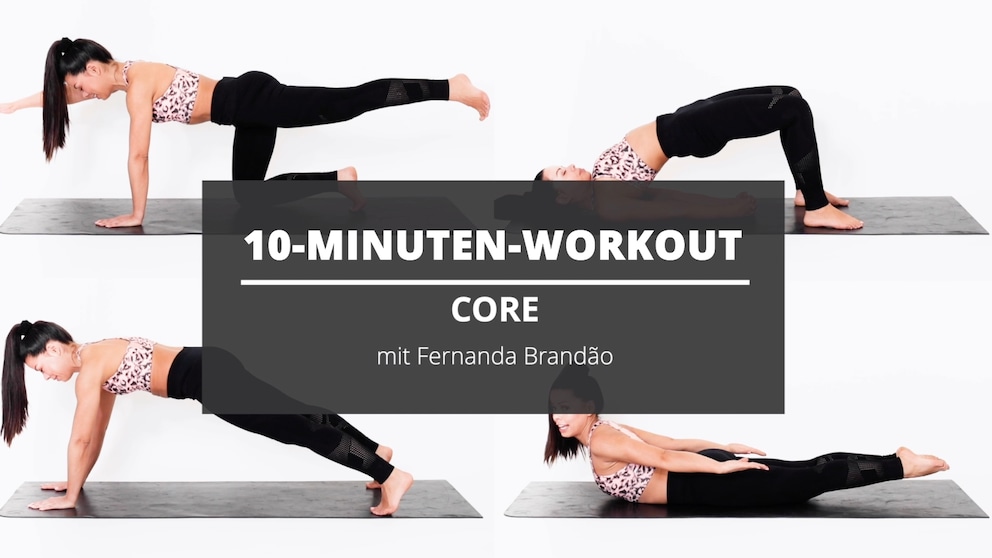
Sometimes you don’t have time for an extended workout, and you need something quick. This 10-minute core workout incorporates elements from yoga and Pilates and requires no equipment. The effective exercises are accessible to everyone–put together by a woman with over 20 years of professional fitness experience.
Who is the trainer in the video?
German-Brazilian Fernanda Brandão became Germany’s youngest licensed fitness trainer at 16. She gained wider recognition as a judge on “Deutschland sucht den Superstar” (Germany’s version of “American Idol”). In 2011, the magazine “FHM” named her the “Sexiest Woman In The World.” In recent years, Fernanda Brandão developed her own fitness concepts with “Ginga by Fernanda Brandão” and “Roots.” She was a guest at the FITBOOK Move Jam in 2018 and 2019, and in 2020, she challenged the Fitfam with four 40-minute workouts.
Also of interest: FITBOOK Move Jam 2020 – all workouts to follow along
What is the idea behind this 10-minute core workout?
Fernanda Brandão’s 10-minute core workout targets a strong core using selected yoga and Pilates elements. A strong core is important for good posture and is crucial in preventing the number one common ailment–back pain. Why yoga and Pilates? Both are sports that focus on the abdomen, back, waist, and pelvis.
Also of interest: Why you should keep exercising with back pain
Which muscle groups are trained?
This core workout trains the trunk muscles, meaning all the muscles around the body’s core. This includes the oblique, straight, transverse, and posterior abdominal muscles, as well as the back muscles. The upper back and especially the so-called back extensor muscles are also intensely activated.
10-Minute Workout: Mobility Flow with Fernanda Brandão
Pilates: The 34 Traditional Exercises
What should be considered with this workout?
A well-trained core (firm abs, a strong back) certainly offers an aesthetic advantage. More importantly, the yoga and Pilates exercises enhance physical well-being. The prerequisite: regular practice of the exercises. And with just ten minutes a day, that should be easy, right?
Overview of the exercises in the video
Cat Cow
We start on all fours. Kneel down and place your hands shoulder-width apart on the floor. Be sure to keep your back straight–don’t arch or round it. Inhale through the nose and exhale through the mouth. When exhaling, activate the abs, “our powerhouse,” by tensing the abdominal muscles.
Bird Dogs
Now extend one arm and the diagonally opposite leg forward and backward in a controlled manner. Important: Both should form a straight line. Hold the position–and release it just as controlled. Repeat the movement several times: Inhale through the nose and exhale through the mouth, activate the abs, and with well-tensed abdominal muscles, extend the same arm-leg combination again. Switch sides.
Also of interest: The 8 stages of yoga
Extended Child’s Pose
In between, loosen the back a bit. For this, go into the extended child’s pose (a yoga exercise). The buttocks rest on the heels, the hands are placed as far as possible in front of the head on the floor, and the head is laid down. Relaxation is the focus in this pose!
Plank and Arm Tap
Get into the plank position. The back is straight and firm, with the weight above the wrists. Stable enough? Then lift the right hand off the floor–yes, it’s possible if the body is tense enough–and touch the left shoulder. Place the right hand back down and now bring the left hand to the right shoulder. Do this ten times, alternating.
Also of interest: How to plank–proper technique and variations
Down Dog and Plank
From the plank position, push the buttocks up in a controlled manner. The legs are as straight as possible, and the heels are in the air, with the forehead moving toward the floor. With plenty of body tension, return to the plank. Hold briefly and then return to the previous position, the down dog. It should be a fluid movement.
Locust
Lie face down on the floor. The arms are stretched back along the legs, with the palms facing up. Now inhale through the nose and lift the head and legs one after the other. Only the area around the pubic bone should remain in contact with the floor. Hold! Briefly lay down in between before going into the locust again. The higher you lift your shoulders and legs, the better.
Lying Wheel
In a prone position, grasp the ankles with your hands. Now it depends on your condition: If the position already challenges you, stay as you are and actively feel the stretch. For those who want to go a step further: Lift the upper body and thighs again to form a kind of wheel. If you build tension in the legs, you will also achieve an effective stretch of the shoulders. Slowly release the position.
Roll Up
Lie on your back with your legs bent. Perform the exercise with the classic Pilates breathing. Repeat the whole thing two to three times.
Hundred
“The Hundred” is a classic Pilates exercise. It is performed lying on your back. The hands are initially placed next to the body, and the legs are bent (90 degrees). Now lift the arms with tension and quickly pulse them up and down.
Shoulder Bridge
In a supine position, stretch your arms away from the body at a right angle and place your feet on the floor. Inhale–and roll the spine up vertebra by vertebra to reach the bridge. Now, meet your hands under the pelvis and form a clasped fist. In the next step, stretch your arms long and push your feet, hands, and shoulders into the floor. Do you feel the pull in your back and abs? Hold this position briefly and enjoy the stretch. Release your hands and roll back down in the opposite direction–starting with the shoulders.