


February 20, 2026, 8:26 am | Read time: 5 minutes
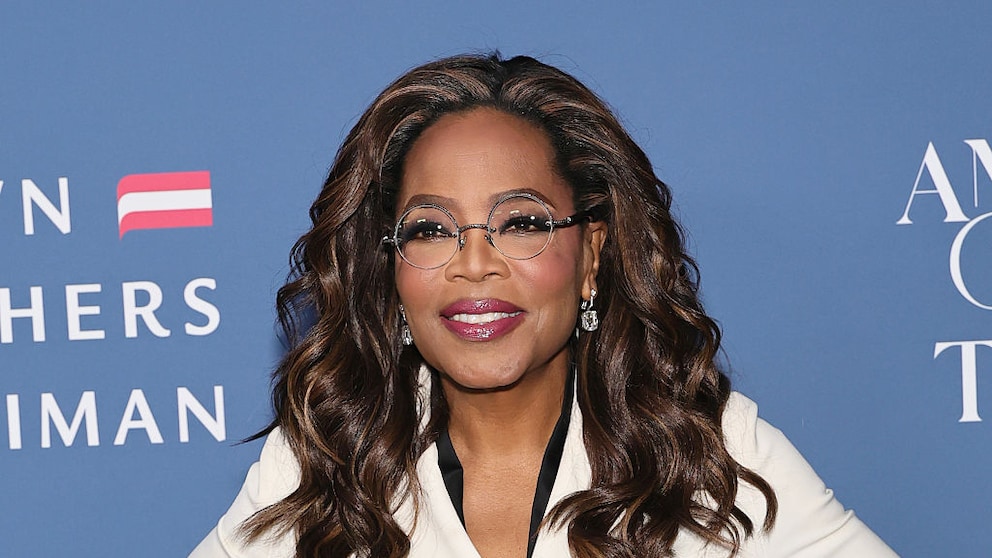
Ten seconds–that was the starting point. More than a minute with added weight–that’s her declared fitness goal today, which she has achieved. Oprah Winfrey makes no secret of what she’s working toward in her training: The plank, the classic forearm support, has become the personal benchmark for strength and stability for the 72-year-old.
Follow the FITBOOK channel on WhatsApp now!
From Ten-Second Attempt to Minute with Weights
On August 10, 2024, Winfrey made her first documented attempt at the plank. The position–supported on forearms and toes, body in a straight line–she held for only ten seconds before visibly exhausted, she stopped.
In a recent Instagram video from February 16, she looks back at that moment and shows how her performance has developed. She can now hold a plank “with weights for over a minute.”
Even after her first brief attempt, she set a clear goal. “I can do 20 seconds!” she announced. Later in the video, she is seen performing the plank with additional weight. “That was the goal!” she exclaims, clenching her fist toward the camera.

In the caption, she also categorizes the exercise: “Planks are the hardest exercise for me.” She summarizes her progress: “My first plank in 2024 lasted 10 seconds. Now I can hold it for over a minute, with weights and everything else trainer Peter comes up with.”
Why Strength Training Is Central for Her
The plank represents a larger goal for Winfrey: healthy aging through strength and flexibility. In the video, she explains why she started strength training: “As you get older–and you want to age healthily–I’ve learned that flexibility and strength are especially important, particularly for women and their bones.” She describes her conclusion clearly: “That’s why I started strength training.”
She refers to two aspects she repeatedly emphasizes: muscle strength as a protective factor for bones and flexibility as a prerequisite for long-term independence. The plank serves as a specific exercise where she can measure her progress.
Also interesting: How long you need to plank daily to see visible effects
Training Beyond the Plank
She makes it clear that her training plan doesn’t consist solely of forearm supports. In her social media post, she points out that trainer Peter regularly incorporates new variations and challenges. The plank with added weight is part of a broader strength training regimen.
Parallel to her athletic development, Winfrey speaks openly about her health transformation. Together with Dr. Ania M. Jastreboff, director of the Yale Obesity Research Center, she published the book “Enough: Your Health, Your Weight and What It’s Like to Be Free.” In it, she discusses her experiences with GLP-1 medications.
In an interview with “People,” she stated: “If obesity runs in your family, I want people to know it’s not your fault.” She also clearly positioned herself against simplified blame: “And people should stop blaming others. Don’t say, ‘Why don’t you just exercise more and eat less?’ That’s not the solution.” For her personally, this led to a change in thinking: “That’s the lesson I’ve learned: I’ve stopped blaming myself.”
One thing remains measurable: Between the first ten-second plank in August 2024 and over a minute with added weight in February 2026, there is a documented performance increase–with the forearm support as a clearly defined fitness goal.

5 Isometric Plank Variations for a Stable Core

My Favorite Bodyweight Exercises for Toned Arms
What Planks Actually Train
The plank–also known as the forearm support–is one of the most effective exercises for core stability, meaning the stability of the body’s center. In the starting position, it resembles a push-up, but instead of supporting on the hands, you rest on the forearms. The body remains tense in a straight line from head to toe–like a board.
It is a static exercise where the position is held for a certain period. Depending on the training level, this can be a few seconds or several minutes.
A correctly executed forearm support engages multiple muscle groups simultaneously:
- the straight and lateral abdominal muscles
- the deep core muscles
- shoulders and arms
- chest muscles
- gluteal muscles
Because not just a single muscle group is trained, planks are considered particularly efficient. A strong core can contribute to better posture and prevent back pain. As strength increases, overall stability improves in other exercises, injury susceptibility can decrease, and the body appears more defined.1
How many calories are burned depends on factors such as body weight and duration. Generally, static strength exercises like the plank boost metabolism. For sustainable progress, a combination with endurance training and a tailored diet is often recommended.
For existing preconditions–such as a herniated disc–medical advice should be sought before starting. For beginners, mobilizing and dynamic strengthening exercises can be beneficial, as they may put less strain on tendons, ligaments, and joints than long static holds.2
Also interesting: Rebecca Barthel: »This is the training women should focus on during menopause
The Difference: Plank with Added Weight
The weighted variant significantly increases intensity. A weight plate, weighted vest, or loaded backpack is placed on the lower back or pelvis area. This noticeably increases the strain on abdominal, back, and shoulder muscles.
Proper technique is essential: The body must maintain a straight line, and the core muscles must remain constantly engaged. A hollow back should be avoided as it unnecessarily stresses the lumbar spine. The additional weight makes the exercise more challenging and requires a higher level of body tension and control–this step marks Winfrey’s documented performance increase.3