


October 28, 2025, 7:11 pm | Read time: 7 minutes
Regular squats train various muscle groups in our body, but it can take quite a while. However, there’s a variation that promises particularly fast results: Super Squats. But how is this special training, which originated in the 1930s, structured, what diet accompanies it, and what are the risks? FITBOOK author Tony Poland asked personal trainer Markus Bremen and explains below what exactly is behind the old bodybuilding method.
The Super Squat Principle
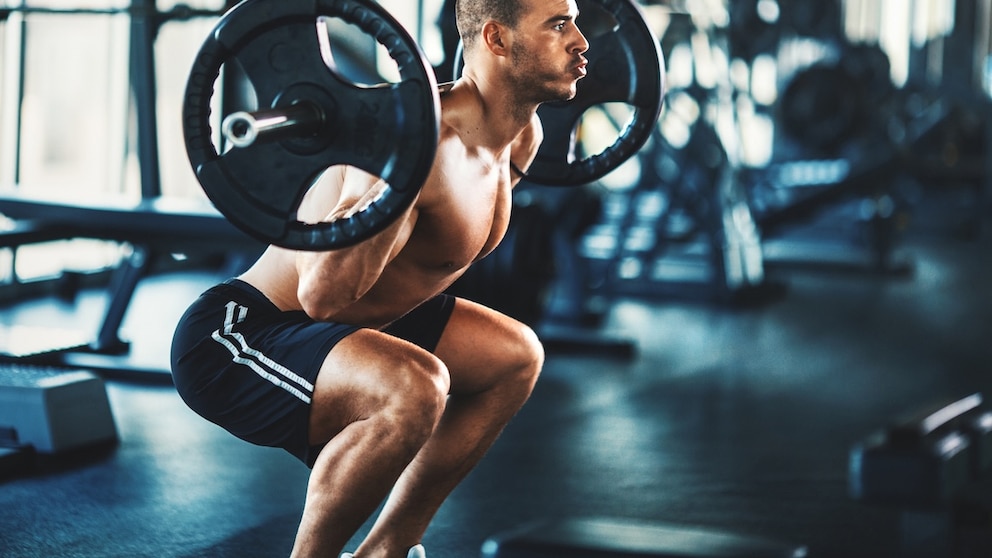
The training method, which comes from strength training and bodybuilding, is simple: Over a period of six weeks, you train three times a week with barbell squats, doing 20 repetitions with the weight you would normally use for ten reps. “Actually, after ten reps with the weight you can manage for a maximum of ten repetitions, you’re exhausted. And then doing another ten is quite a challenge,” explains Markus Bremen.
To continuously improve, according to the Super Squat Principle, you should also increase the weight by about 2.5 kilograms in each training session to achieve a “progressive load.” Overall, it sounds pretty intense and requires a lot of willpower and determination!
But it should be worth it: With the right discipline and perseverance combined with the right diet, a muscle gain of 30 pounds (almost 15 kilograms) is supposedly achievable! Along the way, you also work on your mental state.
Rhythm and Importance of Breathing Squats
Key point: Between each repetition, you stand with the weight on your back and take a deep breath during a short pause to build core tension. Then you go back down. For longer breaths, there are different protocols, says Markus Bremen. “Many do about eight to ten reps and then the first pause, during which they take three to four deep breaths to bring oxygen into the muscles, and then tackle the remaining repetitions,” he explains the so-called “Breathing Squats.” “It’s important not to lower the weight. This way, you constantly have this muscular stimulus to counteract.”
But what are the benefits of these massive breathing repetitions? Markus Bremen explains: “This way, you bring in more oxygen again. Additionally, you also lower your pulse because deep breathing directly triggers a parasympathetic response. You stimulate your vagus nerve, which ensures that the fight-or-flight response is reduced when you’re out of breath. This makes the body capable again.”
Moreover, deep breathing allows you to mentally refocus and realign. This way, you can better tackle the last of the targeted 20 squats until you reach maximum muscle failure.
Also interesting: 6 Tips for More Effective Squats
Why Bench Press and More Follow Afterward
But the Super Squat training isn’t over yet. Afterward, a few basic exercises for the upper body await: lying pullovers with dumbbells (20 reps), bench press (10 reps for two sets), bent-over rows (15 reps for two sets), and finally bicep curls, tricep dips, or chin-ups to muscle failure (two sets). “This is to ensure you develop evenly and holistically. If done correctly, you’re ‘gassed out,’ or completely exhausted,” says the fitness expert.
“Squats and Milk”: The Super Squat Diet Program in Detail
The second component of the Super Squat method concerns nutrition. The main part of the daily diet is milk. And a lot of it! The six-week meal plan is divided into six smaller and larger meals daily and a total of eight glasses of milk in 24 hours. Overall, you should drink 3.8 liters per day.
The first meal is at 7 a.m. It includes three eggs, a slice of bread, and a glass of milk. At 9:30 a.m., a snack follows, consisting of half a sandwich with, for example, chicken breast and the next glass of milk. At noon, lunch is served, which could include two sandwiches with meat, cheese, avocado, tomatoes, cucumbers, and mustard. Add a piece of fruit and the third glass of milk. At 3 p.m., the next snack is recommended: a hard-boiled egg, a slice of cheese, and a glass of milk.
Three hours later, at 6 p.m., it’s time for dinner: 340 grams of meat (e.g., steak), two types of vegetables (such as steamed broccoli and carrots), a piece of fruit (e.g., a banana), and two glasses of milk. Before bed, a final snack at 9 p.m. concludes the day. This should consist of 113 grams of cheese and two glasses of milk.
Almost 160 Liters of Milk in Six Weeks!
“You also have to consider the time it comes from. Back then, milk was different from what it is today. People used to react less to milk. This is because milk today is more contaminated, as it is industrially produced and mixed. You could resort to farm milk, but then there’s the cost factor,” says Markus Bremen regarding the large amounts of this animal protein source. Specifically, you consume almost 160 liters of milk in six weeks.
Goal: Lots of Protein for Many Muscles
All in all, you end up with a significantly increased calorie and protein intake. The complete meal plan aims for about 4,750 calories and 250 grams of protein per day.
Background: These necessary components are intended to help the body achieve rapid muscle growth in combination with the intense strength training of Super Squats. And since there are no supplements, the high nutrient content is achieved solely through whole foods and saturated fats.
Pure Minimalism! Intensity Beats Variety
This extremely minimalist form of training became known in the 1930s and was later popularized by the book “Super Squats: How to Gain 30 Pounds of Muscle in 6 Weeks” (1989) by American kinesiologist Randall J. Strossen. The training is hotly debated, especially on the community platform “Reddit.”
Simply put, the method describes a high-intensity workout with an extremely calorie-rich and protein-rich diet, without any supplements or other additives from today’s time.
“What our recipe lacks in complexity or scope is more than made up for by intensity. Just 20 repetitions of squats, milk, sleep, and the will to prove under the barbell that mind over matter is more than just a clever saying,” J. Strossen summarizes his concept.1
Possible Risks from Intense Workouts
It’s clear that the Super Squat Principle, which requires clean technique and sufficient recovery in strength training, is physically and mentally extremely demanding. It’s not suitable for beginners and people with pre-existing conditions or hip issues!
Additionally, the high fatigue and heavy weight during the workout can cause excessive strain and pain for the spine and knees, among other things. Shoulders and wrists can also be overstrained. The overall high intensity, combined with the high training volume, also poses the risk of fatigue in the form of lack of motivation or mental exhaustion.
The short breathing pauses during squats (“Breathing Squats”) can be particularly dangerous for untrained individuals, causing dizziness or even blackouts or fainting.
Possible Risks from the Diet
Even experienced individuals should consult a doctor or nutritionist before such an extreme diet. Especially the daily large amounts of milk can become problematic. Gastrointestinal issues or severe bloating can occur, and weight gain is possible. Excessive milk consumption can also negatively affect blood lipid levels. Long-term consequences include arteriosclerosis, which increases the risks of heart attacks or strokes.
“And you constantly feel full and find it hard to eat other foods,” says Markus Bremen. “Because it’s not just the milk, you have to generally provoke a high calorie surplus. You also have to manage six meals a day.”

How Many Squats a Day Are Needed to See Visible Results?

Boost Your VO2 Max with the Right Workouts
Super Squat Thesis: Is 30 Pounds of Muscle Mass in Six Weeks Realistic?
Short answer: Yes, this seems possible under the best conditions. “Of course, there’s no general statement; it’s always difficult. But if you’re in the best training age, between 20 and 30, and able to eat that much and drink and tolerate that amount of milk, then it can certainly lead to that,” estimates Markus Bremen.
Expert’s Conclusion
Of course, this extreme form of training and diet is by no means for beginners! However, the experienced individual who has plateaued in their development can certainly try it. “You need training experience and good technique. Additionally, the body must be able to withstand this load in terms of training and dietary stimulus. You have to cope with the fact that you’re putting your digestive system to an absolute challenge. But if all that works, it can result in rapid muscle growth,” emphasizes the expert.
Especially for professional bodybuilders or athletes from American football who need or want to build a lot of muscle mass naturally in a short time, the Super Squat method is quite suitable.