

February 28, 2026, 4:41 pm | Read time: 4 minutes
The SkiErg quickly pushes your cardiovascular system and muscles to their limits–provided your technique is correct. Standing stable, keeping your core engaged, and executing controlled pulls will burn calories effectively and primarily train your back, abs, and triceps. Here’s how to perform it correctly–and why the machine is even intriguing for rehab after leg injuries.
Follow the FITBOOK channel on WhatsApp now!
Proper Execution
Assume Position
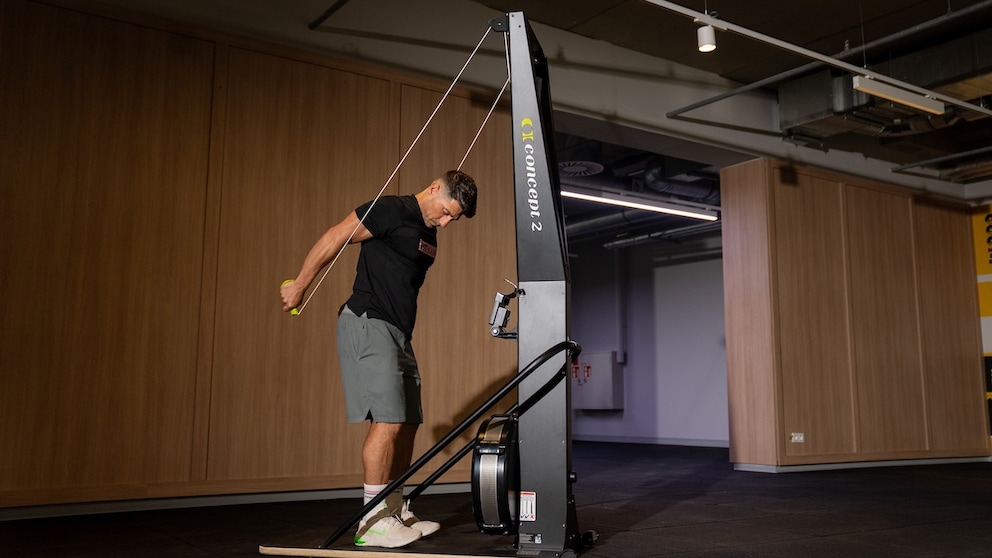
Stand stably with your feet about shoulder-width apart in front of the machine. Grasp the handles and raise your hands shoulder-width apart to about eye level. Your arms should not be fully extended but slightly bent to create a stable and powerful starting position.
Movement Sequence
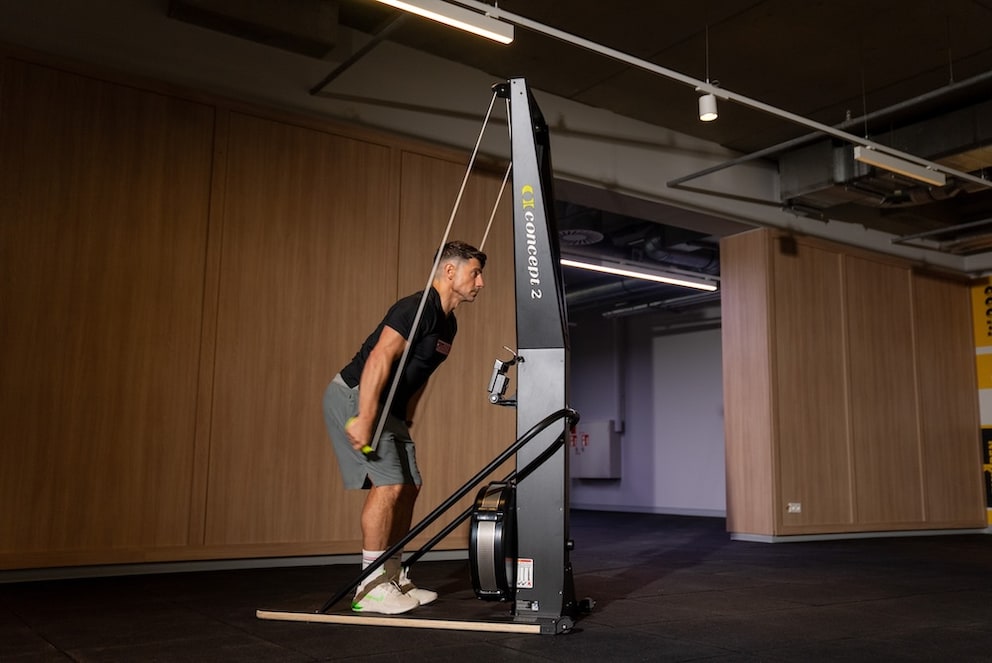
- Engage your core and abdominal muscles actively and slightly bend your knees simultaneously. Use your body weight to accelerate the handles downward. Maintain the bend in your arms during the first part of the pull to guide the handles closely and controlled past your face.
- Finish the stroke by fully extending your arms downward until your hands are at thigh or pocket level. Keep your knees slightly bent at the end of the pull.
- In the subsequent return phase, control your arms back up and fully straighten your upper body to return to the high starting position.
Breathing: Exhale consciously when pulling down and inhale deeply during the upward return.
Calorie Burn and Targeted Muscle Groups
In a 30-minute SkiErg workout, you will likely burn between 300 to 600 calories. This burn rate is comparable to the RowErg or the Assault Bike.1 Additionally, you primarily train the following muscle groups: latissimus, triceps, abs, and back extensors.
High Cardiovascular Load
Training on the SkiErg revs up your cardiovascular system. You can reach peak values of over 90 percent of your maximum heart rate and oxygen uptake.2 This intense load challenges your heart significantly and leads to a demonstrable rapid improvement in your overall endurance and heart performance.
Cardiovascular Load?
Cardiovascular load describes the strain on your cardiovascular system during exertion. It indicates how hard your heart must work to supply muscles with oxygen and remove metabolic products. A high cardiovascular load during exercise is particularly valuable as it forces the heart to pump more blood per beat and optimize oxygen uptake. This, in turn, makes your cardiovascular system more efficient, making you significantly more enduring and resilient in everyday life and sports.

What Makes Training on the Rowing Machine So Effective and What You Should Look Out for
Kettlebell Snatch–Strength-Endurance Exercise for Those Seeking a Challenge
Moderate to High Lactate Production
Intense intervals on the SkiErg push your muscles to their limits. This results in high amounts of lactate, forcing the body to provide energy extremely quickly. This intense metabolic reaction makes the machine particularly effective for improving your speed endurance. You train your body to maintain high speed over longer periods without tiring prematurely.
Lactate/Lactate Production?
Lactate is produced as a byproduct when the body must generate energy without oxygen during intense exertion. It serves as a valuable energy carrier for the brain and heart. High lactate production during exercise is particularly valuable for increasing maximum power and explosiveness, as it signals that the body can activate the “turbo” for massive energy release. This, in turn, makes you more resilient and capable in the long term.3, 4, 5
Also interesting: Are heavy weights really better for muscle building?
Rehabilitation for Leg Injuries
In fact, the SkiErg is considered one of the most valuable devices in physical therapy rehabilitation for leg injuries. The unique aspect of SkiErg training is that it significantly activates the cardiovascular system without straining the legs. With cardio equipment that brings the cardiovascular system to comparable peak levels, this primarily happens because the legs are also engaged. You can also perform the SkiErg kneeling or sitting if your lower extremities are compromised.