

February 11, 2026, 3:02 am | Read time: 3 minutes
A strong body needs more than just isolated machine training. It requires exercises that connect muscle chains, challenge heart rate, and enhance functional strength for everyday life. One of the most effective methods for this is the kettlebell snatch. FITBOOK explains why this classic is considered the “king discipline” of kettlebell training and how your entire body benefits from this explosive movement.
The Correct Execution
Assume Position
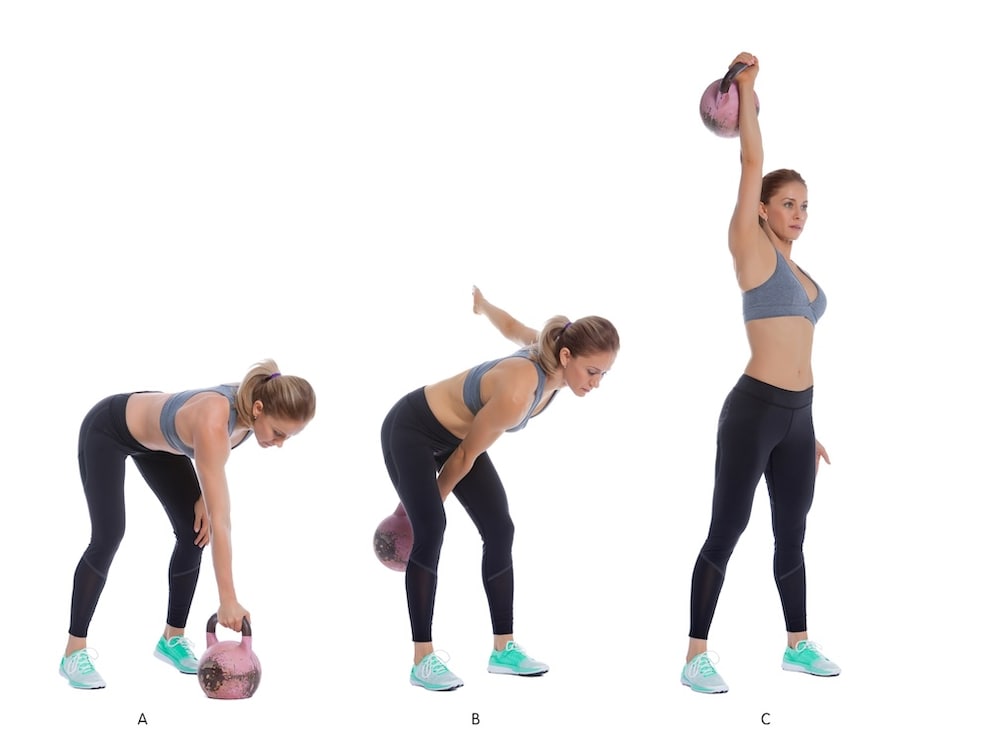
- Stand with your feet shoulder-width apart and place the kettlebell about a foot’s length in front of you on the ground. Slightly bend your hips and knees and grab the kettlebell with one hand. Keep your back straight and stable, with your torso slightly leaning forward.
- Keep your shoulders active and your neck relaxed. Use your free hand for balance, keeping it loose at your side or behind you. Your gaze should be forward.
Movement Sequence
- Swing the kettlebell dynamically backward between your legs. The movement is initiated from the hips and legs, with the arm merely guiding.
- Explosively extend your hips and knees, transferring energy to the kettlebell so it “shoots” upward, staying close to your body.
- Once the kettlebell reaches about shoulder height, quickly guide your hand through the grip so the bell rests softly on your forearm without slamming.
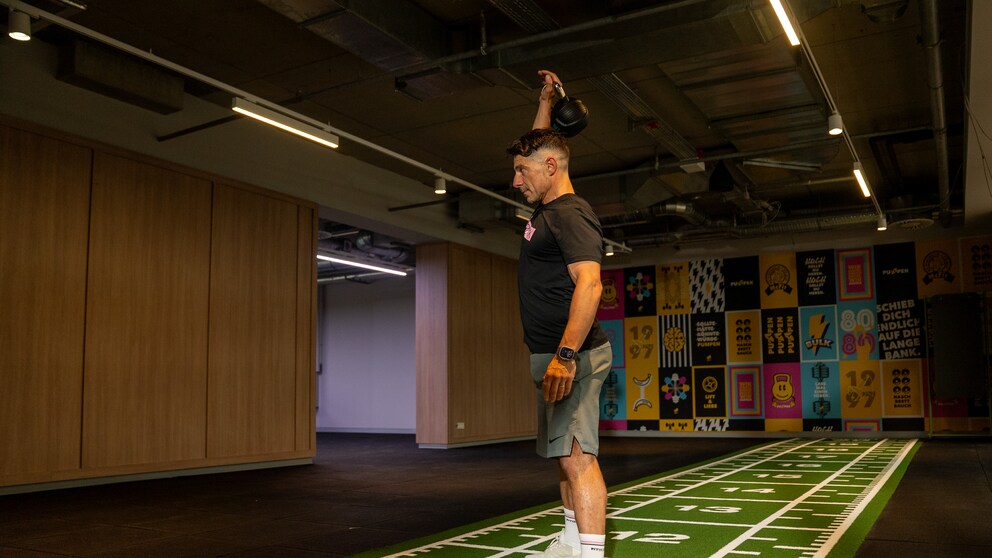
- In the final position, your arm is extended overhead, your core remains engaged, and your body stands upright.
- Lower the kettlebell in a controlled manner, push your hips back again, and smoothly transition into the next swing.

These Exercises Make Padel Players Stronger

6 Essential Strength Training Exercises for Swimmers
The Ultimate Exercise for Strength and Endurance
The kettlebell snatch is a true “muscle all-rounder” that integrates nearly every major muscle group.
Maximum Voluntary Contraction (MVC)
Using “Maximum Voluntary Contraction” (MVC), you can measure how intensely a muscle works during a movement. This percentage value relates the current load to the maximum strength potential (100 percent), making the effectiveness of an exercise comparable.
For example, in bench pressing, the quintessential chest exercise, the pectoral muscle has an MVC value of 80 to 90 percent. The triceps are engaged at 60 to 75 percent, and the front shoulder up to 80 percent.
In the kettlebell snatch, the focus is on the posterior chain. The gluteal muscles reach peak values of 80 percent MVC, while the back extensors are around 50 percent. The latter is particularly valuable as the back extensors dynamically stabilize the spine. Core stability is maintained for power transfer from the hips, while the shoulders (deltoids) and trapezius muscle also contribute.
Focus on Endurance: The Cardiovascular System Under High Tension
While the strength development is impressive, the true power of the snatch lies in its impact on the cardiovascular system. The exercise is considered one of the most efficient for increasing aerobic capacity (VO₂max). As nearly every muscle fiber in the body simultaneously requires oxygen, the pulse rapidly increases, reaching peak values of an average of 93 percent of maximum heart rate.
Specific high-intensity protocols, such as the 15:15 MVO2 training, demonstrate that aerobic capacity (VO2max) can significantly increase by about six percent within just four weeks.1
15:15 MVO2 Protocol
The 15:15 MVO2 protocol is a high-intensity interval training (HIIT) developed by Kenneth Jay to increase aerobic capacity. Over a period of 20 minutes, explosive kettlebell snatches are performed for 15 seconds, followed by 15 seconds of rest.