


June 8, 2026, 2:01 am | Read time: 6 minutes
“I’m getting surgery.” FITBOOK author Nina Ponath said this sentence three times over the past few years—and then postponed the appointment each time. The reason wasn’t fear of the procedure itself, but her feelings about the time afterward: the absolute break from sports. When she could barely stand on one leg without pain, it was clear: eyes closed and push through. What followed was a two-week self-experiment in “Seated Cardio.” She explains how to get your heart rate up while keeping your foot elevated and why movement is sometimes mostly a mental game.
When the Yoga Tree Becomes a Shaky Affair
Perhaps you’ve heard the term or are one of the many women affected by it: Hallux Valgus. It’s a misalignment of the big toe, where the base joint increasingly protrudes outward—the typical “bunion.” What is often dismissed as a cosmetic issue had progressed so far for me that the toe was barely movable. The diagnosis: advanced arthritis in the joint.
The problem became especially apparent during yoga. Balance poses like the “Tree” or “Warrior III” became torture because the foundation—my foot—was simply no longer stable. The decision to have surgery was not a matter of vanity but a necessary investment in my future mobility. Still, the prospect of not being able to put any weight on my foot after the surgery felt like a life sentence on the couch.
From 20,000 Steps to Zero
Normally, my daily life is filled with movement. Sixteen thousand to 20,000 steps is a standard day for me, along with yoga and Pilates sessions and cardio training two to three times a week. After the surgery, reality suddenly looked different: elevate, cool, wait. On the first day, exercise was out of the question due to pain. But soon enough, the proverbial “ants in my pants” returned.
If you’re used to relieving stress through movement, physical inactivity becomes mental stress. I quickly realized I needed an alternative to keep from losing my mind—and, most importantly, to gently keep my circulation going without jeopardizing my foot’s healing. In my research, I came across a concept I had previously scoffed at: Seated Cardio.
What Exactly Is Seated Cardio?
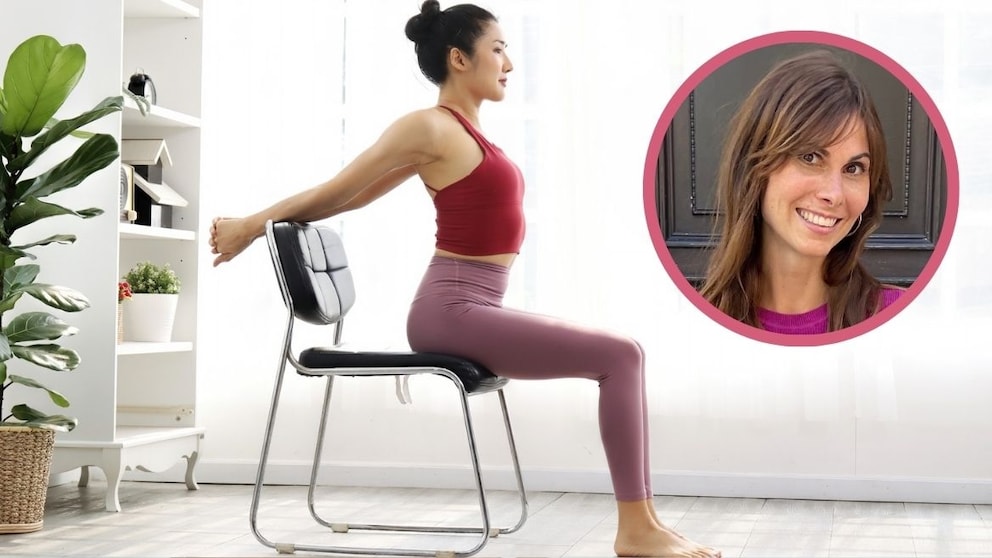
The principle is as simple as it is ingenious: cardio training while sitting. Normally, we burn most calories through the large muscle groups in our legs (while running, walking, or cycling). In Seated Cardio, this part is eliminated—or at least greatly reduced. However, this doesn’t mean the workout is a walk in the park. Through quick, coordinated movements of the upper body, arms, and core muscles, the heart rate can be surprisingly elevated.
It’s the perfect solution for people with lower body injuries, seniors, people with disabilities, or sports enthusiasts in postoperative rehab. While you save the energy of the legs, you compensate with a higher frequency in the upper body. And I can assure you: if you whirl your arms through the air in a boxing manner for 20 minutes, you definitely feel it.
Boxing on the Piano Stool
In my search for inspiration, I stumbled upon a whole subculture of “Seated Athletes” on YouTube. Many of the followers are from the U.S.—including people who need to protect their joints due to severe obesity or athletes recovering from knee and foot injuries. I particularly gravitated toward two channels that were my two-week salvation:
- Paul Eugene: His “Low Impact Seated Cardio Boxing” is fantastic. He combines classic boxing moves with an “80s aerobics energy” that’s instantly infectious. The workout is safe, effective, and designed to burn a lot of calories without taking a single step.

- Nourish Move Love: This is a bit more modern and intense. The “20-Minute Seated Workout” focuses heavily on core strength. Since I had to keep my foot elevated on a stool, core stability was key for me.
My Setup
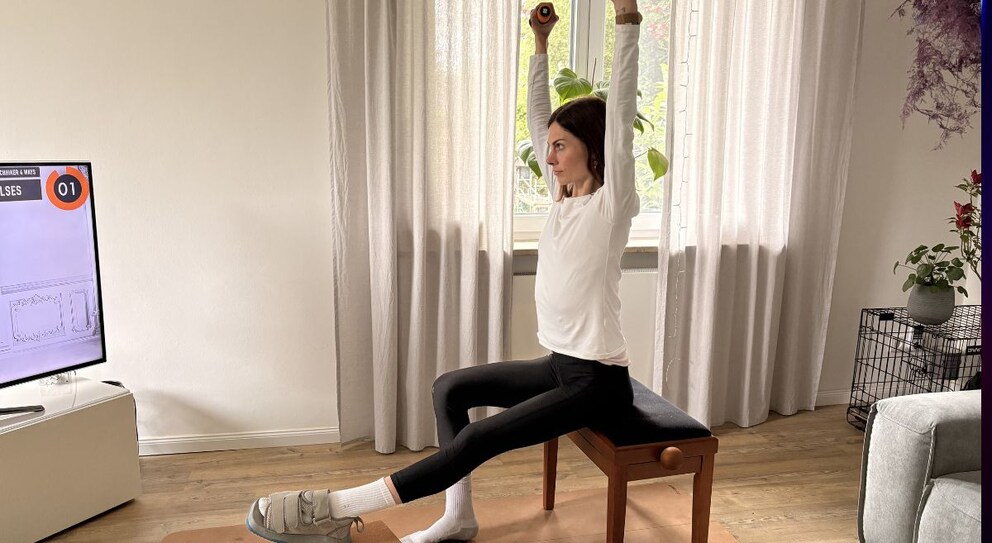
Instead of sinking into the couch, I used my piano stool in the living room as a workout bench. It offers no backrest, which forced me to actively engage my back muscles. To increase the intensity and get my heart rate a few beats higher, I added light dumbbells. A typical Seated Cardio workout consists of a mix of:
- Seated Boxing: Quick jabs, hooks, and uppercuts. The rotation in the upper body challenges the oblique abdominal muscles.
- Seated Jumping Jacks: The arms perform the classic jumping jack motion, while the legs (in my case, only the healthy leg) gently bounce, lift to meet the arms, or stay firmly on the ground.
- Windmills: Large circles with the arms to promote shoulder mobility and deepen breathing.
The result: After half an hour, my smartwatch indicated I had burned around 120 calories. It’s no match for an intense jogging session, but it’s enough to release endorphins and chase away cabin fever.

Burn Fat Effectively with Personal Trainer Argi’s HIIT Workout
I Tried Assisted Stretching–Here’s What the Wellness Trend Offers
Movement Always Finds a Way
After a week, I had practically “played through” the common Seated Workouts. I started improvising, watching regular boxing videos, and only doing the upper body part while my operated foot rested safely on its cushion. I also followed a cardio session by Pamela Reif, where I remained seated with my legs firmly in place.
Conclusion: The Anticipation of the First Run
Of course, it’s nicer to breathe fresh air in the park than to box against imaginary opponents in the living room on a stool in front of the TV. The thought of being seen by passing neighbors was a bit embarrassing, but I’m still glad I discovered Seated Cardio. My body tells me exactly what it needs—and sometimes that’s not total rest, but careful, adapted movement.
So if you’re currently dealing with an injury or know someone who’s frustratedly bedridden after surgery, give Seated Cardio a chance. It may not heal the foot, but it definitely heals the soul. I’m now eagerly looking forward to when I can fully bear weight on my foot again and take my first small jogging round. Until then, I’ll be doing joyful jumps while sitting.
A tip for the time after healing: When you’re allowed to actively train your feet again, barefoot walking on soft surfaces is the best training for the deep muscles. But until then: Keep your feet still—or box while sitting!