

August 12, 2026, 6:02 pm | Read time: 5 minutes
Tyson Fury is one of the most successful heavyweight boxers of all time. He dethroned Wladimir Klitschko after nine years of dominance and, as of August 12, 2026, his birthday, holds a record of 36 wins, two losses, and one draw. And he has “beaten everyone with a fat belly.” One wonders: How can this 6-foot-9 giant still be so agile?
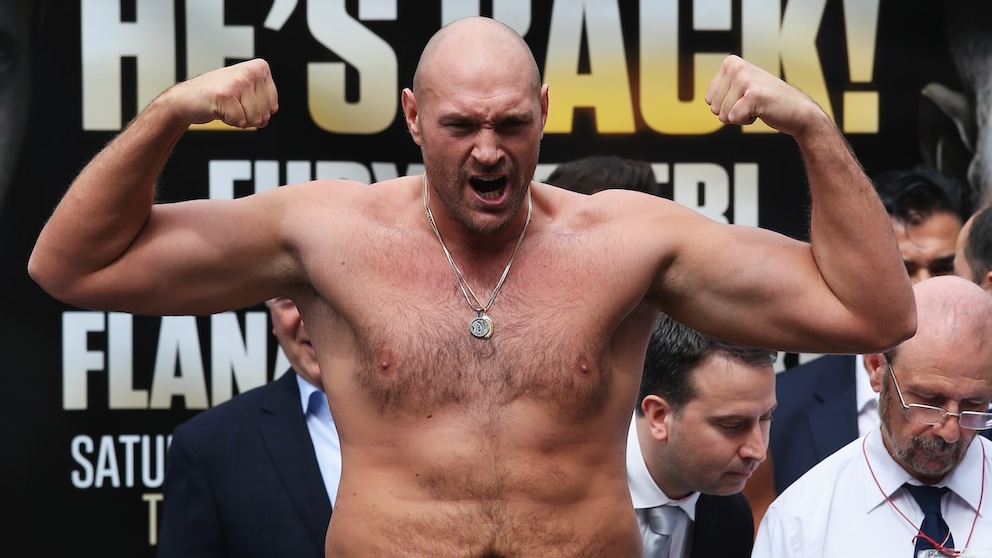
The “Gypsy King”—as Fury is also known—himself said he beat everyone with a fat belly during an interview with “Sky Sports.” Since his victory over Klitschko, his weight has been a recurring topic. Although he achieved what is arguably the greatest success a boxer can attain, he subsequently fell into a deep hole of depression, suicidal thoughts, and drugs. His weight also increased significantly. At the Klitschko fight in 2015, Fury weighed 247 pounds, but afterward, he reportedly reached up to 386 pounds at times.1
Since his comeback in 2018, his fighting weight has usually been between 253 and 287 pounds. Jokes are often made about his unhealthy lifestyle and his often affectionately called “potato sack” belly. Fury himself makes no secret of the fact that he gained a lot of weight between his fights. To keep him in good spirits during the tough training camp preparations, his former chef Anthony Pressley reportedly served a “cheat meal” once a week, usually consisting of grilled burgers and fries. Since Fury also has a strong aversion to vegetables, his chef often had to puree them into sauces, according to “The Athletic,” so that the boxer received all the necessary nutrients despite his pickiness.
Fury’s Agile Fighting Style and How It Can Be Explained
Tyson Fury is a giant through and through. Nevertheless, he possesses agility and footwork uncharacteristic of heavyweights, which, in their dynamism, are more reminiscent of lightweight or welterweight fighters. Fury blocks surprisingly few punches passively with his guard for a fighter of his stature, as he instead relies on agile head and upper body movements. He uses techniques like slips and shoulder rolls to evade attacks. Additionally, he constantly and fluidly switches his stance between orthodox and southpaw.
Fat Beats Muscle
Extremely muscular boxers such as heavyweight Anthony Joshua, whom Fury is likely to face in the ring in November, require enormous amounts of oxygen and energy to supply their large muscle masses with blood. Fat tissue, on the other hand, requires little energy and therefore places less strain on the body.2 Because Fury carries less unnecessary muscle mass, his heart also has to work less. At the same fight intensity, he consumes less oxygen than a well-trained, particularly muscular opponent.

Aerobic vs. Anaerobic Training – What Are the Benefits and Can You Feel the Difference?

“I Was Just Lying Around!” Orlando Bloom’s Dramatic Weight Loss
Why Fury Is So Strong Despite His Belly
Just because Fury carries more fat than some other heavyweight boxers doesn’t mean he’s not muscular. His strength is quite apparent. Especially in his arms and shoulders, the veins are clearly visible, a sign of well-developed muscles. His strength values are also remarkable; Fury can deadlift a hefty 485 pounds.3
Why does his fat concentrate on his belly? There are several possible explanations for this. Fat distribution is largely genetically determined. One body prefers to store fat in the belly, another in the arms or legs, regardless of training condition. In Fury’s case, it’s likely also due to a simple calorie surplus from his well-known eating habits. Chronic stress can also promote the storage of belly fat, a factor that could have played a role given Fury’s depression and drug problems after the Klitschko fight, although this cannot be definitively proven in hindsight.4
Moreover, being a father of seven surely adds its share of stressful moments. Additionally, Fury loves to maintain his image as the “fat fighter” and not only makes no secret of it but also enjoys fueling it.
Boxers Don’t Have to Look Like Runners
Boxers are not endurance athletes like runners or cyclists. While a fight can last up to 30 minutes, boxing consists of many short, intense bursts of power rather than continuous exertion. The difference is less about how much oxygen the body can take in and more about how well it can handle muscle acidification. This acidification is caused by lactic acid (lactate), which forms when muscles have to work extremely hard for a short time. This is measured by the so-called “peak lactate value” in the blood. The higher this value is at maximum exertion, the better an athlete can still call upon strength and speed despite acidification.
A 2025 study shows exactly this difference.5 Endurance athletes have a higher oxygen intake and therefore tire later, but strength and combat athletes like boxers achieve significantly higher peak lactate values, meaning they handle acidification much better.
How high Fury’s lactate value actually is, is not publicly known. This ability cannot be seen from the outside; it depends on the trained metabolism, not on weight or external form. A body like Fury’s can indeed have excellent values, regardless of whether it has a six-pack or a potbelly.