


August 11, 2026, 12:09 pm | Read time: 5 minutes
Sunlight not only leaves marks on the skin but also on the eyes. A recent study from Australia suggests that a specific, easily recognizable change in the eye may be linked to an increased risk of light skin cancer. Surprisingly, other eye features considered markers of sun exposure did not show such a connection. The findings could help identify people at higher risk for skin cancer earlier and raise awareness about preventive measures.
Why Changes in the Eye Are Interesting in Relation to Skin Cancer
Ultraviolet radiation (UV radiation) from the sun is considered the most important modifiable risk factor for skin cancer. At the same time, long-term UV exposure can also cause visible changes in the eye. These include particularly the pterygium, the so-called conjunctival UV autofluorescence (CUVAF), which are discussed as possible objective markers of past sun exposure.
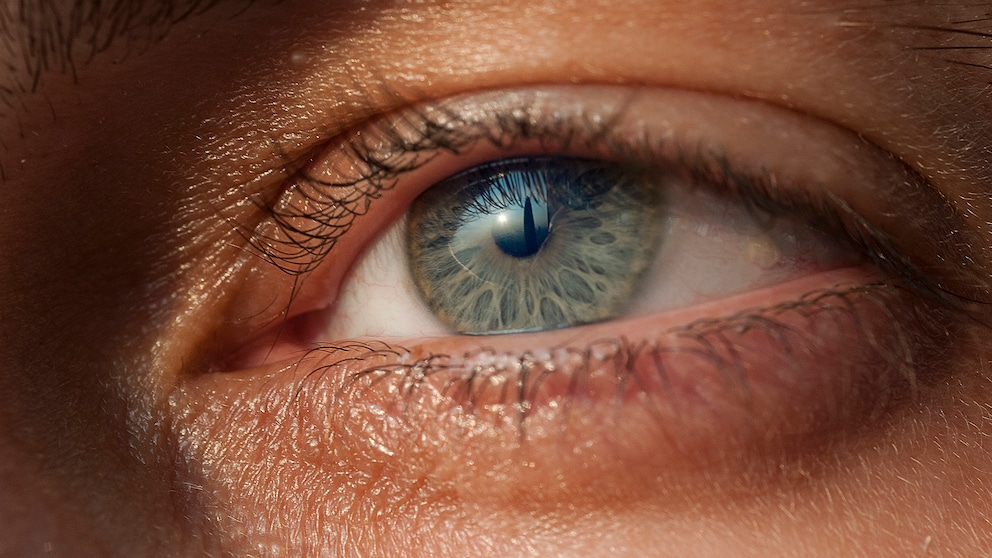
A pterygium, also known as “surfer’s eye,” is a benign, wedge-shaped growth of the conjunctiva that can extend onto the cornea. CUVAF describes UV-induced changes in the conjunctiva that can be made visible with special photography. Myopia (nearsightedness) also plays a role when it comes to time spent in the sun. Previous studies have shown that people who spend more time outdoors often have larger CUVAF areas and are less likely to be nearsighted.1
The researchers wanted to know whether these eye features are associated with a previous diagnosis of skin cancer. They examined both keratinocyte carcinomas–the most common forms of light skin cancer, such as basal cell carcinoma and squamous cell carcinoma–and malignant melanoma (black skin cancer), the most dangerous form of skin cancer. The aim was to determine whether eye findings could serve as an indication of an increased risk of skin cancer.
Also interesting: Tattoos significantly increase the risk of a certain type of cancer
Study Procedure
The study was a cross-sectional study, meaning data collected at a specific point in time were evaluated. It is essentially a snapshot. The basis was data from the “Busselton Healthy Ageing Study,” a large health study on healthy aging in Western Australia. Participants who took part between 2016 and 2022 were analyzed. In total, usable data on skin cancer history were available for 3,829 people. The average age was 64.2 years.2
The Researchers Examined Three Eye Markers for Previous UV Exposure:
- Pterygium using standardized eye photographs
- CUVAF using special UV photography
- Myopia using objective refraction measurements of the eyes
Skin cancer diagnoses were not recorded solely through self-reports. Instead, the researchers combined participant information with data from cancer registries, hospital stays, and death registers to ensure the most comprehensive recording possible.
For statistical analysis, logistic regression models were used. This statistical method allows researchers to calculate whether there is a connection between two things and how strong that connection is. In this study, they considered potential influencing factors such as age, gender, eye color (as a proxy for skin type), smoking behavior, family history of skin cancer, and country of birth.
Why the Most Aggressive Skin Cancer Isn’t the Deadliest

What Is Snow Blindness and How Dangerous Is It?
Connection Between “Surfer’s Eye” and Skin Cancer Risk
Of the nearly 3,900 people studied, about one in five had already developed a form of light skin cancer. Black skin cancer (melanoma) was much less common.
One particularly striking finding was in the eye: People with a pterygium (“surfer’s eye”) were more likely to have already received a diagnosis of light skin cancer than those without this eye change. Individuals with an acute pterygium had about a one-third higher risk; for those who had previously had the growth surgically removed, the risk for light skin cancer was almost twice as high. Could the occurrence of pterygium be a warning sign of an increased risk of skin cancer?
For black skin cancer, however, the researchers found no clear connection. Other examined changes in the eye, considered indicators of high UV exposure, were also not associated with an increased risk of skin cancer.
The results remained consistent even with additional statistical checks, suggesting that the observed connection between pterygium and light skin cancer is robust.
Significance and Interpretation of the Study
Since pterygium and skin cancer were more commonly found together, it is likely that both conditions share common risk factors, particularly long-term UV exposure. One explanation from the researchers involves the body’s DNA repair mechanism: Some people may be naturally–genetically–more sensitive to sunlight. Their bodies are somewhat less efficient at repairing minor cell damage caused by UV light. Since this “repair workshop” operates throughout the body, such a weakness affects both the eyes and the skin. A pterygium in the eye could thus be a visible indicator of a general UV sensitivity that simultaneously increases the risk for light skin cancer.
However, a pterygium does not cause skin cancer and does not automatically mean that affected individuals will develop the disease. But since this specific eye change was statistically more often found alongside skin cancer, it might be wise to pay closer attention to skin changes in the case of a pterygium and have them medically examined.
The strengths of the study include the large number of participants, objective eye examinations, and the linkage with official health data. However, it is limited by being a cross-sectional study, which cannot prove cause-and-effect relationships. Additionally, the number of melanoma cases was small, some information was based on self-reports, and only individuals of European descent were studied. Overall, the study shows a plausible connection but does not prove that pterygia cause skin cancer.