


May 23, 2026, 6:19 am | Read time: 5 minutes
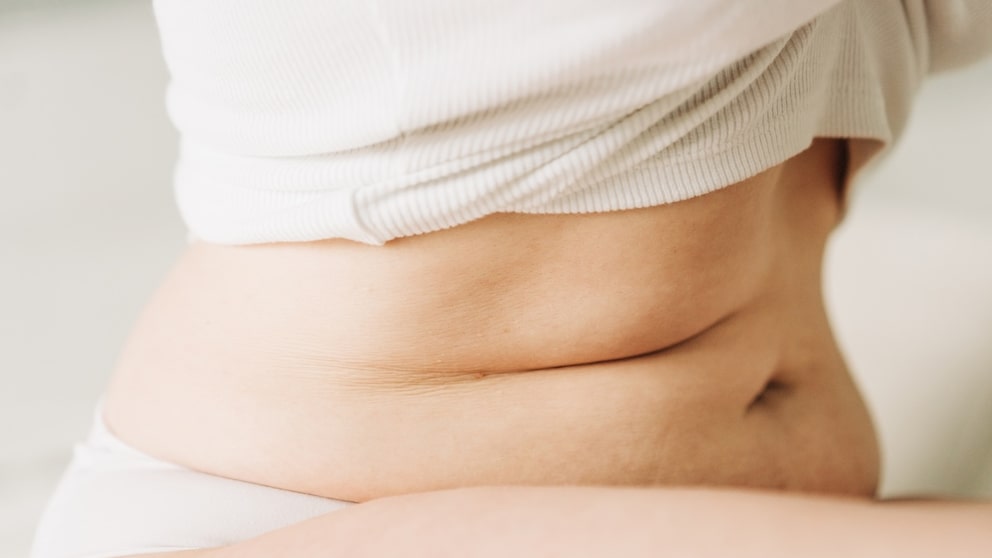
A woman in her mid-40s still gets her period but notices the first changes in her body—for example, a persistent belly suddenly appears. The hormonal belly, or “meno belly,” causes frustration for many women at this age who are gradually entering menopause. Certified Health & Life Coach Adaeze Wolf explained to us in a FITBOOK interview why the body changes this way and what mistakes those affected often make.

FITBOOK: What do the women you advise struggle with the most when it comes to changes caused by menopause?
Adaeze Wolf: “I’ve found that weight gain, especially the ‘meno belly’ at the onset of menopause, is almost the biggest pain point for women.”
Hormonal Imbalance Affects Metabolism
What is happening in women’s bodies that leads to unwanted weight gain, especially around the belly?
“As we enter menopause, we undergo a gradual process with different phases. The first is perimenopause, where hormonal imbalance begins. The sex hormones estrogen, progesterone, and testosterone start to fluctuate. This also affects our metabolism. This change leads to faster muscle mass loss and a decrease in our basal metabolic rate. For example, there’s a connection to ovulation. When it becomes less regular, the body uses less energy. The tricky part is that we don’t notice it immediately. So we continue eating as usual and then realize we’re gaining weight—often around the belly and hips. That’s why the term ‘meno belly’ is often used to describe the belly women get during menopause.”
This even happens to women who are athletic and eat well and previously had no weight issues. How do you explain to them what’s happening and why their previous strategy no longer works?
“I would make them aware of the metabolic changes that occur during menopause. The frustration largely stems from feeling like they no longer understand their bodies.”
Carbohydrates Can Become a Problem
If metabolism changes, does that mean women should adjust their diet?
“Focusing on diet is an effective measure. One topic is carbohydrates. During menopause, women become much more sensitive to carbohydrates. I’m not talking about the obvious, like sugar, white flour, and fast food being unhealthy. I’m talking about complex carbohydrates that are generally healthy, such as muesli in the morning or porridge with banana, perhaps cooked in oat milk. This can now simply be too much because the female body in this life phase doesn’t metabolize carbohydrates as well as before. And then it leads to weight gain.”
Doesn’t it help to just eat less and exercise more?
“That’s exactly what many women do. They essentially fight against themselves. But that’s counterproductive. Eating less and exercising more leads to the body storing even more, including fat. This is related to the stress hormone cortisol. It’s not inherently bad. We want to stimulate it through exercise. But as always, it’s about balance. The hormonal changes during menopause also disrupt insulin and cortisol balance. If external stress factors are added, it throws everything off even more. Women in this life phase often already have many external stress factors: children, work, and sometimes psychological stress from the first signs of menopause. Diets, in particular, cause the already stressed body to switch to storage mode, ‘worried’ that no more food will come. When food does come, it hoards it. This creates a vicious cycle: women gain weight even though they’re in a calorie deficit.”

What I Advise Women in Menopause to Maintain Their Muscles

How Women Can Prepare for Menopause
Women Often Feel Like They’re Failing
In your experience, is the belief that I just need to eat less to lose weight still widespread?
“I still often see women approaching it this way. They’re even stricter with themselves than before. When the desired result doesn’t come, they believe they’re not disciplined enough or that they’ve failed.”
So it’s important to eat?
“Exactly. It’s about getting to know your body anew and trying new, smart combinations of foods. Eating is generally important, so eating regularly. Otherwise, it leads to cortisol release and a kind of emergency state in the body. By the way, the intervals between meals shouldn’t be too long. Breaks are good, but not too long. Otherwise, it means stress for the body again, and you develop cravings.”
Intermittent Fasting Doesn’t Fit Well with Hormonal Imbalances
Speaking of meal breaks, is the popular intermittent fasting even advisable for women during menopause?
“Intermittent fasting can actually be challenging for women at the onset of menopause. The intervals between meals can simply become too long, stressing the hormones. More manageable are breaks of four or five hours between meals, meaning no snacking. If you then go twelve hours overnight without eating, that’s ideal. I’m generalizing a bit; of course, there are individual differences. But on average, this is a good strategy in this life phase. You always have to keep the individual woman’s goal in mind, but generally, I’m not a fan of intermittent fasting if you already have hormonal imbalances.”
About the Person
Adaeze Wolf is an expert in holistic women’s health, author, podcaster, and speaker. As a holistic nutritionist and certified Health & Life Coach, she supports women over 40 who want to overcome hormonal chaos, exhaustion, and unexplained weight gain.