


September 2, 2026, 8:04 pm | Read time: 6 minutes
Many ambitious runners know the feeling: Despite regular running training, endurance or speed improves only slowly or even stagnates. However, few are aware that targeted strength training can enhance running performance. Trainer and FITBOOK expert Alina Bock explains which methods and movement patterns most effectively boost runners’ performance and which exercises have the greatest impact.
How Strength Training Influences Running Performance
To improve running speed and economy, one should not only run but also visit the gym regularly. This is supported by a comprehensive meta-analysis from the journal “Sports Medicine.”1
The study debunks the old myth that classic endurance strength training, which combines many repetitions with short rest periods, also increases general endurance. Quite the opposite: To optimize speed and running economy, one must either train heavily or practice explosive jump training. The best method for a runner depends on their individual running speed. Casual runners (under 12 km/h) benefit particularly from jump exercises. However, those who are already fast and have a high endurance base achieve the best results through heavy strength training. This primarily improves running economy: The neuromuscular system works more efficiently, meaning the runner requires less oxygen and energy for the same speed.
Exercises That Improve Running Performance
To enhance running performance, one should conduct a targeted strength training program with integrated strength and jump exercises. Below, we present exercises that are ideally suited.
Squats
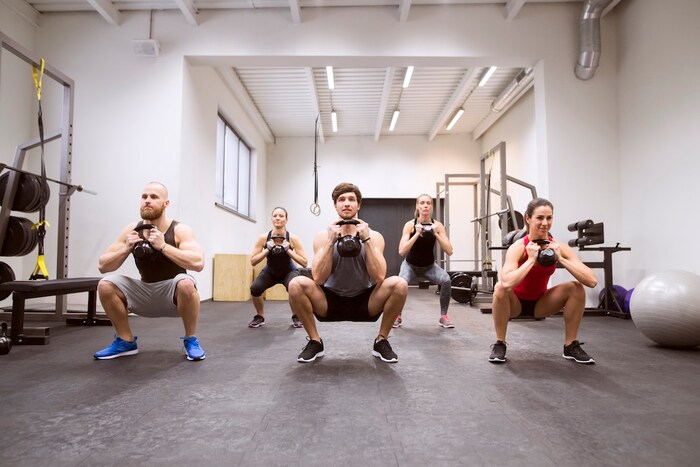
Squats are particularly beneficial as they promote the entire lower body musculature, core stability, and overall coordination. They enhance power development during running and strengthen tendons and ligaments, reducing the risk of injury while running.
Squats are performed in a hip-width stance. If using a barbell, place it on the upper back and secure it with your hands. Beginners can start at the Smith machine (guided barbell). The knees are slightly bent in the starting position, and the core is engaged. Then, bend the knees and lower the hips toward the ground. Once at the bottom, straighten the legs again. Important: Only go as deep into the squat as the heels maintain firm contact with the ground and the lower back remains stable. The upward movement should be initiated as soon as the heels lift or the lumbar spine rounds—this tilting of the pelvis is known in the fitness scene as a “butt wink.”
Lunges

Lunges are a unilateral exercise that also promotes the entire lower body, stability, and coordination. Start in a hip-width stance. Take a large step forward; the dumbbells hang long at the sides of the body. Now bend the front leg and lower the back knee toward the ground. Just before reaching the ground, straighten the leg again and perform the exercise on the other side. The core should be engaged throughout the exercise. Alternatively, the exercise can be performed at the Smith machine. However, to incorporate full-body coordination and core stability, it is recommended to perform the exercise freely.
Deadlifts
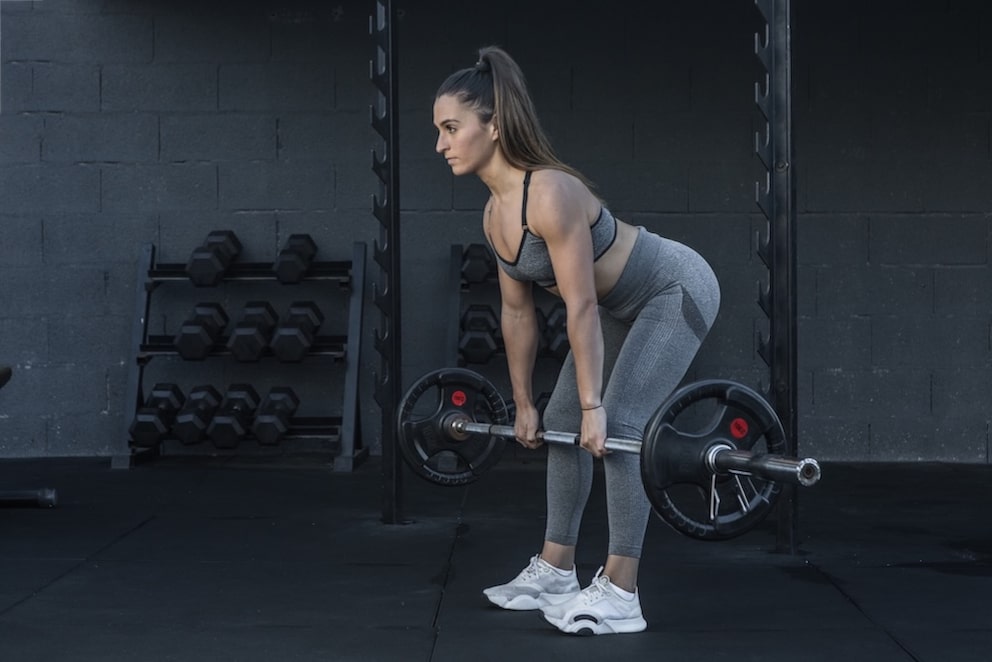
Both classic and Romanian deadlifts promote the entire posterior chain of the legs, effectively supporting the necessary propulsion during running (push-off phase). Additionally, the exercise strengthens the muscles around the knees, helping to prevent injuries sustainably.
Start deadlifts in a hip-width stance. The barbell is held shoulder-width apart in the hands. With the core engaged, bend the upper body forward. Then bend the knees until the barbell with weight plates reaches the ground. Now straighten the knees and raise the upper body. In Romanian deadlifts, which isolate the back of the legs, the knees remain in position and are not bent, while the weight is guided by bending the upper body forward and pushing the hips back toward the ground.
Calf Raises

The Achilles tendon acts like a spring during running. Heavy calf raises increase tendon stiffness, allowing more energy to be stored and released upon landing. Calf raises can be performed standing or seated. The easiest way is on a dedicated machine where you can adjust the weight individually. Whether standing or seated, the goal is to lift the heels and come onto the toes. Then lower the heels again. What looks easy puts quite a strain on your calves.
Box Jumps
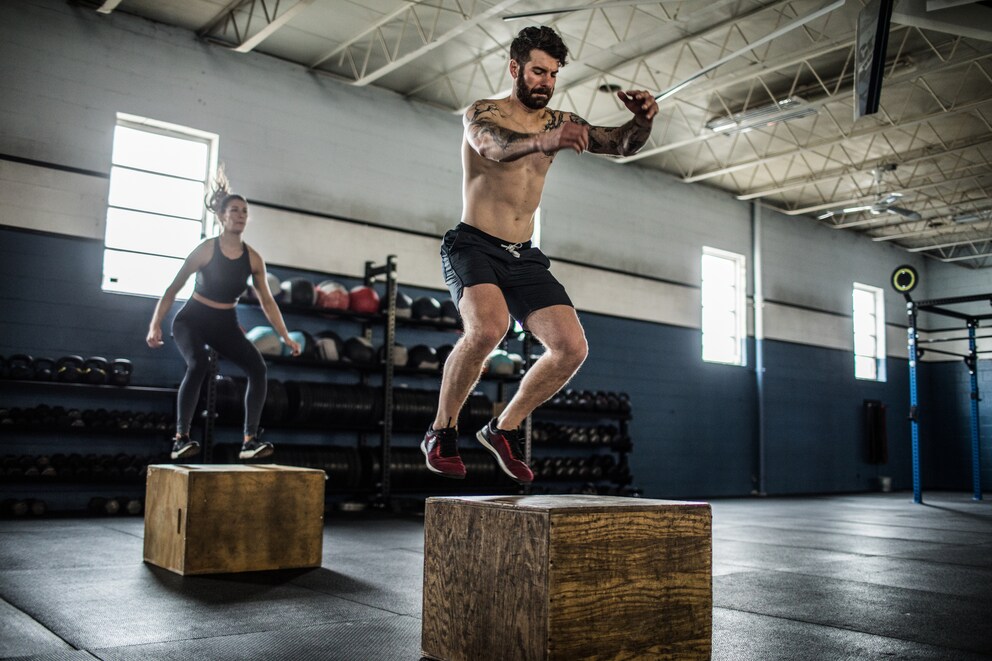
Box jumps are ideal for training leg muscles and jump power. Choose the box height according to your fitness level. Start in a hip-width stance in front of a stable box. Slightly bend the knees, swing the arms back, and explosively jump with both legs simultaneously. Land as controlled and quietly as possible in a squat position. To complete the movement, briefly straighten your body fully. Then step down from the box—not jumping—to protect the joints. Perform this exercise for 3 to 4 sets of 15 to 20 repetitions each.
Drop Jumps
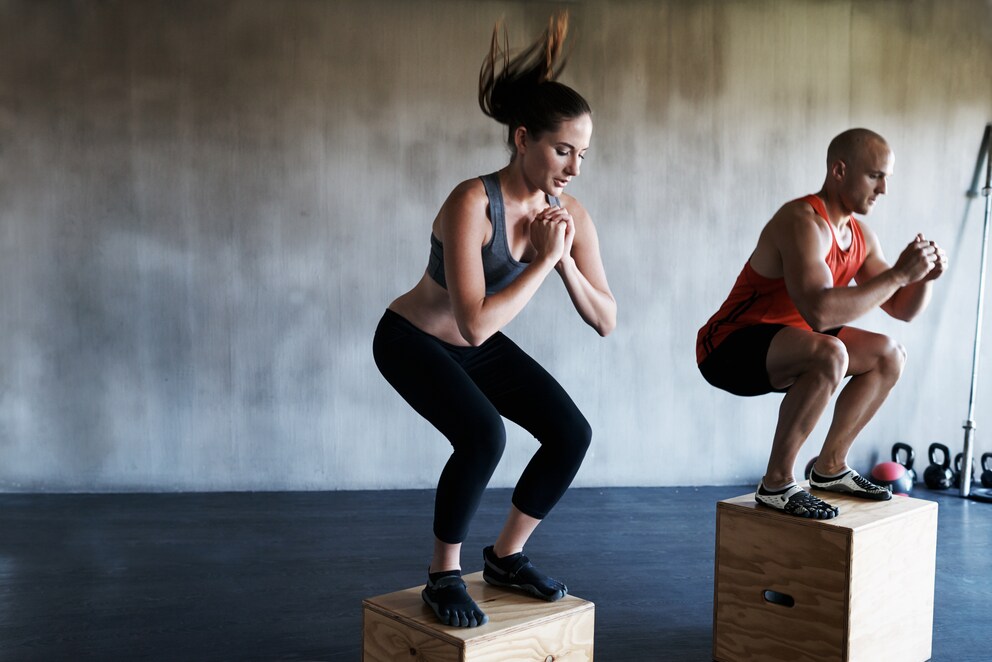
For the drop jump, stand on a small box or step. Let yourself fall down in a controlled manner and immediately jump as explosively and high as possible vertically after ground contact. Then step back onto the box and repeat the exercise for 15 to 20 repetitions. Since ground contact time is kept as short as possible, the exercise maximizes the reactive strength of the Achilles tendon. The tendon learns to work like a highly efficient spring—landing energy is quickly stored and immediately released as propulsion during takeoff. This saves energy with each step, leading to improved running economy and slower fatigue.

What Box Jumps Train and How to Do Them Correctly

6 Strength Exercises for Cyclists Who Want to Get Faster
The Right Intensity: Why 5 to 8 Repetitions Are Optimal
As mentioned earlier, strength exercises should be performed as heavily as possible to achieve the desired results. Specifically, with a load of at least 80 percent of the one-repetition maximum (1 RM). In successful studies, this corresponded to a repetition count of 5 to 8 technically clean repetitions. Fewer repetitions (especially in the maximum strength range of one to three) increase the risk of injury, while more than ten repetitions shift the stimulus to the submaximal range, which, according to the study, is ineffective for running economy.2
Conclusion
The scientific data dispels the myth that running performance can be improved through endurance strength training with light weights and endless repetitions. Quite the opposite: Practicing more than 10 repetitions does not enhance running economy in the slightest. The key to increased speed, maximum endurance, and reduced injury risk lies in a targeted combination of heavy strength training with a maximum of 8 repetitions and explosive jump training.