


May 6, 2026, 6:57 pm | Read time: 6 minutes
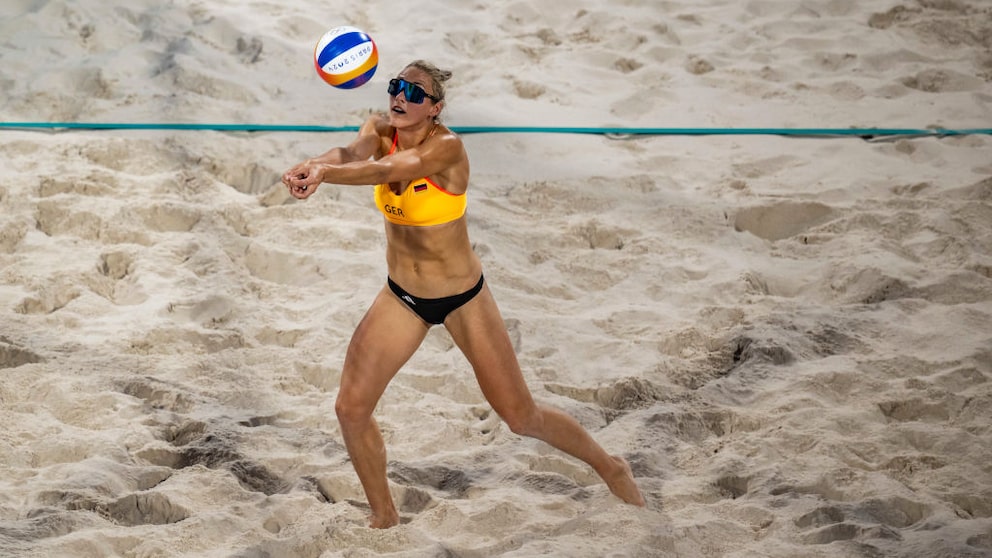
The path to elite sports is rarely straightforward. Often, it’s individual moments that change everything—a feeling, a decision, a shift in perspective. For Louisa Lippmann, it was precisely this mix that led her from traditional indoor volleyball to the sand. In an interview with FITBOOK, the 31-year-old talks about her drive, mental strength, and why she trains more consciously today than ever before.
“I Want to Do This”—the Starting Point for Professional Sports
FITBOOK: Do you remember the moment when you realized: Volleyball or beach volleyball will be my path?
Louisa Lippmann: “In volleyball, everything started quite traditionally: I initially played with friends, just for fun. At the same time, I did track and field and was ambitious in sports from an early age. The decisive moment came when I switched to my youth and training club in Bielefeld. There, for the first time, I was shown that there was more potential in me—keyword boarding school and national squad. That immediately triggered something in me. I didn’t know exactly what it all meant at the time, but I had the feeling right away: I want to do this. When I had my trial week at the boarding school, it confirmed that feeling. I went there at fifteen and soon turned sixteen. This time shaped me a lot. Suddenly, you’re among many like-minded people, all pursuing similar goals, and you begin to define yourself strongly through sports. For me, that was the entry into professional sports.”
From indoor focus to a new perspective in the sand
And beach volleyball initially played no major role?
“No, I saw myself clearly as an indoor player for a long time. Beach volleyball was more something I found interesting, but not as my own path. A significant impulse was the Olympic victory of Laura Ludwig and Kira Walkenhorst in 2016. I was impressed by the charisma and focus with which they played. You could feel that it was a different dimension of competitive sports. Later, through working with Jürgen Wagner, I had more contact with beach volleyball. The real turning point came during the COVID-19 pandemic. Indoor sports were hardly possible, and I tried beach volleyball in Hamburg. Initially, without a clear decision, more out of curiosity. The final decision came later when I asked myself what I still wanted to achieve in my career. In the sand, I simply saw more development opportunities—especially in the mental area.”
“I Listen to My Body Much More Today”
What does your training week look like today?
“I usually train six days a week. I mostly have one ball session a day, plus two strength sessions and several stabilization and athletic sessions. During preparation, endurance sessions are also included, which I honestly don’t particularly enjoy. Most of the training takes place at the Olympic training center. At home, I find it hard to motivate myself additionally. When you train daily anyway, you also need conscious phases to unwind.”
What do you do differently today compared to the start of your career?
“I listen to my body much more today. In the past, I just did what was on the plan. Today, I have a much better sense of what I need, where my limits are, and when it’s wise to take a step back. This body awareness develops over the years. You learn to better assess stress and also take the body’s signals seriously. I train much more consciously and individually today than I did in my early twenties.”
Lippmann on Dealing with Performance Pressure
What skills determine success or failure in beach volleyball?
“Many first think of physical prerequisites, but I would say mental strength is a crucial factor. In beach volleyball, you can’t hide. You’re only two players and are involved in every action. Physically, athleticism and endurance are important, especially in heat and long rallies in the sand. But equally important are ball control, game understanding, and creativity. There isn’t one perfect player type—that’s what makes the sport so exciting.”
How do you handle performance pressure—especially before major tournaments?
“I’m generally a very nervous person before competitions. In beach volleyball, I’ve experienced this even more intensely than before. Especially at major tournaments or the Olympics, it has a unique dynamic. Now, I see the excitement more as something positive. It shows me how important it is to me. The key is to accept it and still stay focused.”
“If You Manage to Stay in the Moment, Everything Becomes Clearer”
Do you have fixed mental routines for this?
“Yes, especially positive self-talk has become an important tool for me. I’ve learned how strongly your own thoughts can influence performance. I also try to focus on the next ball repeatedly. Under pressure, you quickly think too far ahead or dwell on a previous action. If you manage to stay in the moment, everything becomes clearer and easier.”

How COVID-19 Has Changed Our Lives

“Running Changed My Life”
Regeneration, Nutrition, and the Underestimated Basics
What do you think of regeneration trends like ice baths or recovery boots?
“The most important thing for me is a good physiotherapist—that’s irreplaceable. I also use recovery boots, especially after games or travel, which can be very pleasant. I’ve tried ice baths, but I personally didn’t feel a significant effect. The basics are much more crucial: adequate sleep, flexibility, and mental recovery. These are often underestimated.”
What role does nutrition play for you?
“A big one, but it has evolved over the years. I’ve tried a lot, including a vegan phase. I realized what works for me and what doesn’t. A key point was eating enough. Due to the high training volume, I had a large energy consumption, and it was physically noticeable. Today, I focus on a balanced, mostly plant-based diet and try to reduce highly processed foods. At the same time, I believe nutrition should also remain enjoyable. I don’t forbid myself anything–it’s about balance.”
“You Should Bring Patience”—Louisa Lippmann’s Advice to the Youth
What advice would you give to young girls dreaming of professional sports?
“That they should listen to their gut feeling and not lose the joy of sports. Especially at the beginning, it’s important that motivation comes from within and not from outside. You shouldn’t do sports out of pressure, but because you truly love it and want to grow in it. At the same time, a good environment is crucial. People who support, motivate, and believe in you make a huge difference–especially in difficult phases. Because those inevitably come. This path is hardly achievable alone. And you should bring patience. Development is not linear; there are setbacks and doubts. It’s important to stay committed and trust your own path.”