

May 5, 2026, 9:05 am | Read time: 9 minutes
Menopause is a phase of profound physical and mental changes for many women–yet it is often underestimated. The effects extend far beyond the individual: Significant economic costs arise annually because women reduce their working hours or leave the workforce entirely. In a conversation with FITBOOK, Dr. Swaantje Taube explains why the topic still receives too little attention and what the consequences are.
The author, speaker, and former attorney discusses her book “Happiness & Longevity – The Encouragement Book for Women 50+,” her personal experiences with illness and change, and why discipline is more important than motivation–and why it’s never too late to start anew.
“We need more depth, more structure, and something women can rely on”
FITBOOK: What was the specific trigger for you to write this book?
Dr. Swaantje Taube: “The specific trigger was actually the request from Christian Verlag. The publisher contacted me in 2025 and asked if I could envision a book on longevity and the lives of women over 50. And I immediately knew, yes. Not because I had long planned to write a book, but because I realized something was coming together. I had been talking more and more about longevity, menopause, and my own journey on my social media channels and noticed the impact. How many women relate to it, how many questions arise, and how great the need is. At the same time, social media is extremely fleeting. A story is quickly gone, a reel runs for a few seconds and disappears again. But the topics remain. And I knew it needed more depth, more structure, and something women can truly rely on. A kind of guide, a reference book. And I also remembered exactly how I had sought orientation after my illness and how important it was to learn from other women. At that moment, it was no longer a strategic decision, but rather the feeling that it was time.”
From Social Media Topic to Book
FITBOOK: When did you feel: This topic needs to become a book now?
“The request was the trigger, but internally the topic had been there for a while. I noticed how strong the reactions to my content were and that it wasn’t just about me, but about an incredible number of women. And not just from age 50. The earlier we engage with preventive medicine, the better. What really made it clear for me was my own transformation. I had pain, that typical joint pulling, low energy, and that’s gone today. My blood values improved, I regained strength, and I have a completely different body feeling. And that didn’t happen eventually, but relatively quickly after I started to really change things. It was clear to me that this is a real lever for quality of life. And for that, you need more than individual posts. You need a book with a concrete roadmap for implementation.”
“Motivation helps at the beginning, but what really sustains is discipline”
FITBOOK: Many health books promise guidance–what makes yours different?
“I believe my book is different because it doesn’t view health in isolation. It’s not just about blood values, muscles, nutrition, or sleep. Of course, all of that is important. But it falls short if we pretend a good life can be explained solely by lab values. Especially we women experience how everything is interconnected. Body, mind, charisma, self-image, posture, clothing, energy, discipline, joy. It all influences each other. I experienced this very strongly myself. After my breast cancer in 2020, during menopause, with pain, with exhaustion, also with looking in the mirror. When hair falls out or you no longer feel at home in your own body, it’s not just external. It affects self-worth, posture, the way you present yourself, and how you engage with the world. Conversely, I experienced how strength training, good nutrition, better routines, and a conscious approach to myself not only changed my body but also my inner stability. I stood differently again. In both the literal and figurative sense.”
Also interesting: “First breast cancer, then sudden menopause–this is how I experienced both”
“Women are left alone with menopause”
FITBOOK: Were there parts of the book where you consciously wanted to take a stand–even at the risk of causing a stir?
“Yes, definitely on the topic of menopause. It was extremely important to me to give this topic its own chapter because I believe that women are still too often left alone here. It’s always said that it’s no longer a taboo topic. But when I look at how many women write to me, how many complaints they have over the years, and how often they are not taken seriously, that’s simply not true. Many still reduce menopause to a few hot flashes and think everything goes back to normal afterward. That’s not the reality. We talk about perimenopause, menopause, and postmenopause, and the hormonal changes don’t just disappear. The consequences remain, both physically and mentally.”
“We’re not talking about a fringe topic here”
What particularly bothers you about the topic?
“How little it’s seen structurally. We’re not talking about a fringe topic here. There are calculations that menopause costs the German economy billions every year, around nine billion euros, because women drop out, reduce their working hours, or leave their jobs entirely. This is not a niche topic; it’s a massive factor that is talked about far too little. At the same time, we have a problem in medicine. Women are not small men. They have different symptoms, different courses, even with classic diseases like cardiovascular issues. And yet this is still far too little considered in education and everyday life. I wish women were informed much earlier. That we don’t just react when the complaints are there, but are prepared and understand what’s happening in our own bodies.”
Why is it so important to you to address the problem areas?
“And it was also important to me to address this openly because many women in the workforce fail precisely because of this. They keep going, even though they are exhausted, sleep poorly, have concentration problems, or no longer recognize themselves. And they don’t talk about it, out of fear of appearing less capable. I don’t have that pressure. I’m free in what I say. And that’s exactly why I think I should use my voice for this.”
Criticism of the Anti-Aging Narrative
FITBOOK: Where have you consciously opposed common narratives or trends?
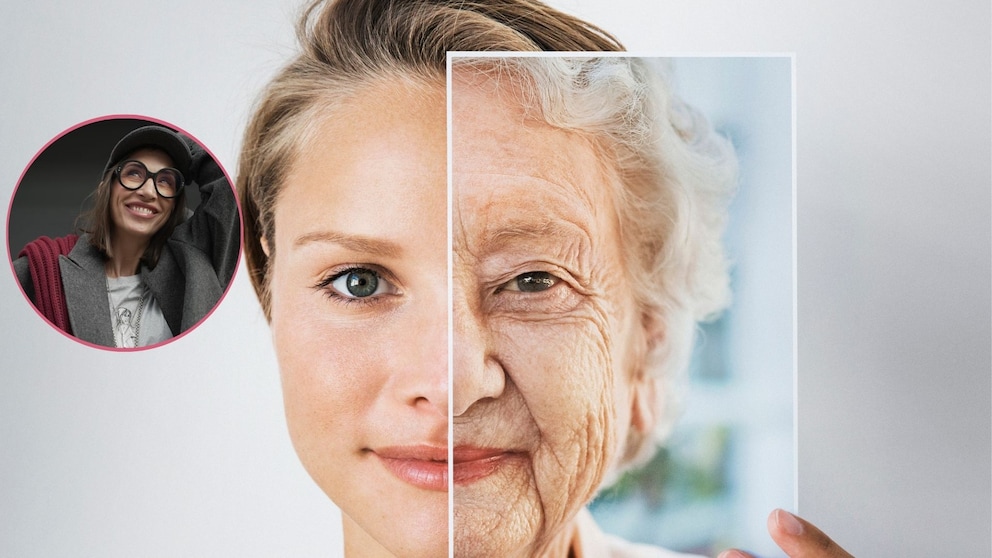
“One point where I consciously go against a common narrative is this whole anti-aging mindset. The term is everywhere, especially in cosmetics. Creams, treatments, promises to look as young as possible for as long as possible. And at first glance, it seems harmless, almost normal. But if you look closer, there’s an attitude behind it that I view critically. I’m not against aging. On the contrary. For me, it’s a privilege. Especially when you’ve experienced, like I have, that health is not a given, your perspective changes completely. I’m about well-aging. About how we age healthily, powerfully, and independently. Not about desperately trying to look younger.”
And external interventions to look younger?
“What every woman does with it is her decision. Whether someone uses Botox, undergoes aesthetic treatments, or stays completely natural, I don’t judge that. But I question this fundamental narrative that we must fundamentally fight aging. Because that subtly conveys that we lose value as we age. And that’s simply not true. A woman is not worth less just because she gets older or is no longer in this classic biological role. I think we should start seeing age differently. As development. As a phase where experience, clarity, and strength emerge. And if we simultaneously do something for our health, then it’s ultimately not about a younger appearance, but about something much more important: freedom.”

Strong After 50! How I Reclaimed My Strength During Menopause

Breast Cancer Activist: “I Thought: Maybe I Won’t See Next Year”
Book Title as a Signal to Act
FITBOOK: How did the book title come about–and what did you want to trigger with it?
“The title came from exactly the feeling I see in many women: this ‘There’s more to it,’ but often accompanied by uncertainty or procrastination. I wanted to consciously trigger something with the title. Not just inform, but move. Women 50+ should feel addressed and realize: It’s not too late. On the contrary. Now is exactly the right moment to change things. ‘Happiness & Longevity’ connects two things for me that belong together and are too often thought of separately. A long life alone is not enough. It’s about how we live. With energy, health, and inner clarity. And at the same time, this is not a book just for women 50+. The earlier we start engaging with these topics, the better. Whether 30, 40, or 50–it’s always about starting today. That’s exactly what the title should convey: You can influence. Your body, your mindset, and your life. And the right moment is not someday. It’s now.”
The Central Message: Act Instead of Wait
FITBOOK: What message was most important to you when writing?
My most important message is: Give it your all. Just don’t give up. That’s my common thread. Through everything I’ve experienced. Whether it’s a new beginning, upheavals, or illness. It’s not about being perfect. We all have doubts. We all have fears. The difference is whether we still take action. I wanted to show that change is always possible. Step by step. And that we shouldn’t make decisions dependent on perfect conditions. They don’t exist. There’s never a perfect time. Something always speaks against it. For me, everything starts with the “Whether.” That’s my gut feeling. My inner compass. And once that decision is made, the head comes into play. Then it’s about the “How.” Structured, realistic, adapted to one’s own possibilities. That’s exactly why it’s a book of encouragement and participation. It’s not about reading. It’s about implementing. And above all: away from “I must,” towards “I may.” We may go for ourselves. We may shape our lives. And that’s where the power lies.