

October 28, 2025, 11:57 am | Read time: 4 minutes
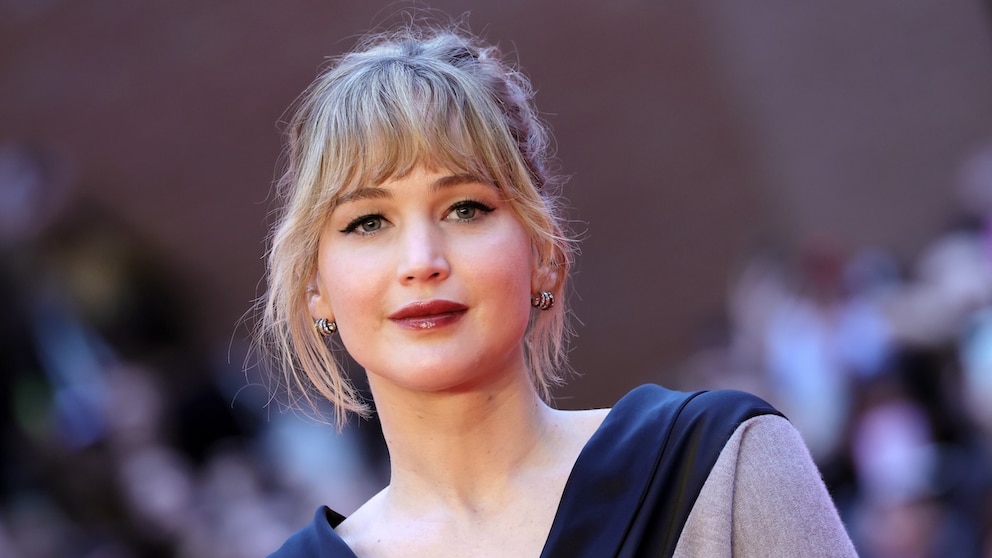
Actress Jennifer Lawrence is known for her acclaimed performances on screen and her humor during public appearances and interviews. But there’s another side she recently revealed in connection with her latest film role. In the thriller, Lawrence–a mother of two herself–plays a wife who suffers a mental health crisis after the birth of her first child. It’s a story with parallels to her own private life, where she has publicly shared her experience with postpartum depression (PPD).
In May of this year, at the press screening of her new film “Die, My Love” (2025) in Cannes, the Hollywood actress described her feelings during filming. She was pregnant with her second child at the time, and it was heartbreakingly difficult to separate her own experiences from those of the film character. As she was quoted in the spring of 2025 by the industry portal “Variety,” she had to emotionally immerse herself in this difficult, dark situation while she actually wanted to feel the opposite: anticipation for her own child.
At that time, she probably didn’t realize how much she would suffer after the birth of her child. In a newly published profile in the U.S. magazine “The New Yorker,” she openly describes how she experienced her postpartum depression (PPD).
Expert Explains the Condition of Postpartum Depression (PPD)
FITBOOK spoke with couples therapist Susanne Brümmerhoff. She frequently encounters the topic of postnatal depression in her professional practice. This is also often what the condition is called. However, the expert uses the more medically precise term “postpartum” depression. This specifically refers to the mother, while “postnatal” refers to the child. In common language, the terms are often used synonymously for the period after birth.
It is a serious depressive disorder that can occur weeks or even months after birth. The term “postnatal depression” is technically misleading. The condition manifests similarly to a “normal” depression, Brümmerhoff explains. “Young mothers feel hopeless, they have fears, are suddenly deeply sad, or feel worthless and guilty.”

“I Told Wlad, ‘I Can’t Go on Living Like This!'”

Postpartum Depression: Signs and Prevention Options
How Jennifer Lawrence Experienced the Condition
For Jennifer Lawrence, it was mostly anxiety and dark thoughts, as she describes to the “New Yorker.” She also felt extremely insecure. “I thought I was doing everything wrong and would ruin my children,” said the 35-year-old. When the baby cried, she interpreted it as the child being unhappy to be alive and part of the family. At times, she sought encouraging words from ChatGPT. The artificial intelligence (AI) assured her, upon her request, that she was a loving mother and doing her best.
The image she paints is quite different from how people know Jennifer Lawrence outside of her roles. In interviews, she always presents herself as quick-witted and extremely humorous. There are numerous compilations of hilarious scenes with her on the red carpet or in TV shows. This shows that even people who appear confident and strong on the outside can be affected by mental health challenges.
Treatment with New PPD Medication
The symptoms were so severe that Jennifer Lawrence sought medical help. As she recounts, she took Zurzuvae: the first oral medication (active ingredient Zuranolone) for the treatment of postpartum depression. The U.S. Food and Drug Administration (FDA) approved it in August 2023, and since September 2025, it can also be prescribed in the EU.2 Zuranolone acts on certain nerve cells in the brain responsible for mood and emotional processing, and can alleviate depressive symptoms. Studies confirm its effectiveness, and Lawrence also reports a quick and significant improvement in her symptoms. Important: Like all medications, Zurzuvae should only be taken under medical supervision, as it is not free from side effects.